Hirschfeldia · Kew POWO · Kew Plants of the World Online
Hirschfeldia
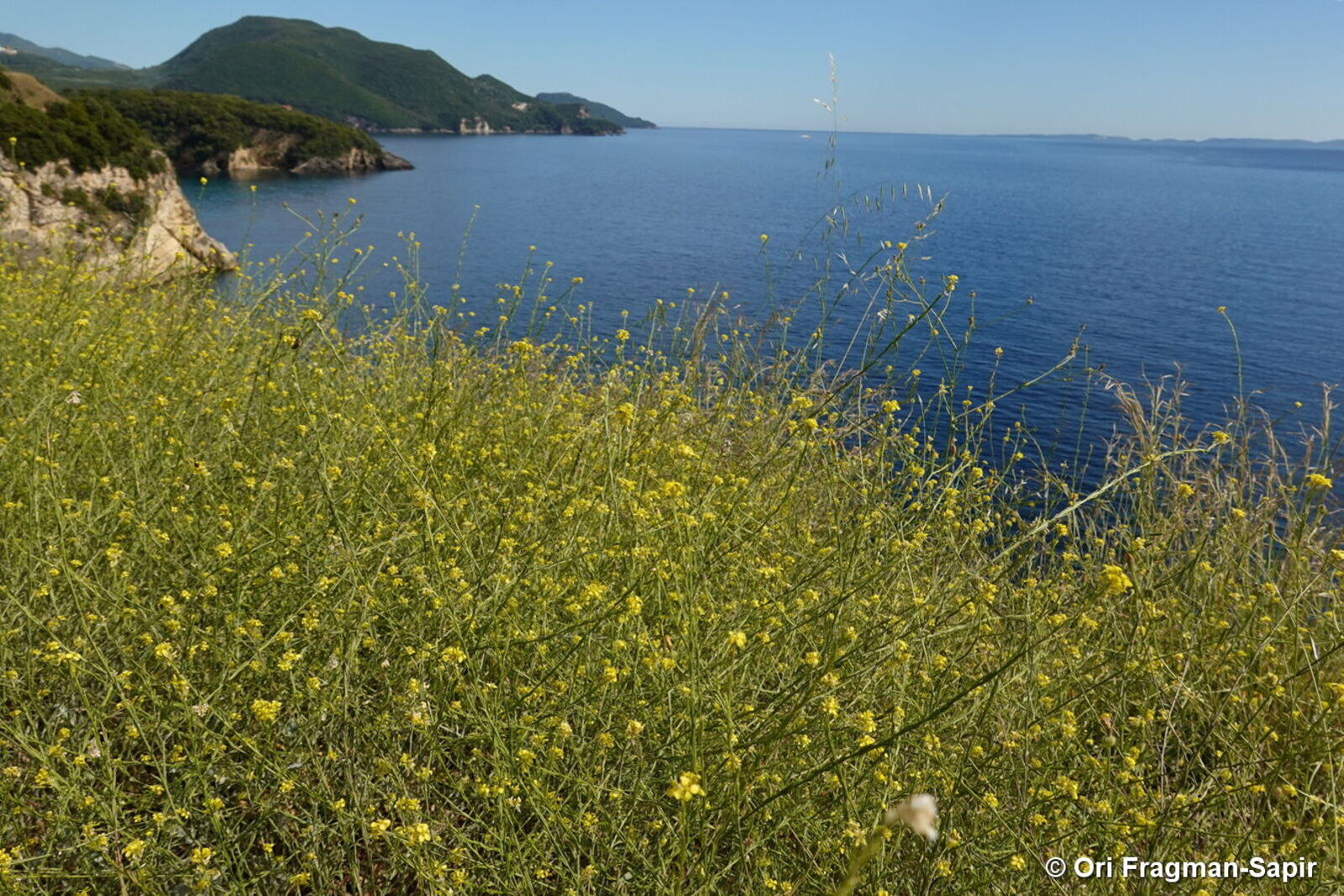
Sign in to saveHirschfeldia incana (formerly Brassica geniculata) is a species of flowering plant in the mustard family known by many common names, including shortpod mustard, buchanweed, hoary mustard and Mediterranean mustard. It is the only species in the monotypic genus Hirschfeldia, which is closely related to Brassica. The species is native to the Mediterranean Basin but it can be found in many parts of the world as an introduced species and often a very abundant noxious weed. This mustard is very similar in appearance to black mustard, but is generally shorter. It forms a wide basal rosette of lobed l
Species
GENUS
- KingdomPlantae
- PhylumTracheophyta
- ClassMagnoliopsida
- OrderBrassicales
- FamilyBrassicaceae
via GBIF · Kew POWO
Museum specimens
- Specimen records
- 39
- With media
- 38
- Family
- Brassicaceae
- Collections
- RSA, ASU, MO, SBBG, TENN, BRIT
- Recorded in
- Netherlands, Algeria, United States, Canary Islands, Tunisia, Morocco, Argentina
Wikidata facts
- Instance of
- taxon
- Parent taxon
- Brassiceae
- Named after
- Christian Cay Lorenz Hirschfeld
- Image
- Hirschfeldia incana FlowersCloseup October032009 DehesaBoyalPuertollano.jpg
Show 6 more facts
- taxon name
- Hirschfeldia
- taxon rank
- genus
- topic's main category
- Category:Hirschfeldia
- taxon common name
- hirschfeldia
- Commons category
- Hirschfeldia
Sources (2)
via Wikidata · CC0
~2 min read
Encyclopedic overview
3 sectionsContents
- Subspecies
- References
- External links
Hirschfeldia incana (formerly Brassica geniculata) is a species of flowering plant in the mustard family known by many common names, including shortpod mustard, buchanweed, hoary mustard and Mediterranean mustard. It is the only species in the monotypic genus Hirschfeldia, which is closely related to Brassica. The species is native to the Mediterranean Basin but it can be found in many parts of the world as an introduced species and often a very abundant noxious weed. This mustard is very similar in appearance to black mustard, but is generally shorter. It forms a wide basal rosette of lobed leaves which lie flat on the ground, and it keeps its leaves while flowering. Its stem and foliage have soft white hairs. Unlike black mustard, H. incana is a perennial plant.
Its leaves are edible and traditionally were used in some areas as a leaf vegetable.
Excerpted from Wikipedia’s “Hirschfeldia” article, available under the CC BY-SA 4.0 licence.
Gallery (2)
Available in 9 languages
via Wikidata sitelinks · CC0