(c) Microbe World, some rights reserved (CC BY-NC-SA) · cc-by-nc-sa
Histoplasma
Sign in to saveHistoplasma is a genus of fungi in the order Onygenales. Species are known human pathogens producing yeast-like states under pathogenic conditions. They are the causative agents of histoplasmosis in humans and epizootic lymphangitis in horses.
Species
GENUS
- KingdomFungi
- PhylumAscomycota
- ClassEurotiomycetes
- OrderOnygenales
- FamilyAjellomycetaceae
via GBIF
Museum specimens
- Specimen records
- 6
- Family
- Ajellomycetaceae
- Collections
- NHMUK
- Recorded in
- United Kingdom, Singapore
Research
5,001 papers- Histoplasma Capsulatum: Mechanisms for Pathogenesis.Current topics in microbiology and immunology · 2019
- Infection of bats with Histoplasma species.Medical mycology · 2023
- Molecular regulation of Histoplasma dimorphism.Current opinion in microbiology · 2019
- Considerations about the Geographic Distribution of Histoplasma Species.Applied and environmental microbiology · 2022
- Histoplasma capsulatum pathogenesis: making a lifestyle switch.Current opinion in microbiology · 2008
via PubMed
Wikidata facts
- Instance of
- taxon
- Parent taxon
- Onygenaceae
- Image
- Histoplasma pas-d.jpg
Show 6 more facts
- taxon name
- Histoplasma
- taxon rank
- genus
- topic's main category
- Category:Histoplasma
- taxonomic type
- Histoplasma capsulatum
- Commons category
- Histoplasma
- taxon author citation
- Darling
via Wikidata · CC0
~1 min read
Encyclopedic overview
2 sectionsContents
- Forms and stages
- References
Histoplasma is a genus of fungi in the order Onygenales. Species are known human pathogens producing yeast-like states under pathogenic conditions. They are the causative agents of histoplasmosis in humans and epizootic lymphangitis in horses.
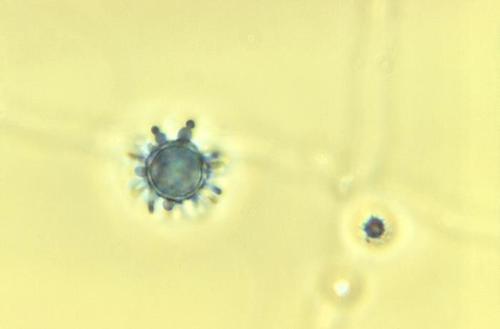
== Forms and stages == Histoplasma species have two forms: their environmental form is hyphal with microconidia and tuberculate macroconidia while their pathogenic form is a small intracellular yeast that exhibits narrow-necked budding and no capsule. Infection occurs through inhalation of microconidia or small mycelial fragments. The dimorphic mold-yeast transforms and enters host macrophages and proliferates within them. Infections are most often seen in immunodeficient individuals.
Excerpted from Wikipedia’s “Histoplasma” article, available under the CC BY-SA 4.0 licence.