HMS Sparrow
Sign in to saveAlso known as TS Amokura, Amokura, NZS Amokura
1889 Redbreast-class gunboat
Described at
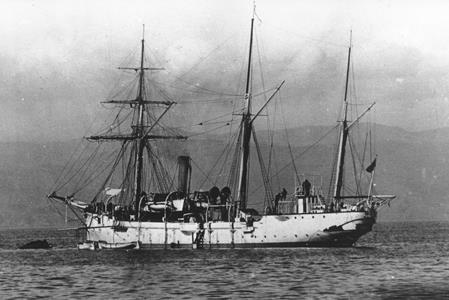
TS Amokura — National Museum of the Royal New Zealand Navy
Amokura was a training ship that was commissioned by the New Zealand government for the purposes of naval training. The name means ‘red-tailed tropic bird.’
navymuseum.co.nz →Explore By Collections ShipsNew Zealand’s naval ships have undertaken a range of tasks and operations. Read about ‘HMNZS Gambia’ – the ship known to have fired the last shots of WWII and ‘HMHS Maheno ‘– a hospital ship that carried injured men back home to New Zealand in WWI. PlacesRead about the history of ‘Elizabeth House’ -the home of the Women in the Navy during WWII and ‘HMNZS Tamaki’ – a training establishment for personnel in WWII. Oral HistoriesThe Oral History Project commenced in 1991 as part of the celebrations for the 50th Anniversary of the Royal New Zealand Navy. The oral histories include veterans’ memories from as early as WW1 and include personal stories of naval personnel recently returned from duties in Bosnia, Afghanistan, Cambodia, East Timor and the Sinai. Oral history is an important method of collecting unique and personal recollections – historical evidence that might otherwise be lost forever. The recorded and transcribed interviews help to create a fuller understanding of our past. These testimonials provide a unique insight into the naval life of men and women during war and peace. The recounting of the testimony can be emotional for an interviewee who may never have discussed the details of his or her experiences with anyone before. The Museum takes great responsibility in handling these unlocked memories. Technology & weaponsThe Royal New Zealand Navy has a long history of technology and weaponry including radar, torpedoes and minesweeping. Read about the history of NZ Coastal Defences and Enemy Operations in NZ Waters. Customs & TraditionsThe Navy is steeped in customs and tradition and these play an important role in Navy life today. Find out what naval terms like “Splice the Mainbrace” mean and read about Mascots in the Navy – including HMS New Zealand’s mascot- a bulldog named Pelorus Jack AviationRead about military air power in both the Royal Navy and the Royal New Zealand Navy. Included are details about the modern and currently active Seasprite Helicopters. TS Amokura was a training ship that was commissioned by the New Zealand government for the purposes of naval training. The name means ‘red-tailed tropic bird.’ Amokura was a training ship that was commissioned by the New Zealand government for the purposes of naval training. The name means ‘red-tailed tropic bird.’[[1]]( As HMS Sparrow she saw service with the Royal Navy on the west coast of Africa as part of the colonial policing that was the lot of the late-Victorian navy. In 1891, under the command of Lieutenant Fraser she engaged with the ‘local natives’ on the Gambia River resisting the passage of the Anglo-French Boundary Commission upriver. In 1892, men from Sparrow, the sloop HMS Racer and the armed paddle vessel Alecto assaulted fortified strongholds of the Tambi and Toniatuba tribes that had attacked tribes protected by the British. In 1893 she moved the east coast of Africa to take part in punitive expeditions. Detachments were sent from Sparrow, the third-class cruiser HMS Blanche, and the sloop HMS Swallow. She was a unit in a fleet commanded by Rear-Admiral Rawson during the 1895-1896 Ashantee War. A civil war in Zanzibar following the death of the Sultan required the deployment of Rawson’s fleet. Along with HMS Philomel , Sparrow successfully engaged with the hostile fleet and a captured warship Glasgow.[ [3] ]( By March 1913, 220 boys had been trained on the vessel. Some had joined the RN ships HMS Challenger, Pioneer. Others joined the merchant navy as ordinary seamen.[[10]]( The skill of Captain Hooper made for a successful training ship by: “being a thoroughly-trained naval officer, combined tactfulness and understanding in his methods of dealing with the youths who sought personally to pierce the mysteries and investigate the romance of the sea.[[11]]( ” By the end of the commission, 530 boys had served aboard Amokura between March 1907 and December 1921.[[12]]( Most of the sailing was done under canvas.
Excerpt from a page describing this subject · 36,331 chars · not written by Vinony
Wikidata facts
- Instance of
- shipwreck
- Country
- New Zealand
- Operator
- Government of New Zealand
- Country of origin
- United Kingdom of Great Britain and Ireland
- Image
- HMS Sparrow (1889).jpg
- Significant event
- keel laying
Show 6 more facts
- Commons category
- Sparrow (ship, 1889)
- yard number
- 261
- service entry
- 1889-00-00
- service retirement
- 1922-00-00
- described at URL
- navymuseum.co.nz/explore/by-collections/ships/amokura
- name
- NZS Amokura
Sources (2)
via Wikidata · CC0