Manikandan, K;Megalaa, N;Valliappan, Subramanian;Nandini, K;Rani, Lourdu V;Dakshinamurthi, Senthil;Nagappan, Nagappan
Homolidae
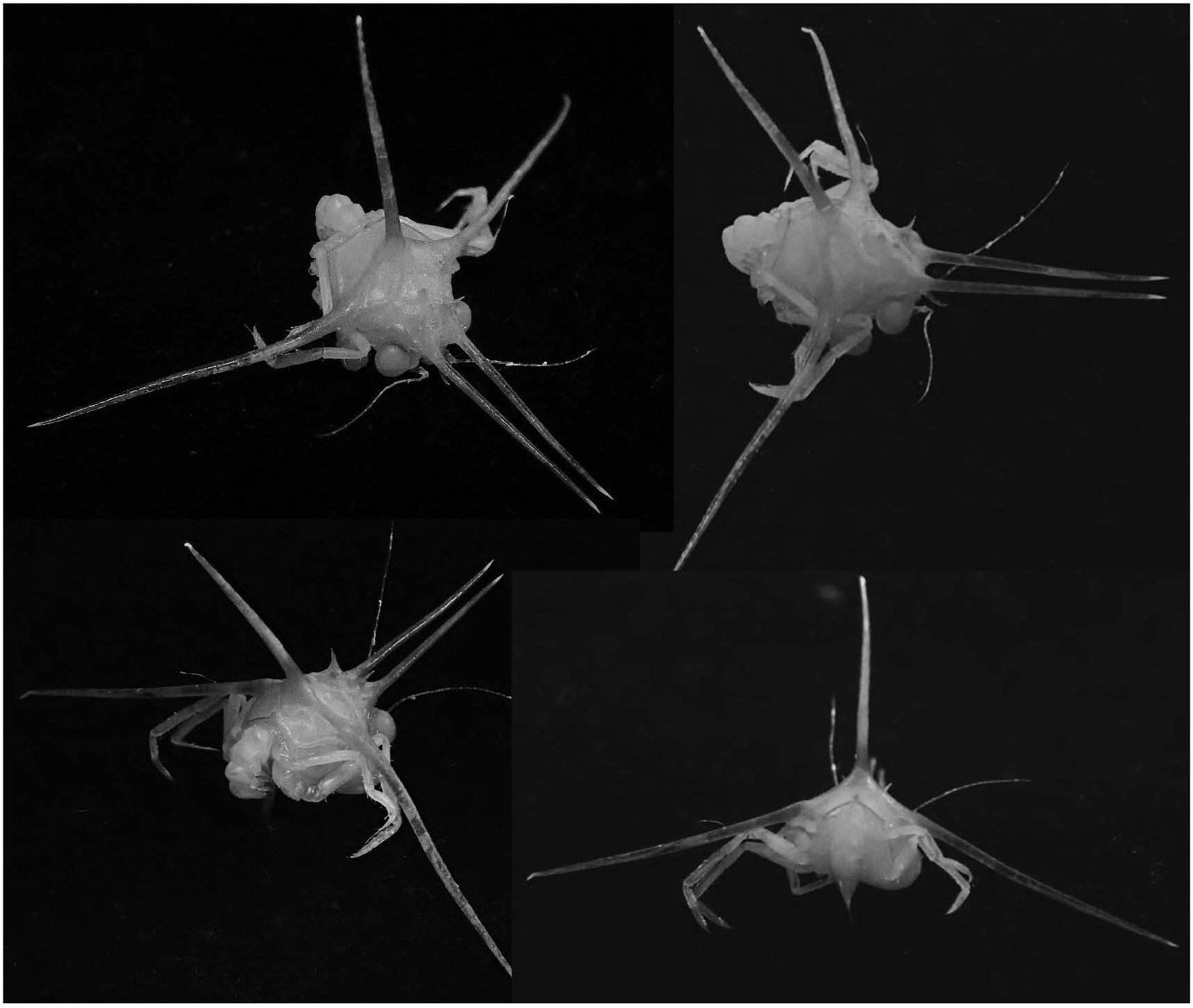
Sign in to saveThe family Homolidae, known as carrier crabs or porter crabs, contains 14 genera of marine crabs. They mostly live on the continental slope and continental shelf, and are rarely encountered. Members of the Homolidae have their fifth pereiopods (last pair of walking legs) in a sub-dorsal position, which allows them to hold objects in place over the rear half of the carapace. The objects carried include sponges, black corals and gorgonians, and this behaviour may be a defence mechanism against predators. Some species have been observed carrying living sea urchins in a symbiotic relationship whic
Species
ホモラ科
FAMILY
- KingdomAnimalia
- PhylumArthropoda
- ClassMalacostraca
- OrderDecapoda
- FamilyHomolidae
via GBIF
Museum specimens
- Specimen records
- 295
- With media
- 37
- Family
- Homolidae
- Collections
- CAS, USNM, UF, MUSEU NACIONAL/UFRJ
- Recorded in
- Brazil, Malaysia, Japan, United States, Taiwan, Mexico, Thailand, Ecuador
Wikidata facts
- Instance of
- taxon
- Parent taxon
- Homoloidea
- Image
- Paromola cuvieri.jpg
Show 4 more facts
- Commons category
- Homolidae
- taxon name
- Homolidae
- taxon rank
- family
- topic's main category
- Category:Homolidae
Sources (1)
via Wikidata · CC0
~1 min read
Encyclopedic overview
2 sectionsContents
- Genera
- References
The family Homolidae, known as carrier crabs or porter crabs, contains 14 genera of marine crabs. They mostly live on the continental slope and continental shelf, and are rarely encountered. Members of the Homolidae have their fifth pereiopods (last pair of walking legs) in a sub-dorsal position, which allows them to hold objects in place over the rear half of the carapace. The objects carried include sponges, black corals and gorgonians, and this behaviour may be a defence mechanism against predators. Some species have been observed carrying living sea urchins in a symbiotic relationship which allows them to benefit from the protection of the urchin's dangerous spikes.
The genus was erected by Dutch zoologist Wilhem De Haan in 1839.
Excerpted from Wikipedia’s “Homolidae” article, available under the CC BY-SA 4.0 licence.