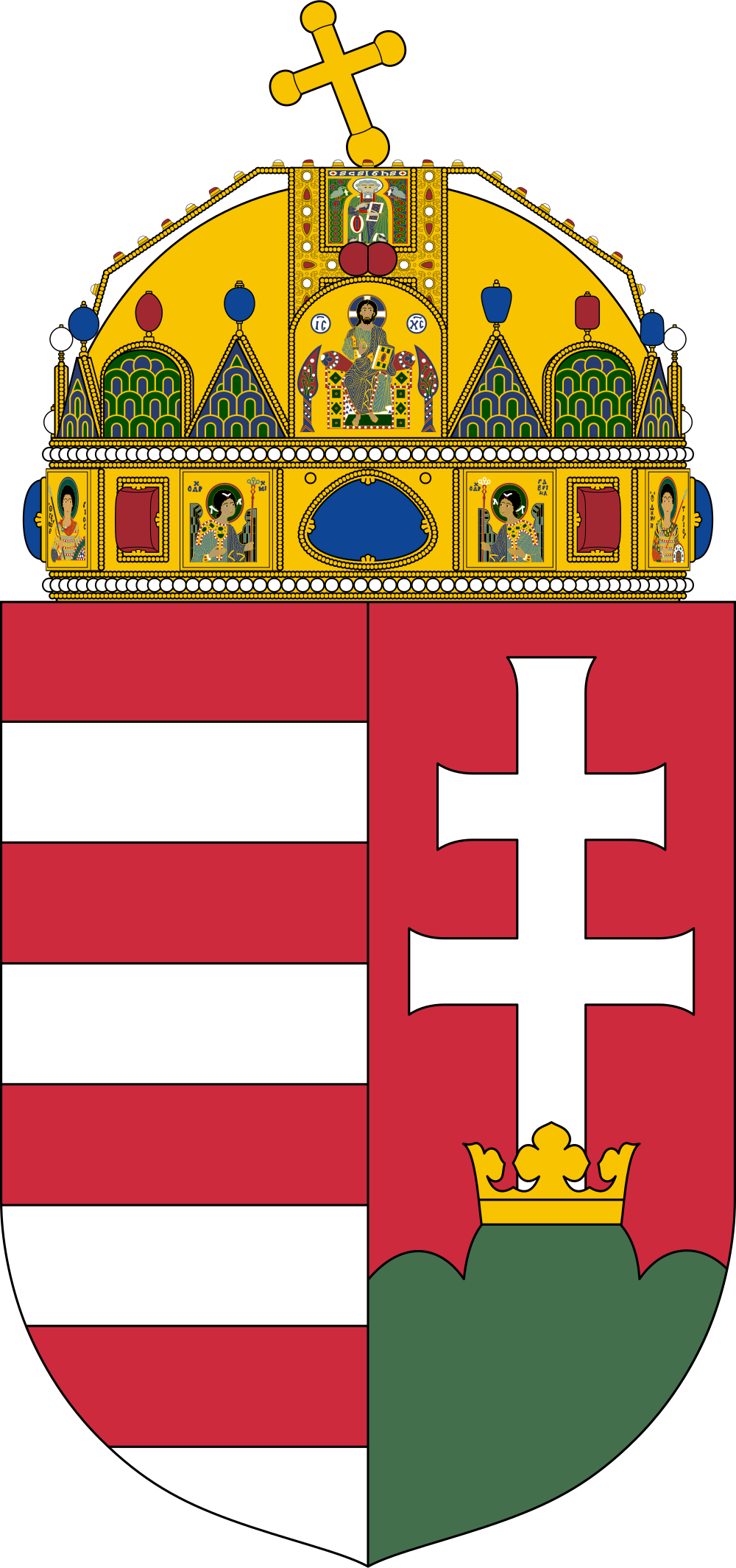
Hungary is a landlocked country in Central Europe bordered by seven nations, with a population of 9.6 million people predominantly of Hungarian (Magyar) ethnicity and a significant Romani minority. The country matters geographically as a major part of the Carpathian Basin and culturally as the home of the Hungarian language, one of Europe's rare non-Indo-European languages.
AI-generated from the Wikipedia summary — may contain errors.
via Open-Meteo
250px|thumb|Horsemen in Kurultaj, an annual reenactment festival held in [[Bugac on the Great Plain]] Hungary is one of the 15 most popular tourist destinations in the world, with a capital regarded as one of the most beautiful in the world. Despite its relatively small size, Hungary is home to numerous World Heritage Sites, UNESCO Biosphere reserves, the second largest thermal lake in the world (Lake Hévíz), the largest lake in Central Europe (Lake Balaton), and the largest natural grassland in Europe (Hortobágy). In terms of buildings, Hungary is home to the largest synagogue in Europe (the Great Synagogue of Budapest), the largest medicinal bath in Europe (Széchenyi Medicinal Bath), the third largest church in Europe (Esztergom Basilica), the second largest territorial abbey in the world (Pannonhalma Archabbey), the second largest Baroque castle in the world (Gödöllő), and the largest Early Christian Necropolis outside Italy (Pécs).
You can expect to find safe food and water, good safety and a generally stable political climate.
Hungary has been ethnically diverse since its inception, and while today over 90% of the population are ethnically Hungarian, pockets of ethnic and cultural Slovaks, Romanians, Germans, Romani/Sinti people (Gypsies), and others dot the country. Due to the border changes of Hungary after World War I, over 2 million ethnic and cultural Hungarians live in bordering countries, as well. The Hungarians, otherwise known as Magyars, are the descendants o…
Recognised refugees and stateless persons in possession of a valid travel document issued by the government of any one of the above countries/territories are exempt from obtaining a visa for Hungary (but no other Schengen country, except Germany and, for refugees, Slovakia) for a maximum stay of 90 days in a 180-day period.
Citizens of Antigua and Barbuda are permitted to work in Hungary without the need to obtain a visa for the period of their 90-day visa-free stay. However, this ability to work visa-free does not necessarily extend to other Schengen countries.
Hungary has several World Heritage sites. These are: 300px|thumb|right|Buda Castle by night Budapest, including the Banks of the Danube, the Buda Castle Quarter and Andrássy Avenue Old Village of Hollókő and its Surroundings Caves of Aggtelek National Park — beautiful caves with dripstones and stalagmites Millenary Benedictine Abbey of Pannonhalma and its Natural Environment Hortobágy National Park — the Puszta Early Christian Necropolis of Pécs (Sopianae) Fertő Lake Cultural Landscape common place with Austria more see there Tokaj and Villány Wine Regions and Historic Cultural Landscapes
Hungria (em húngaro: Magyarország, pronunciado: [ˈmɒɟɒrorsaːɡ]) é um país localizado no leste europeu, especificamente na Bacia dos Cárpatos. Faz fronteira com a Eslováquia ao norte, Romênia ao leste, Sérvia ao sul, Croácia a sudoeste, Eslovênia a oeste, Áustria a noroeste e Ucrânia a nordeste. A capital do país é a cidade de Budapeste. A Hungria é membro da União Europeia, da OTAN, da OCDE, do Grupo de Visegrád e do Espaço Schengen. A língua oficial é o húngaro, que é a língua não indo-europeia mais falada na Europa. Após séculos de sucessiva ocupação de celtas, romanos, hunos, eslavos, gépidas e ávaros, a Hungria foi fundada no final do século IX pelo grão-príncipe húngaro Arpades durante o Honfoglalás ("conquista da pátria"). Seu bisneto Estêvão I subiu ao trono no ano 1000, quando converteu o país para um reino cristão. Até o século XII, a Hungria era uma potência média no mundo ocidental, alcançando seu auge no século XV. Após a Batalha de Mohács, em 1526, e de cerca de 150 anos sob ocupação otomana (1541-1699), a Hungria ressurge sob o domínio dos Habsburgos e, mais tarde, formou uma parte significativa do Império Austro-Húngaro (1867-1918). Suas fronteiras atuais foram estabelecidas pela primeira vez pelo Tratado de Trianon (1920) após a Primeira Guerra Mundial, quando o país perdeu 71% de seu território, 58% da sua população e 32% dos húngaros étnicos. Após o período entre-guerras, a Hungria aderiu às Potências do Eixo na Segunda Guerra Mundial, quando sofreu danos significativos. A Hungria ficou sob a esfera de influência da União Soviética, o que contribuiu para o estabelecimento de um governo comunista que governou por quatro décadas (1947-1989). O país ganhou ampla atenção internacional por conta da Revolução de 1956 e da abertura parcial de sua fronteira anteriormente restrita com a Áustria, em 1989, o que acelerou o colapso de todo o Bloco de Leste. Em 23 de outubro de 1989, a Hungria tornou-se novamente uma república parlamentar democrática e atualmente tem uma economia de alta renda, com um alto Índice de Desenvolvimento Humano (IDH). O país também é um destino turístico popular, atraindo cerca de 10 milhões de visitantes por ano. A Hungria abriga o maior sistema de fontes termais e o segundo maior lago termal do mundo (Lago Hévíz), o maior lago da Europa Central (lago Balaton), e as maiores pastagens naturais do continente europeu (o Parque Nacional de Hortobágy).
Abstract from DBpedia / Wikipedia · CC BY-SA
6 mapped locations
Discovered by embedding cosine similarity (sentence-transformers MiniLM, 384-dim).
via REST Countries
via World Bank Open Data · CC BY 4.0
via Wikimedia Pageviews API
via Wikipedia infobox
via PubMed
via Wikidata · CC0
You can also check the National parks in Hungary page.
Other major tourist destination is Lake Balaton, with winehills, thermal spa in Hévíz, Hajdúszoboszló and Harkány around. Sopron is one of the most popular place for a sightseeing in the region.
There are also some amazing things to see.
Tiszavirágzás. In mid-June the Tisza produces swarms of mayflies which are likened to flowers. Once decimated by pollution, the population is rebounding. (They're famous for living only for 1–2 days.) Busójárás. In February the people chase away bad ghosts by loud clamping on streets of Mohács.
Birdwatching: Hungary has wooded hills, vast fish-pond systems and grasslands, the puszta. Particularly good areas are the Kiskunság National Park, Hortobágy National Park and the Aggtelek, Bukk and Zemplen Hills. Horse riding: Vast areas of open countryside coupled with the long traditions of horsemanship make Hungary an ideal country for riding. Wide open plains in the south and forested hills in the north offer varied riding terrain. Baths: Thermal waters abound in Hungary, with over 1000 thermal springs many of which have been turned into baths and spas. The most famous are the Szechenyi baths in Budapest, but there are hundreds more. The cave baths at Miskolc-Tapolca and the spa at Egerszalók are good examples. See also Budapest#Baths, Nyíregyháza#Do, and a selected list of authorized medicinal waters. Football: 12 teams play soccer in the country's top tier, Nemzeti Bajnokság I or NB1; four of them are based in Budapest. The national team play home games at Puskás Aréna in Budapest, completed in 2019. Autosport: Watch the Formula One Hungarian Grand Prix in the July window. It takes place at the Hungaroring circuit in Budapest. The Hungarian Grand Prix is also termed as 'Monaco without the bars/railings'. Book early because it follows the Belgium Grand Prix and people use the wise decision to book the tickets after the fourth race of the season. Hungaroring is also known for its nice scenery outside the race track and for heavy rains at unexpected times. Hungaroring als…
Main courses in menu are normally 3000–5000 Ft in touristy places in Budapest, 2000–3000 Ft outside it, or in towns like Eger and Szentendre. A two-course lunch with a soft drink in Budapest typically costs 3000–10000 Ft per person, and half or third of that outside Budapest. A Chinese fast food menu is around 1500 Ft. (updated Jan 2023)
In restaurants, a service charge is frequently included into bill, 10% or even 12%, but this has to be clearly pointed out on the menu. If it's not mentioned, the place has no right to include a service charge in the bill.
Even if there's no service charge, unless the service was preposterous most Hungarians tend to leave a tip of 10% minimum. Unlike in most western countries, tip is usually not left on the table but rather the amount is specified to the waiting staff when you pay.
There were some places, mainly in the centre of Pest, that try to rip off drunk tourists at night by charging ridiculously high prices for drinks. Most of these places are closed now, but it's still a good idea to always check the prices before ordering.
Common in major cities and next to the highways are branches of major international chains such as KFC, McDonald's, Burger King, Subway, Pizza Hutand TGI Friday's last two just in Budapest.
thumb|Budapest by night Hungary in general is a very safe country. However, petty crime in particular remains a concern, just like in any other country.
Watch your bags and pockets on public transport. There is a danger of pickpockets. Passports, cash and credit cards are common targets of thieves. Keep items that you do not store in your hotel safe or residence in a safe place, but be aware that pockets, purses and backpacks are especially vulnerable, even if closed. There are also reported cases of people who got their baggage stolen while sleeping on the train.
Generally, Hungary is rather quiet during the night compared to other European countries, and crime to tourists is limited to pickpocketing, and cheating on prices and bills and taxi fares.
Everyone is required to carry their passport and ID card. Not doing so lead to trouble with the police. The police generally accept a colour copy of your passport.
The police force is professional and well trained, but most hardly speak any English.
See the Budapest travel guide for more specific and valuable information about common street scams and tourist traps in Hungary.
Despite the government's controversial rhetoric regarding immigration, most Hungarians are not racist or xenophobic, and Budapest does have a small yet vibrant immigrant community. With that said, you might want to avoid living in rural areas if you are not white.
Food and water is generally safe, even in remote villages. It is safe to drink tap water anywhere, even in remote areas, however, due to the cleaning process the taste of the water can be really unpleasant. Best idea is to try before changing to the bottled water. Bottled waters has a large selection, both the fizzy (blue bottle cap) and still (red/pink bottle cap) water and it is cheap (starts from less than 100 Ft for 1.5 litre). The only notable exception of the drinking water are trains where the tap water is not drinkable and other places where tap water is labeled as such.
It is widely available and good practice to have with you a bottle during hot summer.
Private health care providers are high quality, but limited in scope once outside Budapest. Dentistry is cheaper here than in Western Europe (8000–10,000 Ft for an appointment and x-ray), and physiotherapy also (3000 Ft for a half-hour treatment), but check the price with the provider before you confirm the appointment. Outside Budapest you will likely have to speak basic Hungarian to communicate your needs as few doctors will have any English or German skills.
Public health care is free for qualifying (insured) people, and is of adequate quality in urban areas.
The country has joined the EU, so basic coverage is present for EU citizens, but check before entering the country how far are you insured and what you have to pay for. Do not expect at this time that the local doctor will know the EU rules…
Broadband Internet access is now widespread in Hungary. It's quite usual to find free Internet access (Wi-Fi) in shopping centers; in Budapest, most cafes and pubs. You'll have Wi-Fi access even in small towns. Look for the "Wi-Fi" signs, you may have to ask for the access password, however, if you consume, it will be freely given. There are 4G coverage in most of the country while 5G is being deployed (July 2024).
The land border can be crossed to Austria, Slovenia, Croatia, Serbia, Romania, Ukraine and Slovakia.
Travel guide from Wikivoyage (CC BY-SA 4.0)
via Wikidata sitelinks · CC0