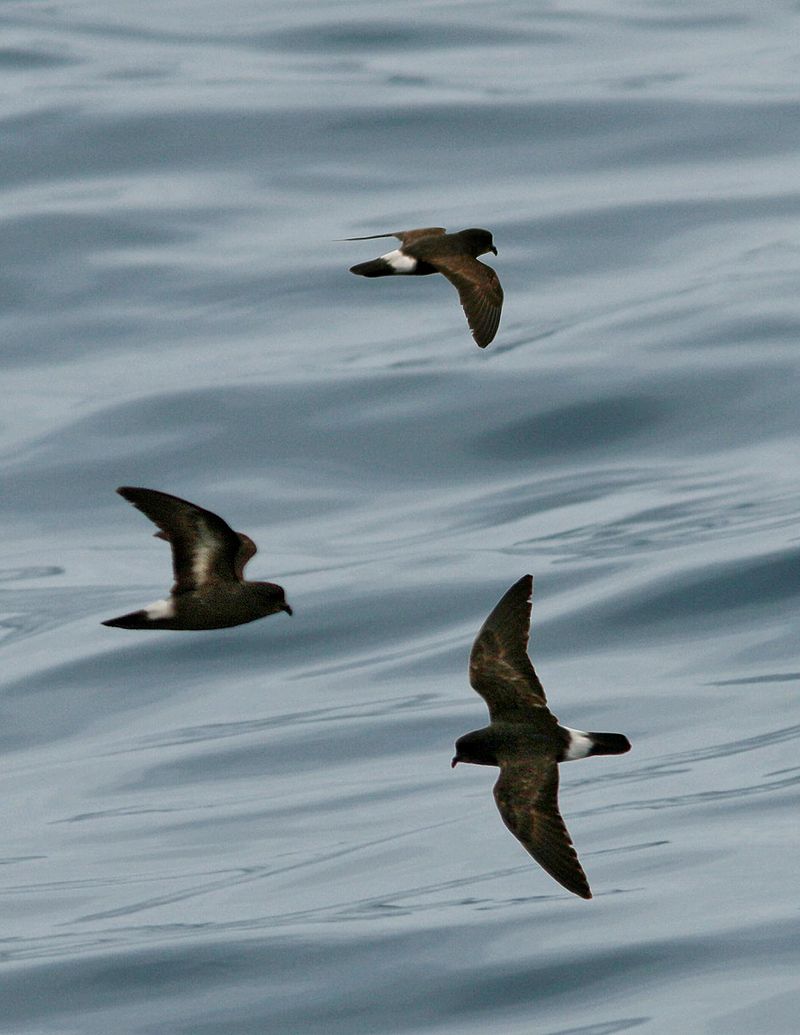
File:European_Storm_Petrel_From_The_Crossley_ID_Guide_Eastern_Birds.jpg · Wikimedia Commons · See Wikimedia Commons
OverviewAI-generated
Hydrobatidae is a family of birds within the order Procellariiformes. It belongs to the class Aves, phylum Chordata, and kingdom Animalia. The family was described by Mathews in 1913 and is governed by the International Code of Zoological Nomenclature. Its common name is storm petrels.
The taxon has an accepted status and is found in the Northern Hemisphere. It inhabits marine environments. Records for this family are held by institutions including SUI, NHMUK, FMNH, UCLA, and RBINS-SCIENTIFIC HERITAGE. These records are located in the United States, Chile, Ecuador, and French Polynesia.
Synthesized by Vinony from 37 facts across 6 sources: Wikidata, GBIF, Gbif Occ, WoRMS, iDigBio, Vinony graph. Generated from structured data (not the Wikipedia text) and checked against those facts — may still contain errors.
Species
storm petrels
Hydrobatidae
FAMILY
- KingdomAnimalia
- PhylumChordata
- ClassAves
- OrderProcellariiformes
- FamilyHydrobatidae
via GBIF
Museum specimens
- Specimen records
- 7
- With media
- 1
- Family
- Hydrobatidae
- Collections
- SUI, NHMUK, FMNH, UCLA, RBINS-SCIENTIFIC HERITAGE, AM
- Recorded in
- United States, Chile, Ecuador, French Polynesia
Wikidata facts
- Instance of
- taxon
- Parent taxon
- Procellariiformes
- Image
- European Storm-petrel.jpg
Show 10 more facts
- Commons category
- Hydrobatidae
- taxon rank
- family
- taxon name
- Hydrobatidae
- Code of nomenclature
- International Code of Zoological Nomenclature
- Commons gallery
- Hydrobatidae
- topic's main category
- Category:Hydrobatidae
- described by source
- Brockhaus and Efron Encyclopedic Dictionary
- taxon range
- Northern Hemisphere
- taxon common name
- stormsvalefamilien
- on focus list of Wikimedia project
- Wikipedia:Vital articles/Level/4
Sources (1)
via Wikidata · CC0
~16 min read
Encyclopedic overview
Northern storm petrels are seabirds in the genus Hydrobates in the family Hydrobatidae, part of the order Procellariiformes. The family was once lumped with the similar austral storm petrels in the combined storm petrels, but have been split, as they are not closely related. These smallest of seabirds feed on planktonic crustaceans and small fish picked from the surface, typically while hovering. Their flight is fluttering and sometimes bat-like.
The northern storm petrels are found in the Northern Hemisphere, although some species around the Equator dip into the south. They are strictly pelagic, coming to land only when breeding. In the case of most species, little is known of their behaviour and distribution at sea, where they can be hard to find and harder to identify. They are colonial nesters, displaying strong philopatry to their natal colonies and nesting sites. Most species nest in crevices or burrows, and all but one species attend the breeding colonies nocturnally. Pairs form long-term, monogamous bonds and share incubation and chick-feeding duties. Like many species of seabirds, nesting is highly protracted, with incubation taking up to 50 days and fledging another 70 days after that.
Excerpted from Wikipedia’s “Hydrobatidae” article, available under the CC BY-SA 4.0 licence.