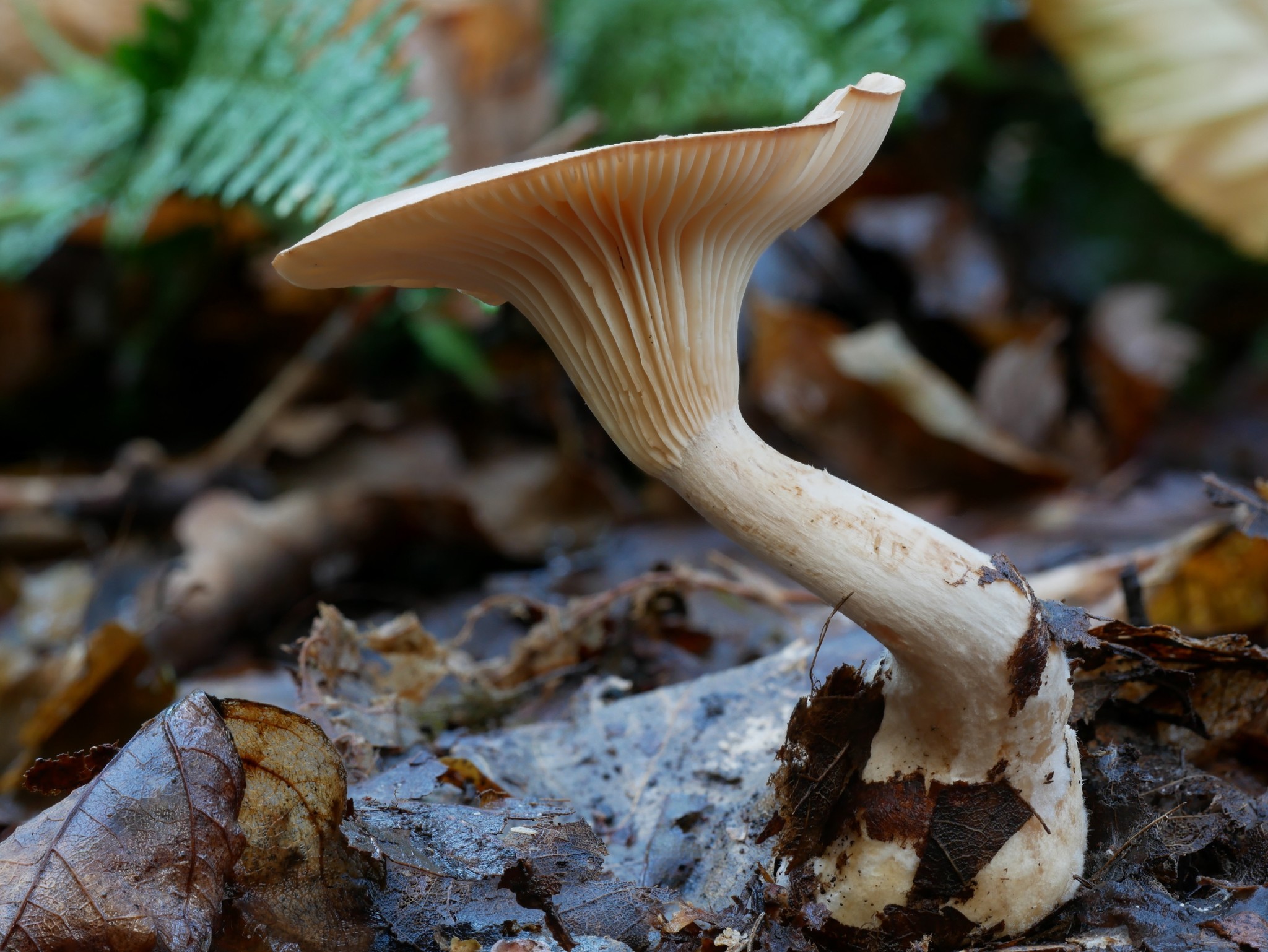
Specimen image via iDigBio · BY-NC-SA
Hygrophoraceae
Sign in to saveThe Hygrophoraceae are a family of fungi in the order Agaricales. Originally conceived as containing white-spored, thick-gilled agarics (gilled mushrooms), including Hygrophorus and Hygrocybe species (the waxcaps or waxy caps), DNA evidence has extended the limits of the family, so it now contains not only agarics, but also basidiolichens and corticioid fungi. Species are thus diverse and are variously ectomycorrhizal, lichenized, associated with mosses, or saprotrophic. The family contains 34 genera and over 1000 species. None is of any great economic importance, though fruit bodies of some H
Species
FAMILY
- KingdomFungi
- PhylumBasidiomycota
- ClassAgaricomycetes
- OrderAgaricales
- FamilyHygrophoraceae
via GBIF
Museum specimens
- Specimen records
- 57
- With media
- 6
- Family
- Hygrophoraceae
- Collections
- F, TENN-F, FLAS, MEL, US, DUKE
- Recorded in
- India, Costa Rica, United States, Australia, Guyana, Chile, Brasil
Wikidata facts
- Instance of
- taxon
- Parent taxon
- Agaricales
- Image
- Hygrophorus eburneus-pastorino.JPG
Show 6 more facts
- Commons category
- Hygrophoraceae
- taxon rank
- family
- taxon name
- Hygrophoraceae
- topic's main category
- Category:Hygrophoraceae
- taxon author citation
- Lotsy
- taxonomic type
- Hygrophorus
Sources (2)
via Wikidata · CC0
~5 min read
Encyclopedic overview
7 sectionsContents
- Taxonomy
- History
- Current status
- Habitat, nutrition, and distribution
- Economic usage
- References
- Cited literature
The Hygrophoraceae are a family of fungi in the order Agaricales. Originally conceived as containing white-spored, thick-gilled agarics (gilled mushrooms), including Hygrophorus and Hygrocybe species (the waxcaps or waxy caps), DNA evidence has extended the limits of the family, so it now contains not only agarics, but also basidiolichens and corticioid fungi. Species are thus diverse and are variously ectomycorrhizal, lichenized, associated with mosses, or saprotrophic. The family contains 34 genera and over 1000 species. None is of any great economic importance, though fruit bodies of some Hygrocybe and Hygrophorus species are considered edible and may be collected for sale in local markets.
==Taxonomy==
Excerpted from Wikipedia’s “Hygrophoraceae” article, available under the CC BY-SA 4.0 licence.