Hypertelis · Kew POWO · Kew Plants of the World Online
Hypertelis
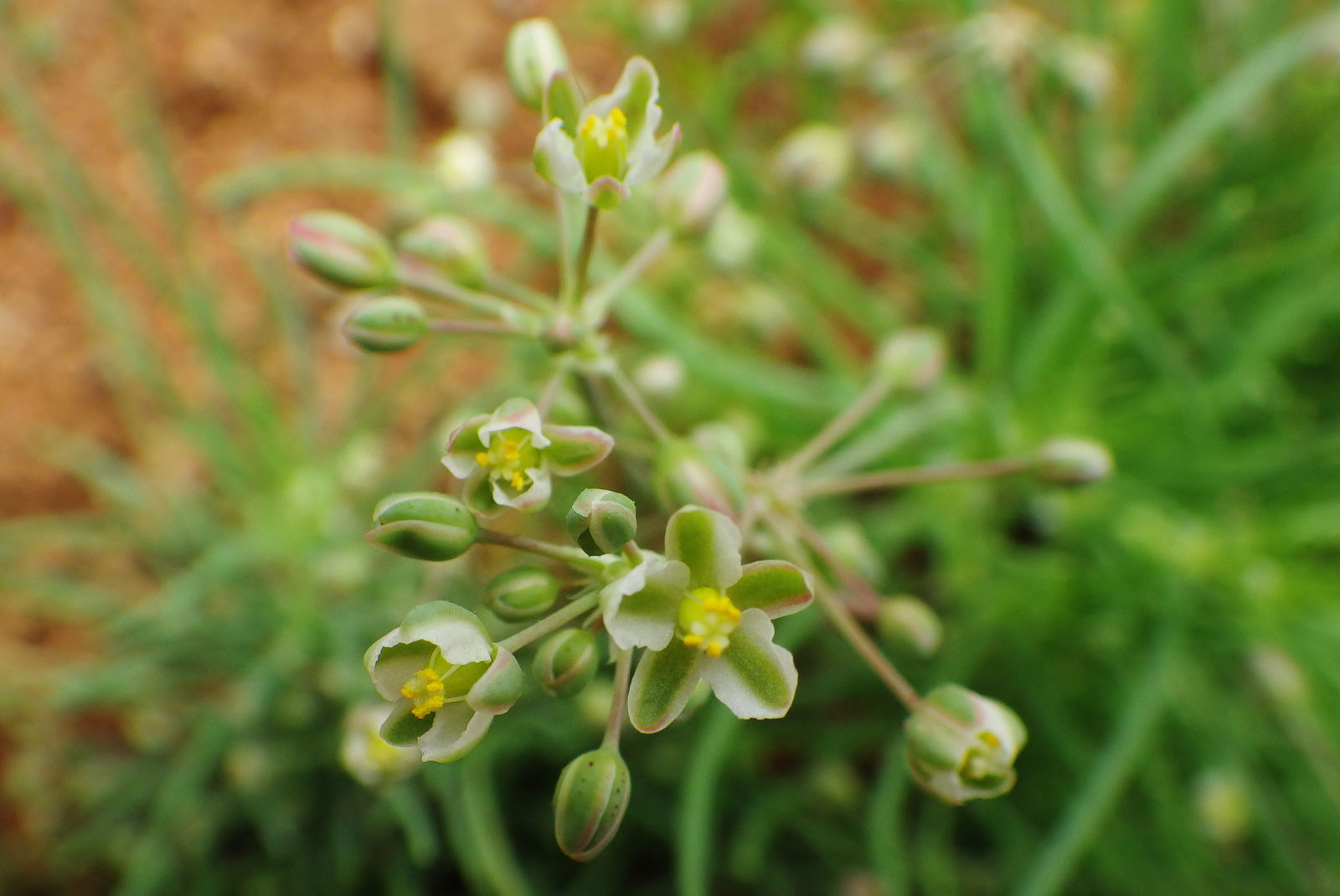
Sign in to savethumb | right | alt=Hypertelis cerviana | Hypertelis cerviana Hypertelis is a genus of flowering plants in the family Molluginaceae. Most of its former species have been transferred to the new genus Kewa, and the remaining species, Hypertelis spergulacea, may also need a different placement. Hypertelis spergulacea is a woody-based plant, up to high, with whorled greyish green leaves. It is found on the border between Namibia and the Northern Cape province of South Africa.
Species
GENUS
- KingdomPlantae
- PhylumTracheophyta
- ClassMagnoliopsida
- OrderCaryophyllales
- FamilyMolluginaceae
via GBIF · Kew POWO
Museum specimens
- Specimen records
- 5
- With media
- 1
- Family
- Molluginaceae
- Collections
- MEL, BRIT
- Recorded in
- South Africa, Angola, Namibia
Wikidata facts
- Instance of
- taxon
- Parent taxon
- Molluginaceae
- Image
- Hypertelis cerviana 126756569.jpg
Show 4 more facts
- taxon rank
- genus
- taxon name
- Hypertelis
- taxon common name
- 漆姑粟草属
Sources (1)
via Wikidata · CC0
~3 min read
Encyclopedic overview
6 sectionsContents
- Description
- Taxonomy
- Former species
- Distribution and habitat
- References
- External links
thumb | right | alt=Hypertelis cerviana | Hypertelis cerviana Hypertelis is a genus of flowering plants in the family Molluginaceae. Most of its former species have been transferred to the new genus Kewa, and the remaining species, Hypertelis spergulacea, may also need a different placement. Hypertelis spergulacea is a woody-based plant, up to high, with whorled greyish green leaves. It is found on the border between Namibia and the Northern Cape province of South Africa.
==Description== Hypertelis spergulacea grows to about high, woody at the base with softer ascending stems. The lower leaves are crowded together and fleshy; further up the stem the leaves are arranged in well spaced whorls of five to ten. The individual leaves are narrowly linear, hairless (glabrous) and greyish green in colour. The inflorescence is somewhat umbellate, with individual flowers borne on long thin stems (pedicels). The flowers have 20–30 stamens, most united at the base into 3–5 groups. The seeds are black and shiny.
Excerpted from Wikipedia’s “Hypertelis” article, available under the CC BY-SA 4.0 licence.