Ilse Weber
Sign in to saveAlso known as Ilse Weberová, Ilsa Weberová
Czech composer and writer (1903-1944)
Person · Open Library
- Works
- 4
Top works
- Kinder der Liebe
- Lebkuchen
- Louise Bourgeois, Meret Oppenheim, Ilse Weber
via Open Library + Wikidata
Listeners · Last.fm
- Listeners
- 2,246
- Total plays
- 5,789
Tags
Ilse Weber January 11, 1903 - October 6, 1944) neé Herlinger, was born in Witkowitz near Mährisch-Ostrau. A Jewish poet, she wrote songs and theater pieces for Jewish children. She married Willi Weber in 1930. She voluntarily was transported to Auschwitz with the children of Theresienstadt and was killed in the gas chambers, along with her son, Tommy. A notable Czech writer of children's fiction, she fell victim to the Holocaust. Her most popular book was "Mendel Rosenbusch: Tales for Jewish Ch
Described at
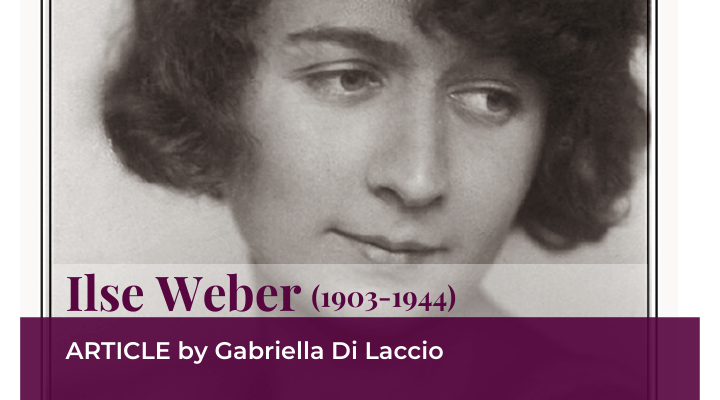
Ilse Weber (1903-1944) - Donne, Women in Music
Ilse Weber was a Czech author and songwriter. She wrote children's fiction, and her most popular book was "Mendel Rosenbusch: Tales for Jewish Children" (1929). She had learned to sing and play guitar, lute, mandolin and balalaika, but she had never sought a career as a musician. Read more about this fascinating woman in this article by Gabriella Di Laccio.
donne-uk.org →Ilse Weber was a Czech author and songwriter. She worked as a night nurse in the children’s ward of the Theresienstadt concentration camp’s infirmary and had the courage to secretly write poems and songs about camp life while her patients slept. Ilse Weber (1903-1944) was a Czech author and songwriter. She worked as a night nurse in the children’s ward of the Theresienstadt Ghetto’s infirmary and had the courage to secretly write poems and songs about camp life while her patients slept. Discover more about her in this article by Gabriella Di Laccio. Our history is full of forgotten women, invisible artists who overcame endless barriers in order to follow their dreams, develop their talent and create art with dedicated passion. Most of them somehow disappeared from our history books and it’s hard not to think that we have somehow been robed from having the inspiration of their stories as part of our lives. Discovering new women in music has become a daily habit since the beginning of the project Donne. I can’t help myself. There is simply too much to learn, too many stories to be shared, too many new songs to be sung … Sometimes you can recognize their names, and sometimes, the discovery comes as a moving surprise, an intimate artist who might not have produced the exciting symphonies and operas that we expect from what we learned to call ‘a music genius’. Instead, you find stories of real people who used their art to make a real difference to people’s lives, away from the spotlight, making music where it mattered the most. I learned about Ilse Weber’s story a few years ago, and, as so many secret heroines from the past, her courage, passion and fearless talent continue to move and inspire me to this day. Ilse Weber was a Czech author and songwriter. She wrote children’s fiction, and her most popular book was “Mendel Rosenbusch: Tales for Jewish Children” (1929). She had learned to sing and play guitar, lute, mandolin and balalaika, but she had never sought a career as a musician. In 1939, Ilse was living in her ancestral village of Vítkovice in northern Czechoslovakia with her husband and two sons when their town was annexed by Hitler’s Third Reich. The Webers managed to send one of their sons, Hanuš on one of Sir Nichola’s Winton’s Kinderstransport to London. This was the last time she saw him. In February 1942 Ilse, her husband Willi and her son Tommy were deported to the Theresienstadt Ghetto where they were imprisoned until 1944. Her true experience and emotions were conveyed in more than sixty poems she composed there. Working in the children’s infirmary, Ilse entertained the young patients with songs, trying to make their daily suffering slightly more bearable. Writing, composing and singing with her illegal guitar was Ilse’s way of cheering the children she attended at the sick bay, her way of trying to comfort while participating in the legal official cultural activities in Theresienstadt. She worked in the camp’s children’s hospital at night, doing all she could for the patients without the help of medicine, as it was forbidden for Jewish prisoners. She wrote many poems while she was there and set a good number of them to music. She would accompany herself on guitar while she sang her lullaby-like songs to children and the elderly of the ghetto. Her music activity, as recounted in her “Musica Proibita”, was a life-threatening engagement. Ich wandere durch Theresienstadt, vorbei an dem strengen Gendarmen, die Laute, die man mir geliehen hat, wie ein Kind verpackt in den Armen. Mein Herz schlägt schneller, die Wange brennt in des Gefürchteten Nähe. Es wäre geschehen um das Instrument wenn er es bei mir sähe. Wir sind ja verurteilt an diesem Ort zu tiefster Verzweiflung und Schande, und die Instrumente nahm man uns fort als gefährliche Konterbande. Wir dulden Hunger und Freiheitsraub und alles, womit sie uns quälen, doch richten sich immer empor aus dem Staub die niedergetretenen Seelen. Wir dürfen, umgeben
Excerpt from a page describing this subject · 10,603 chars · not written by Vinony
Wikidata facts
- Instance of
- human
- Family name
- Weber
- Gender
- female
- Citizenship
- Czechoslovakia
- Place of birth
- Vítkovice
- Place of death
- Oświęcim
- Occupation
- prose writer
- Languages spoken
- German
- Image
- Ilse Weber (1903-1944).jpg
Show 9 more facts
- date of birth
- 1903-01-11
- date of death
- 1944-10-06
- Commons category
- Ilse Weber
- place of detention
- Theresienstadt Ghetto
- birth name
- Ilse Herlinger
- subject has role
- Holocaust victim
- name
- Ilse Weberová
- described at URL
- donne-uk.org/ilse-weber
- place of burial
- Auschwitz
Sources (2)
via Wikidata · CC0