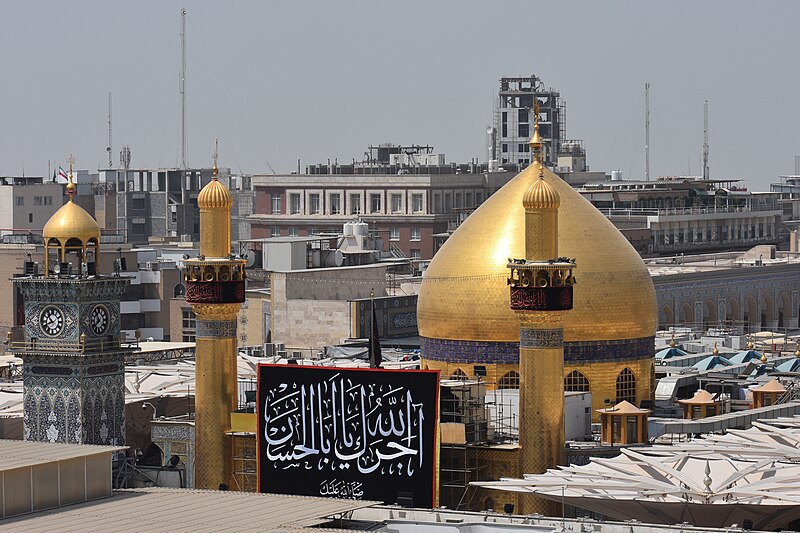
File:Shrine_of_Imam_Ali_Najaf_August_2023.jpg · Wikimedia Commons · See Wikimedia Commons
The Imam Ali Mosque is a holy shrine located in Iraq that holds great religious significance for Muslims. It is one of the most important pilgrimage sites in Islam and serves as a major center of worship and spiritual devotion.
AI-generated from the Wikipedia summary — may contain errors.
Key facts
- Affiliation
- Islam
- Ecclesiastical or organizational status
- Shrine
- Status
- Active
- Location
- Najaf , Najaf Governorate
- Country
- Iraq
- Type
- Shi’i mosque
- Style
- Islamic architecture
- Groundbreaking
- 1621 CE
- Completed
- 1630 CE
- Dome
- One
- Dome height inner
- 42 m (138 ft)
- Minaret
- Two
- Minaret height
- 38 m (125 ft)
- Shrine
- One: Ali ibn Abi Talib
- Materials
- Ceramic tiles; gold; copper
via Wikipedia infobox
Wikidata facts
- Instance of
- architectural landmark
- Religion
- Islam
- Country
- Iraq
- Located in
- Najaf
- Founded by
- 'Adud al-Dawla
- Image
- Meshed ali usnavy (PD).jpg
Show 5 more facts
- native label
- حرم الإمام علي
- inception
- 0977-00-00
- Commons category
- Imam Ali Mosque
- category for people buried here
- Category:Burials at Imam Ali Mosque
- architectural style
- Safavid architecture
Sources (3)
via Wikidata · CC0
~12 min read
Encyclopedic overview
The Imam Ali Shrine (Arabic: حَرَم ٱلْإِمَام عَلِيّ, romanized: Ḥaram al-ʾImām ʿAlī), also known as the Mosque of Ali (Arabic: مَسْجِد عَلِيّ, romanized: Masjid ʿAlī), is a Shi'ite mosque and shrine, located in Najaf, in the Najaf Governorate of Iraq. The site is a mausoleum which Shia and Sunni Muslims believe contains the tomb of Ali ibn Abi Talib, a cousin, son-in-law and companion of the Islamic prophet Muhammad.
The Shias consider Ali as their first Imam and Muhammad’s rightful successor, while the Sunnis regard him as the fourth Sunni Rashid Caliph. According to Shia belief, buried next to Ali within this mosque are the remains of Adam and Nuh (Noah). Each year, millions of pilgrims visit the shrine and pay tribute to Imam Ali. The shrine has been built and rebuilt numerous times throughout history.
Excerpted from Wikipedia’s “Imam Ali Mosque” article, available under the CC BY-SA 4.0 licence.