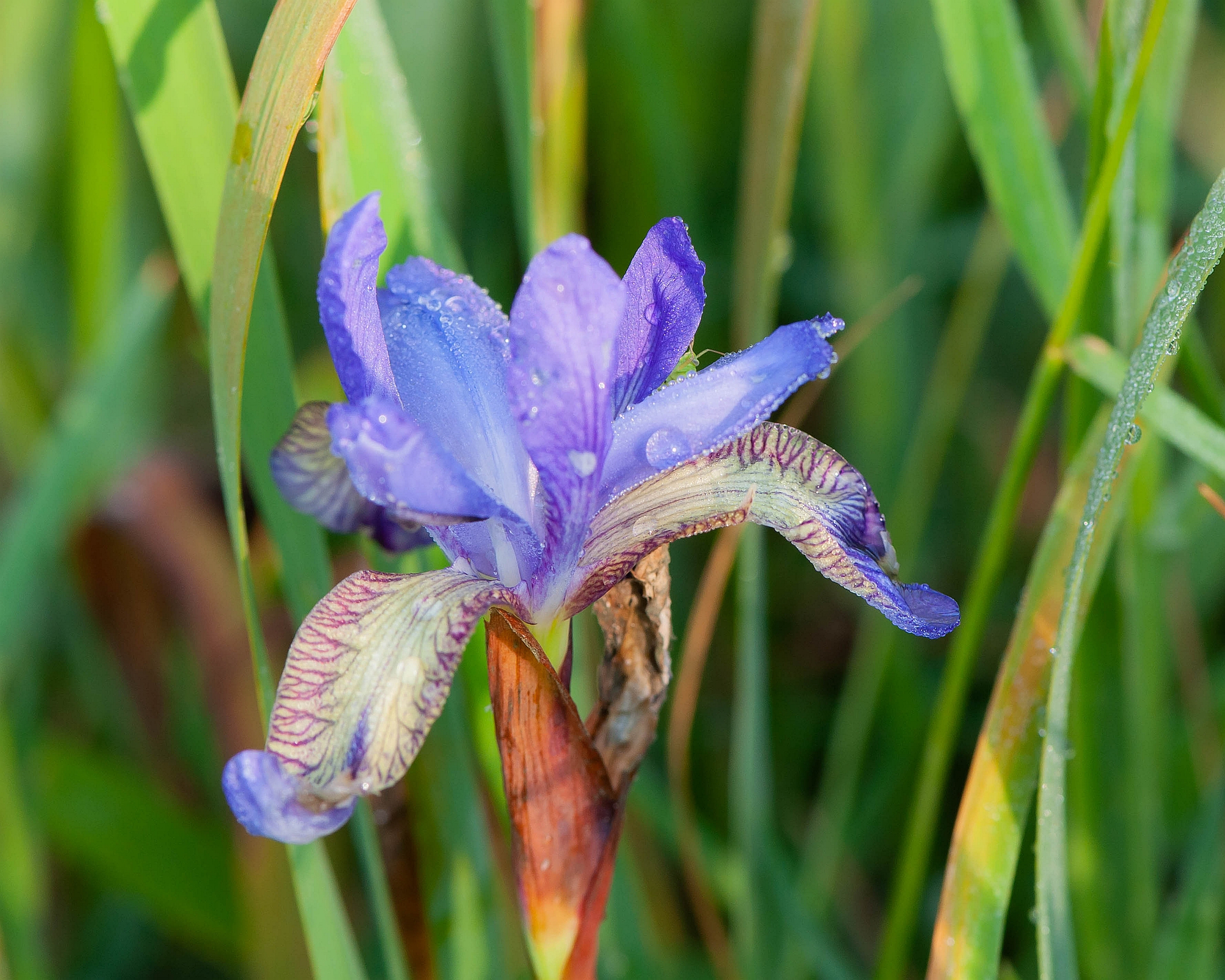
Image from GBIF · CC BY-NC
OverviewAI-generated
Iris sibirica, commonly known as the Siberian iris, is a species of plant in the family Iridaceae. It belongs to the kingdom Plantae, phylum Tracheophyta, class Liliopsida, and order Asparagales. The species is classified within the parent taxon Iris ser. Sibiricae and is cited with the author abbreviation L.
The plant has an extensive global range. Its conservation status is listed as Near Threatened by the IUCN Red List, with a record from 2013. Occurrence data indicates the presence of the species in the United States, Czech Republic, Germany, Austria, and the Russian Federation.
Synthesized by Vinony from 30 facts across 7 sources: Wikidata, GBIF, IUCN Red List, Gbif Occ, Plants of the World, iDigBio, Vinony graph. Generated from structured data (not the Wikipedia text) and checked against those facts — may still contain errors.
Species
Near ThreatenedSPECIES
- KingdomPlantae
- PhylumTracheophyta
- ClassLiliopsida
- OrderAsparagales
- FamilyIridaceae
L'Iris de Sibérie (Iris sibirica) est une plante herbacée appartenant au genre Iris et à la famille des Iridacées. On la trouve en Europe centrale, orientale, en Asie du Nord ainsi que dans le Caucase comme en Arménie aux alentours du lac Arpi. En France, c'est une plante rare et protégée, qu'on rencontre en Alsace, et çà et là ailleurs notamment dans le Jura et en Charente-Maritime. Nom russe : Ирис сибирский
via GBIF · IUCN · Kew POWO
Museum specimens
- Specimen records
- 919
- With media
- 718
- Family
- Iridaceae
- Collections
- DBG, UNIVERSITY OF VERMONT, CM, VT, WIS, MSC
- Recorded in
- United States, Czech Republic, Germany, Austria, Russian Federation
Wikidata facts
- Instance of
- taxon
- Parent taxon
- Iris ser. Sibiricae
- Image
- 00 3972 Blüte der „Sibirische Schwertlilie“ (Iris sibirica).jpg
Show 8 more facts
- taxon rank
- species
- taxon name
- Iris sibirica
- Commons category
- Iris sibirica
- taxon common name
- sibirska perunika
- Commons gallery
- Iris sibirica
- short name
- I. sibirica
- taxon author citation
- L.
Sources (8)
via Wikidata · CC0
~14 min read
Encyclopedic overview
Iris sibirica, commonly known as Siberian iris or Siberian flag, is a species of flowering plant in the family Iridaceae. It is a rhizomatous herbaceous perennial, from Europe (including France, Italy, Switzerland, Austria, Czech Republic, Slovakia, Germany, Hungary, Poland, Romania, Bulgaria, Former Yugoslavia, Belarus, Estonia, Latvia, Lithuania, Moldova, Ukraine and northern Turkey) and Central Asia (including Armenia, Azerbaijan and Siberia). It has long green grass-like leaves, tall stem, 2–5 violet-blue, to blue, and occasionally white flowers. It is cultivated as an ornamental plant in temperate regions.
Description
Excerpted from Wikipedia’s “Iris sibirica” article, available under the CC BY-SA 4.0 licence.