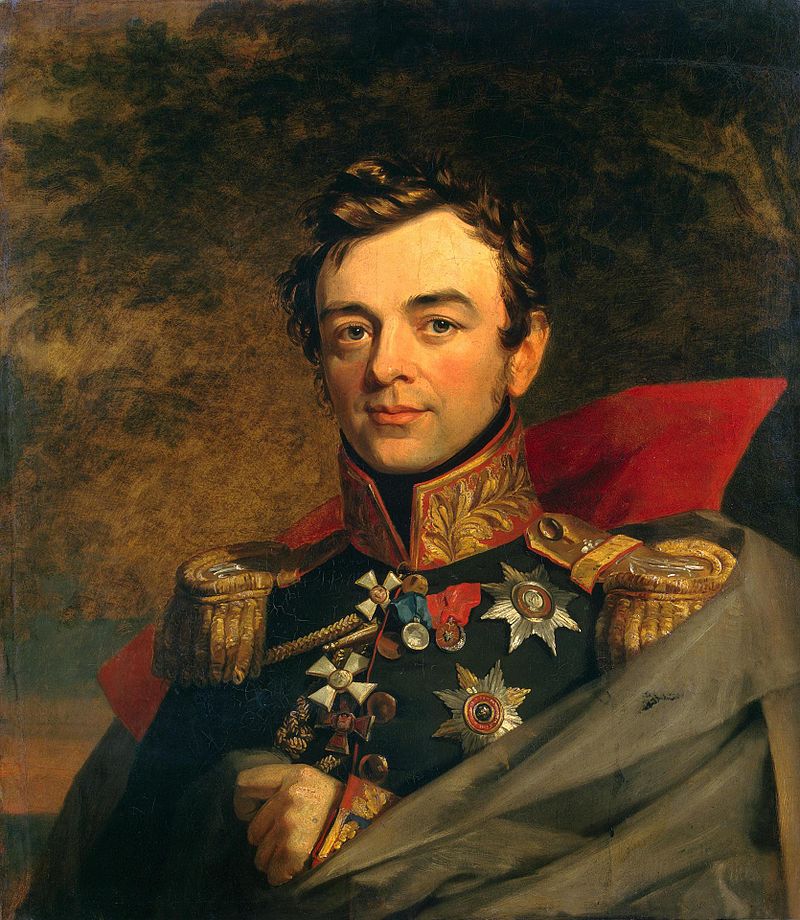
File:Иван_Федорович_Паскевич.jpg · Wikimedia Commons · See Wikimedia Commons
Ivan Paskevich
Sign in to saveAlso known as Ivan Fyodorovich Paskevich, Paskievitch
Russian military leader (1782–1856)
Key facts
- Native name
- Иванъ Ѳедоровичъ Паскевичъ
- Born
- ( 1782-05-19 ) 19 May 1782, Poltava , Russian Empire (now Ukraine )
- Died
- 1 February 1856 (1856-02-01) (aged 73), Warsaw , Congress Poland , Russian Empire
- Allegiance
- Russia
- Branch
- Imperial Russian Army
- Service years
- 1800–1856
- Rank
- Field Marshal
- Awards
- Order of St. Andrew , Order of St. George , Order of St. Vladimir , Order of St. Anna , Order of St. Alexander Nevsky , Order of the White Eagle (Russian Empire) , Gold Sword for Bravery
via Wikipedia infobox
Wikidata facts
- Instance of
- human
- Gender
- male
- Citizenship
- Russian Empire
- Place of birth
- Poltava
- Place of death
- Warsaw
- Occupation
- politician
- Educated at
- Page Corps
- Award
- Virtuti Militari
- Noble title
- count
- Conflict
- Russo-Persian War of 1826–28
- Military branch
- Imperial Russian Army
- Military rank
- general field marshal
- Image
- Иван Федорович Паскевич.jpg
Show 8 more facts
- Commons category
- Ivan Paskevich
- date of birth
- 1782-05-08
- date of death
- 1856-02-01
- Commons gallery
- Ivan Paskevich
- name in native language
- Иван Фёдорович Паскевич
- described by source
- Encyclopædia Britannica 11th edition
- place of burial
- Paskevich burial chapel
- start of work period
- 1800-00-00
via Wikidata · CC0
~8 min read
Encyclopedic overview
Count Ivan Fyodorovich Paskevich-Erevansky, Serene Prince of Warsaw (19 May [O.S. 8 May] 1782 – 1 February [O.S. 20 January] 1856) was a Russian military leader who was the namiestnik of Poland.
Paskevich is known for leading Russian forces in Poland during the November Uprising and for a series of leadership roles throughout the early and mid-19th century, such as the Russo-Persian War of 1826–1828, and the beginning phase of the Crimean War. In Russian history, he is remembered as a prominent military commander, rated on a par with Ivan Dibich-Zabalkansky, commander of the Russian armies during the same time.
Excerpted from Wikipedia’s “Ivan Paskevich” article, available under the CC BY-SA 4.0 licence.