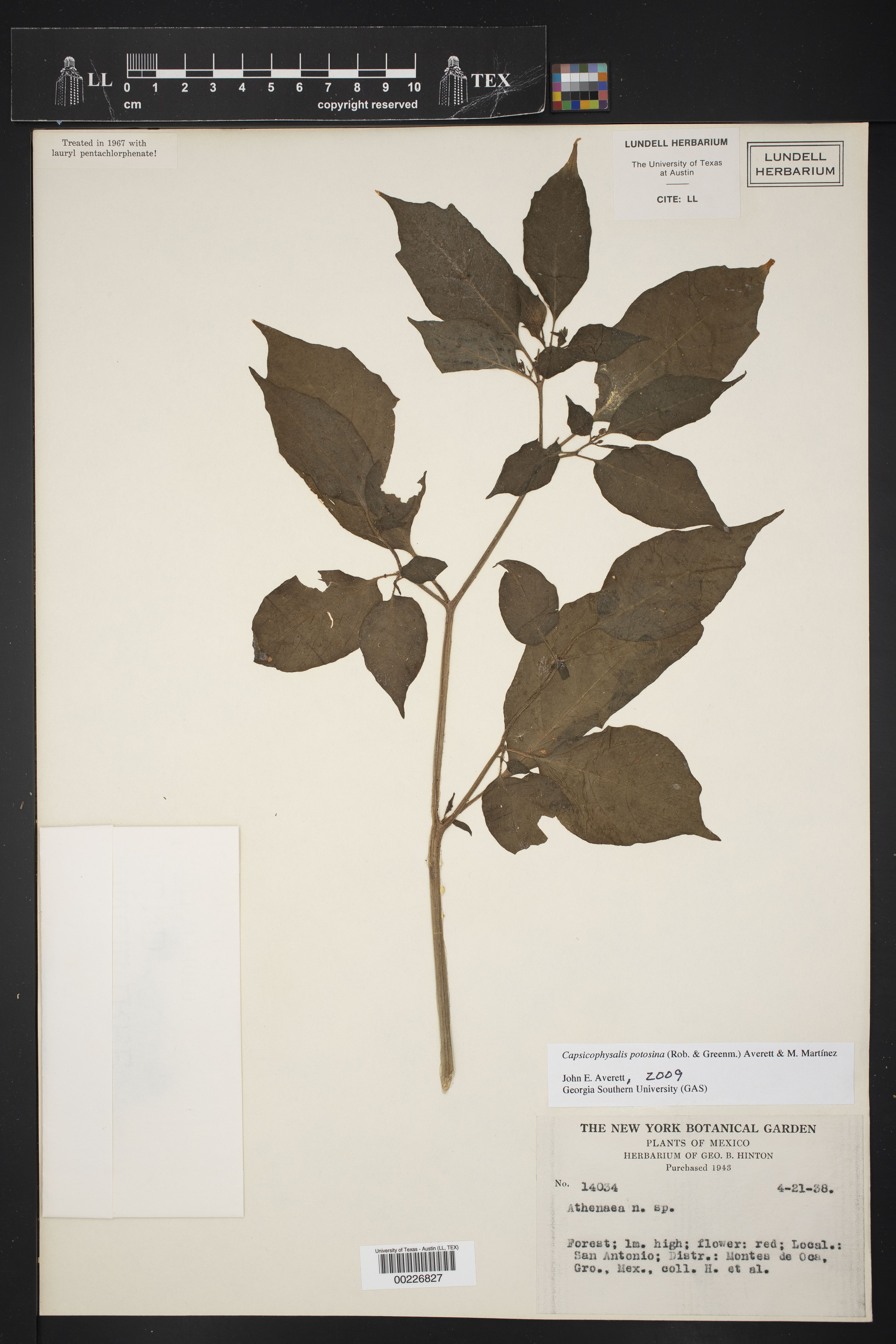
Specimen image via iDigBio · CC0
Jaltomata
Sign in to saveJaltomata is a genus of plants in the family Solanaceae. According to molecular phylogenies, Jaltomata is the sister genus to Solanum, which includes tomato, potato, and eggplant. Jaltomata has a neotropical distribution, in that species occur from the United States southwest through Latin America, and into the Andean region of South America. Species encompass a wide range of vegetative and reproductive trait variation, including growth habit (trailing herbs, erect herbs, and woody shrubs), floral size, shape and color, as well as fruit size and color. The fruits of some of the species are eat
Species
GENUS
- KingdomPlantae
- PhylumTracheophyta
- ClassMagnoliopsida
- OrderSolanales
- FamilySolanaceae
via GBIF · Kew POWO
Museum specimens
- Specimen records
- 507
- With media
- 162
- Family
- Solanaceae
- Collections
- GH, IIB-UV, INECOL, TEX, CIIDIR-IPN, IBUNAM
- Recorded in
- Mexico
Wikidata facts
- Instance of
- taxon
- Parent taxon
- Solanaceae
- Image
- Jaltomata procumbens flower.jpg
Show 7 more facts
- taxon rank
- genus
- taxon name
- Jaltomata
- Commons category
- Jaltomata
- Commons gallery
- Jaltomata
- taxon common name
- false holly
- topic's main category
- Category:Jaltomata
Sources (1)
via Wikidata · CC0
~3 min read
Encyclopedic overview
3 sectionsContents
- Etymology
- Species
- References
Jaltomata is a genus of plants in the family Solanaceae. According to molecular phylogenies, Jaltomata is the sister genus to Solanum, which includes tomato, potato, and eggplant. Jaltomata has a neotropical distribution, in that species occur from the United States southwest through Latin America, and into the Andean region of South America. Species encompass a wide range of vegetative and reproductive trait variation, including growth habit (trailing herbs, erect herbs, and woody shrubs), floral size, shape and color, as well as fruit size and color. The fruits of some of the species are eaten by humans in Latin and South America. Depending on the species, fruits may be red, green, orange, or dark purple.
==Etymology== The name comes from xāltomatl, lit. "sand tomato", the Nahuatl (Aztec) name for the species Jaltomata procumbens (earlier Saracha jaltomata). The Nahuatl X is pronounced like an English SH, but when borrowed into Mexican Spanish and spelled J, the pronunciation is like an English H. Both Mexican and US American botanists pronounce the J this way.
Excerpted from Wikipedia’s “Jaltomata” article, available under the CC BY-SA 4.0 licence.