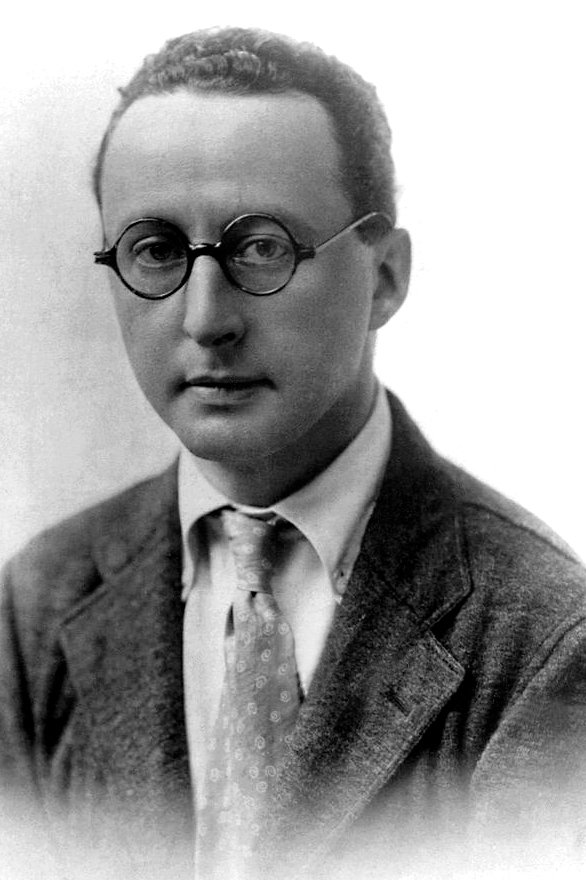
Profile via TMDB · Courtesy of TMDB
Jerome Kern
Sign in to saveAlso known as Jerome David Kern
American composer of musical theater and popular music (1885-1945)
OverviewAI-generated
Jerome David Kern was an American composer, songwriter, and film score composer. Born in Manhattan in 1885, he began his work period in 1902. Kern was educated at the Steinhardt School of Culture, Education, and Human Development and Heidelberg University. He was a member of the American Academy of Arts and Letters and wrote in the English language. His genres included song and musical works.
Kern received the Grammy Trustees Award and the Academy Award for Best Original Song. He was also nominated for an Academy Award for Best Original Song. His compositions appeared in the work *Till the Clouds Roll By*. Kern died in New York City in 1945 from a cerebral hemorrhage. He is buried at Ferncliff Cemetery.
Synthesized by Vinony from 29 facts across 5 sources: Wikidata, MusicBrainz, Last.fm, Europeana Sparql, TMDb. Generated from structured data (not the Wikipedia text) and checked against those facts — may still contain errors.
Film & TV
From Wikipedia, the free encyclopedia Jerome David Kern (January 27, 1885 – November 11, 1945) was an American composer of musical theatre and popular music. One of the most important American theatre composers of the early 20th century, he wrote more than 700 songs, used in over 100 stage works, including such classics as "Ol' Man River", "Can't Help Lovin' Dat Man", "A Fine Romance", "Smoke…
Known for
- An Intimate Dinner in Celebration of Warner Bros. Silver Jubilee — Self1930
via TMDB
Music · MusicBrainz
- Type
- Person
- Gender
- Male
- Country
- United States
- Active from
- 1885
- Active to
- 1945
Discography
via MusicBrainz · CC0
Listeners · Last.fm
- Listeners
- 25,819
- Total plays
- 100,226
Tags
Jerome Kern (1885-1945). Born in New York. American composer who grew to fame in the 1920's because of his contributions to musical theatre (Broadway). He moved to Hollywood in the mid-30s to work on film scores, but continued his association with Broadway. Some of his most charming songs were penned by P. G. Wodehouse. <a href="https://www.last.fm/music/Jerome+Kern">Read more on Last.fm</a>
Wikidata facts
- Instance of
- human
- Given name
- David
- Family name
- Kern
- Gender
- male
- Citizenship
- United States
- Place of birth
- Manhattan
- Place of death
- New York City
- Occupation
- screenwriter
- Languages spoken
- English language
- Field of work
- film score
- Genre
- musical
- Image
- Jerome-Kern-1934-Stage.jpg
Show 17 more facts
- place of burial
- Ferncliff Cemetery
- Commons category
- Jerome Kern
- date of birth
- 1885-01-27
- date of death
- 1945-11-11
- member of
- American Academy of Arts and Letters
- nominated for
- Academy Award for Best Original Song
- cause of death
- cerebral hemorrhage
- name in native language
- Jerome David Kern
- writing language
- English language
- start of work period
- 1902-00-00
- present in work
- Till the Clouds Roll By
- copyright representative
- American Society of Composers, Authors and Publishers
- related category
- Category:Songs with music by Jerome Kern
- partner in business or sport
- Dorothy Fields
- P8168
- Mrčići
- Commons Creator page
- Jerome Kern
- manner of death
- natural causes
Sources (7)
via Wikidata · CC0
Works in European collections
6 objects attributed to Jerome Kern, held across European museums, libraries & archives · via Europeana


~37 min read
Encyclopedic overview
Jerome Kern in 1934 Jerome David Kern (January 27, 1885 – November 11, 1945) was an American composer of musical theatre and popular music. One of the most important American theatre composers of the early 20th century, he wrote more than 700 songs, used in over 100 stage works, including such classics as "Ol' Man River", "Can't Help Lovin' Dat Man", "A Fine Romance", "Smoke Gets in Your Eyes", "The Song Is You", "All the Things You Are", "The Way You Look Tonight" and "Long Ago (and Far Away)". He collaborated with many of the leading librettists and lyricists of his era, including George Grossmith Jr., Guy Bolton, P. G. Wodehouse, Otto Harbach, Oscar Hammerstein II, Dorothy Fields, Johnny Mercer, Ira Gershwin and Yip Harburg.
A native New Yorker, Kern created dozens of Broadway musicals and Hollywood films in a career that lasted for more than four decades. His musical innovations, such as 4/4 dance rhythms and the employment of syncopation and jazz progressions, built on, rather than rejected, earlier musical theatre tradition. He and his collaborators also employed his melodies to further the action or develop characterization to a greater extent than in the other musicals of his day, creating the model for later musicals. Although dozens of Kern's musicals and musical films were hits, only Show Boat is now regularly revived. Songs from his other shows, however, are still frequently performed and adapted. Many of Kern's songs have been adapted by jazz musicians to become standard tunes.
Excerpted from Wikipedia’s “Jerome Kern” article, available under the CC BY-SA 4.0 licence.