
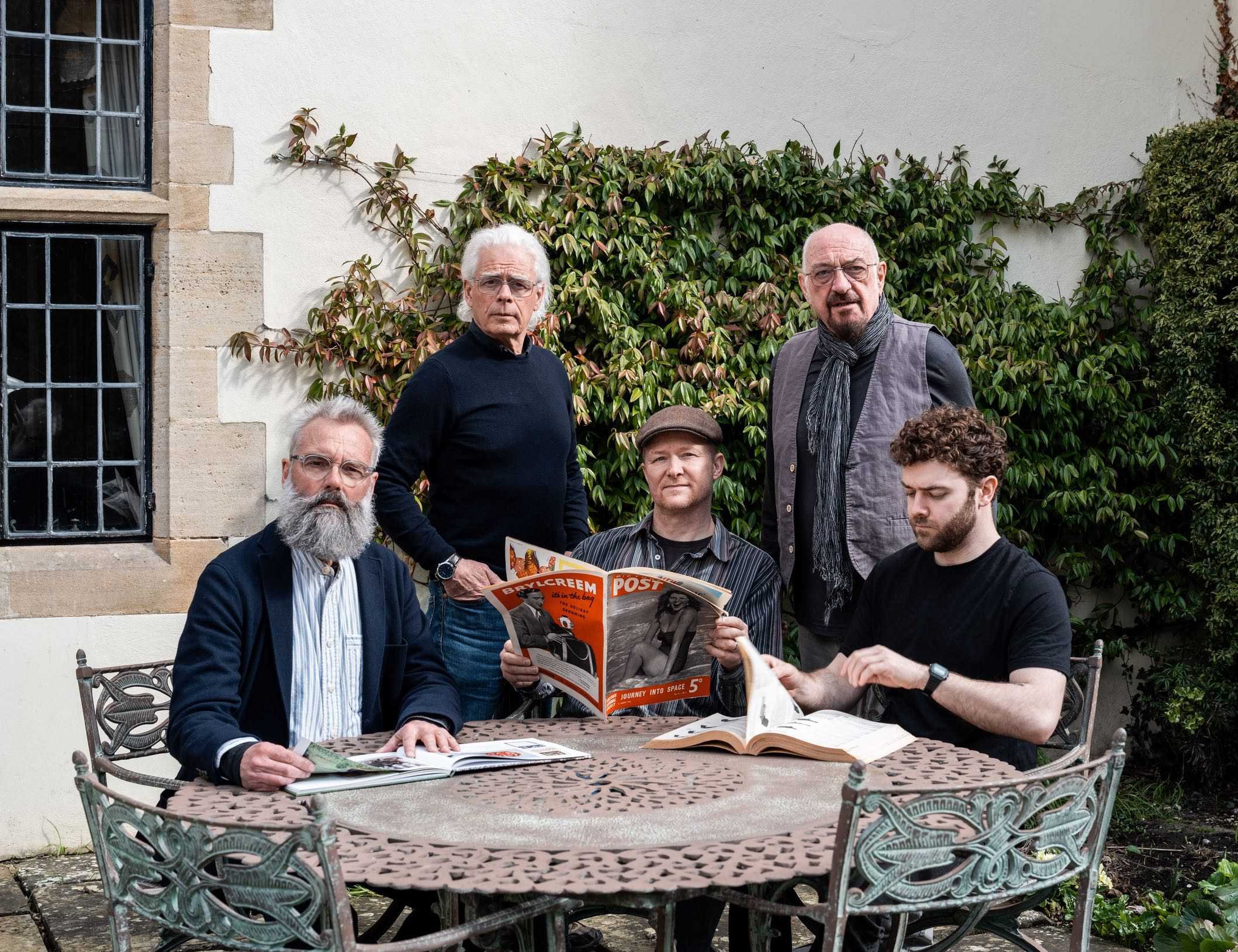
File:Jethro_Tull_070373_003.jpg · Wikimedia Commons · See Wikimedia Commons
Jethro Tull is a British rock band known for blending rock music with folk and classical elements, fronted by flautist Ian Anderson. The band, active since the late 1960s, became influential in the development of progressive rock and remains significant in music history for their innovative approach to rock instrumentation and composition.
AI-generated from the Wikipedia summary — may contain errors.
Official website
Jethro Tull - The Official Website of the Legendary Classic Rock Band
The official website of Jethro Tull/Ian Anderson, featuring latest news, tour dates, an in-depth discography, archive content and much more!
jethrotull.com →Link to the official site · 13,059 chars · not written by Vinony
Wikidata facts
- Instance of
- rock band
- Has part
- Clive Bunker
- Named after
- Jethro Tull
- Chairperson
- Ian Anderson
- Genre
- electronic music
- Country of origin
- United Kingdom
- Instrument
- ARP Odyssey
- Record label
- EMI
- Discography
- Jethro Tull discography
- Official website
- jethrotull.com
- Image
- Ian Anderson and Martin Barre 2006.jpg
Show 11 more facts
- Commons category
- Jethro Tull
- inception
- 1967-12-01
- Commons gallery
- Jethro Tull
- topic's main category
- Category:Jethro Tull (band)
- location of formation
- Luton
- topic has template
- Template:Jethro Tull
- member category
- Category:Jethro Tull (band) members
- start of work period
- 1967-00-00
- different from
- Jethro Tull
- social media followers
- 52562
- native label
- Jethro Tull
via Wikidata · CC0
~40 min read
Encyclopedic overview
Jethro Tull are a British rock band formed in Blackpool, Lancashire, in 1967. Emerging from the 1960s British blues scene, the band soon developed a distinctive progressive rock sound, blending hard rock, English folk music and classical music, while undergoing numerous stylistic shifts throughout its history. The band was founded and has been continuously led by Ian Anderson, its principal composer, lead vocalist and a multi-instrumentalist best known for his flute playing. The group has featured a succession of musicians throughout its history, including significant contributors such as long-time guitarist Martin Barre, bassists Glenn Cornick, Jeffrey Hammond, John Glascock and Dave Pegg; drummers Clive Bunker, Barrie "Barriemore" Barlow and Doane Perry; and keyboardists John Evan, Dee Palmer and Peter-John Vettese.
After gaining attention on the London club circuit, Jethro Tull released their debut album This Was in 1968. After a key line-up change which saw original guitarist Mick Abrahams replaced by Barre, the band achieved their first major success the following year with their folk-influenced second album Stand Up, which reached No. 1 in the UK. Aqualung (1971) marked the band's international breakthrough and became their most commercially successful album, while subsequent releases such as Thick as a Brick (1972) fully established their progressive rock identity. Throughout the 1970s the band maintained an intense schedule of touring and recording, releasing one studio album every year and expanding their musical scope through concept albums and increasingly complex arrangements. In the late 1970s the band shifted towards folk rock, before a major line-up change led to a period influenced by electronic rock in the early 1980s. The band returned to a hard rock sound with Crest of a Knave (1987), which earned them their only Grammy Award, and explored world music influences in the 1990s. Jethro Tull have sold an estimated 60 million albums worldwide, with 11 gold and 5 platinum albums. They have been described by Rolling Stone as "one of the most commercially successful and eccentric progressive rock bands."
Excerpted from Wikipedia’s “Jethro Tull” article, available under the CC BY-SA 4.0 licence.