
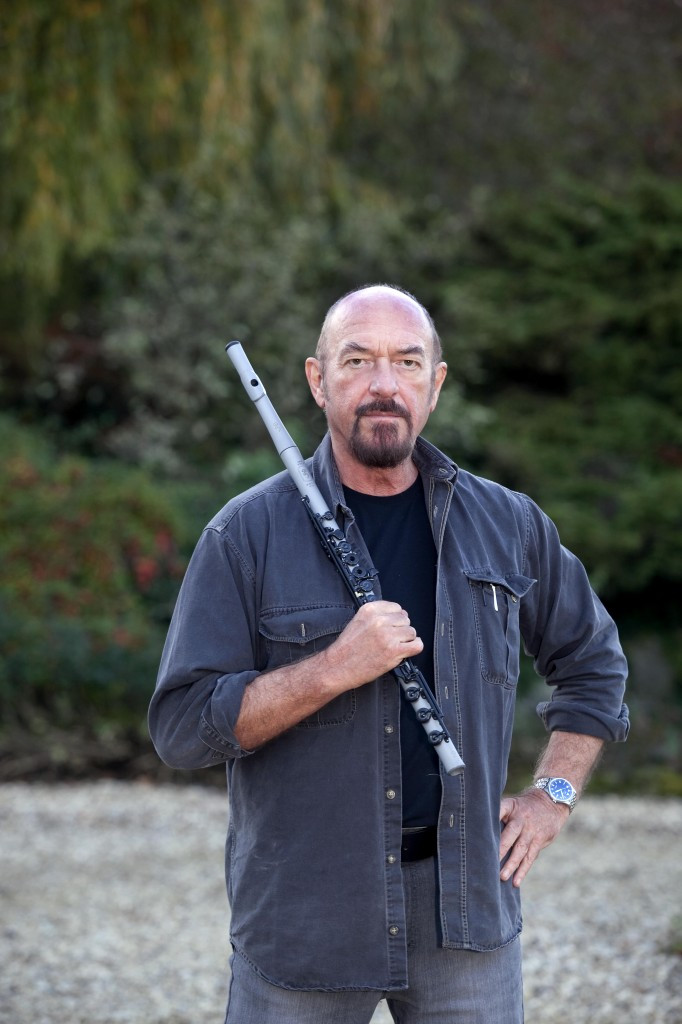
File:Ian_Anderson_-_Jethro_Tull_live_in_Cambridge_23rd_April_2024_(53688414617).jpg · Wikimedia Commons · See Wikimedia Commons
OverviewAI-generated
Ian Scott Anderson is a British composer, singer, guitarist, and flautist born in Dunfermline in 1947. He is a member of the rock music group Jethro Tull and has performed using instruments including the guitar, transverse flute, recorder, and his baritone voice. His musical styles encompass rock, progressive rock, folk, folk rock, pop rock, and acoustic rock.
Anderson began his work period in 1962 and has been associated with record labels such as Chrysalis Records and Island Records. He is a Member of the Order of the British Empire and is represented by PRS for Music. He speaks and writes in English. Anderson has been diagnosed with chronic obstructive pulmonary disease.
Synthesized by Vinony from 31 facts across 4 sources: Wikidata, MusicBrainz, Last.fm, TMDb. Generated from structured data (not the Wikipedia text) and checked against those facts — may still contain errors.
Film & TV
Dunfermline, Fife, Scotland, UK
Ian Scott Anderson MBE (born 10 August 1947) is a British musician best known for being the chief vocalist, flautist, and acoustic guitarist of the British rock band Jethro Tull. He is a multi-instrumentalist who also plays harmonica, keyboard, bass guitar, bouzouki, balalaika, saxophone and a variety of whistles. His solo work began with Walk into Light in 1983; since then he has released…
Known for
- Jethro Tull: Under Wraps (The Unwrapped Edition)2026
- Jethro Tull: The Christmas Album Fresh Snow at Christmas2024
- A World Without Beethoven? — Self2020
- ManDoki Soulmates: Wings Of Freedom — Self2019
- Melody Makers2019
- Jethro Tull: Stormwatch (40th Anniversary Force 10 Edition) — Himself2019
- Jethro Tull: This Was (50th Anniversary Edition) — Himself2018
- Back Beat — Himself2016
- Jethro Tull: Too Old to Rock'n'Roll, Too Young To Die! (The TV Special Edition) — Himself2015
- The Ritchie Blackmore Story — Self2015
via TMDB
Music · MusicBrainz
- Type
- Person
- Gender
- Male
- Origin
- United Kingdom
- Active from
- 1947
Discography
Member of
via MusicBrainz · CC0
Listeners · Last.fm
- Listeners
- 96,254
- Total plays
- 1,727,217
Tags
Ian Scott Anderson, MBE (b. 1947) is a Scottish singer, songwriter, and multi-instrumentalist, best known for his work as the leader and flautist of British rock band Jethro Tull. Anderson was born on 10th August 1947, the youngest of three children. He spent the first part of his childhood in Edinburgh, Scotland. He was influenced by his father's big band and jazz records and the emergence of rock music, though disenchanted with the "show biz" style of early American rock and roll stars like E
Key facts
- Born
- Ian Scott Anderson , ( 1947-08-10 ) 10 August 1947 (age 78) , Dunfermline , Scotland
- Origin
- Blackpool , Lancashire , England
- Genres
- Progressive rock folk rock hard rock blues rock
- Occupations
- Singer musician songwriter composer
- Instruments
- Vocals flute guitar
- Years active
- 1963–present
- Labels
- Chrysalis Fuel 2000 RandM Angel EMI
- Member of
- Jethro Tull
- Website
- iananderson .com
via Wikipedia infobox
Wikidata facts
- Instance of
- human
- Given name
- Scott
- Family name
- Anderson
- Gender
- male
- Citizenship
- United Kingdom
- Place of birth
- Dunfermline
- Occupation
- saxophonist
- Languages spoken
- English language
- Native language
- English language
- Genre
- rock music
- Instrument
- voice
- Record label
- Island Records
- Official website
- jethrotull.com
- Image
- Ian Anderson 2.jpg
- Voice type
- baritone
Show 9 more facts
- Commons category
- Ian Anderson
- date of birth
- 1947-08-10
- member of
- Jethro Tull
- start of work period
- 1962-00-00
- birth name
- Ian Scott Anderson
- name in native language
- Ian Anderson
- copyright representative
- PRS for Music
- social media followers
- 11500
- medical condition
- chronic obstructive pulmonary disease
via Wikidata · CC0
~20 min read
Encyclopedic overview
Ian Scott Anderson MBE (born 10 August 1947) is a British musician best known as the lead vocalist, flautist, and acoustic guitarist of the British rock band Jethro Tull, with whom he has been the only constant member since the band's founding in 1967. A multi-instrumentalist, Anderson also plays harmonica, mandolin, bouzouki, balalaika, saxophone and a variety of whistles.
Born in Dunfermline, Scotland to a Scottish father and English mother, Anderson was raised in Edinburgh before moving to Blackpool, England with his family at age 12. Anderson formed The Blades in 1963 while still in school, a soul and blues band that eventually evolved into Jethro Tull by 1967. Anderson initially played electric guitar, however soon abandoned the instrument in favour of the flute, which would become his signature instrument and a defining component of Jethro Tull's sound. Anderson developed an energetic stage presence, wearing a large overcoat during the band's early years and adopting a signature pose in which he plays the flute while standing on one leg. Beginning with Jethro Tull's second studio album, Stand Up (1969), Anderson assumed increasing creative control, becoming the band's primary songwriter and guiding it through a series of stylistic shifts throughout its history, including into the progressive rock that the band would become known for.
Excerpted from Wikipedia’s “Ian Anderson” article, available under the CC BY-SA 4.0 licence.