John Lavery
Sign in to saveAlso known as Sir John Lavery, Sir Lavery, John R. H. Lavery, John Lavery (Sir), J. Lavery, Lavery, John, Sir Lavery, John R.H. Lavery
Irish artist (1856-1941)
Person · Open Library
- Born
- 1949
- Died
- *
- Works
- 6
Top works
- Sandra Beck
- Food from algae
- The labour of language; a critical commentary on the poetry of Seamus Heaney
- The sense of place in modern Ulster poetry
- Very good butter
via Open Library + Wikidata
Listeners · Last.fm
- Listeners
- 3
- Total plays
- 99
<a href="https://www.last.fm/music/John+Lavery">Read more on Last.fm</a>
Described at
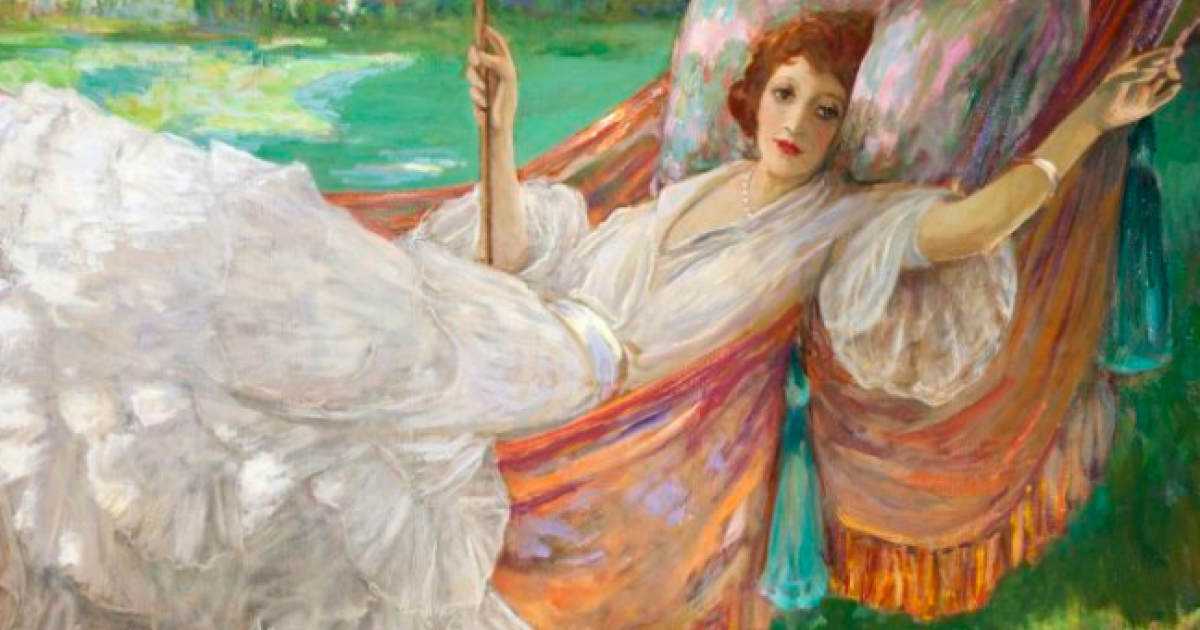
Sir John Lavery gave 34 of his paintings to the Belfast Museum and Art Gallery (now the Ulster Museum) when it opened. This much-loved collection includes some of his finest portraits, as well as work painted during his time in Morocco, Switzerland and America. Below is a window into Lavery’s world. Born in Belfast, Lavery was orphaned early in his life. He was sent to Scotland in 1866 and began his career in Glasgow, working in a photography studio and making art in his spare time. He progressed quickly as a painter and during the 1880s he visited Paris and the artists’ colony at Grez-sur-Loing, near Fontainebleau, where he painted several significant works. In 1929 he gave the Belfast Museum and Art Gallery (now the Ulster Museum) thirty-four paintings, for two reasons he said: ‘ one that I was born in Belfast, and the other that they had built a gallery there, but had no pictures to put in it’ . BELUM.Y.W.10.79.67 Sir John and Lady Lavery standing in front of the display of Lavery paintings in the Ulster Museum. Dated May 1929. He was a very diverse artist and painted a huge range of subject matter, from regal and society portraits to spontaneous images of the people he knew best, as well as landscapes and seascapes. Lavery perfected the oil sketch as a means of planning his compositions and during his frequent travels to North Africa, Switzerland and France he evolved subtle colour harmonies which show the influence of Whistler. Under the Cherry Tree was painted at Grez-sur-Loing, a small village on the river Loing, south of Fontainbleu, near Paris, where artists had gathered since the 1860s. Lavery worked there in 1883 and 1884 and it was during that time that he developed his new ‘plein-air’ style; working outside directly from nature. When first exhibited at the Glasgow Institute in 1885 this painting bore the title On the Loing: An Afternoon Cha t. Under the Cherry Tree is larger and more ambitious than any work Lavery had previously attempted. It is a youthful masterwork, heavily influenced by Bastien-Lepage and was intended to display the painterly techniques he had recently acquired through study in France. The composition of Under the Cherry Tree is divided into three distinct areas and Lavery employed a different technique in the painting of each, including the finely observed vegetation in the foreground and the misty rendition of bridge and foliage in the background. Late in the 1890s, Lavery returned to rural France and revisited Grez-sur-Loing, In The Bridge at Gres he used almost the same view as Under the Cherry Tree . The Bridge at Grès was painted quickly, almost in a single session, and is one of the finest examples of Lavery’s increasingly sophisticated landscape paintings. The horizon line is set high in the painting and the figures only sketchily observed. The real subject of the painting is the river surface, which recalls Monet’s fascination with the effects of light on water. Lavery often painted those he was closest to, and these two works show his much-loved daughter Eileen at two very different stages - in childhood, and with a child of her own. Eileen was Lavery’s only child, the daughter of his first wife, Kathleen, who died shortly after her daughter’s birth. In this sketch for a larger painting, Lavery concentrates on the subtle graduations of tone between white and grey of her gown and veil. Lavery was strongly influenced by fellow painter James Abbott McNeill Whistler, in particular his delicate and restrained colour harmonies. He kept in regular contact with Whistler from the time they met in 1887 and gave him considerable assistance when he formed the International Society of Sculptors, Painters and Gravers in 1897-8, acting as vice-president alongside Whistler as President. Whistler was, in fact, staying with Lavery when he painted Eileen, aged seven, on holiday from her convent boarding school. The influence of Whistler is also very apparent in the soft brushstrokes and tonal q
Excerpt from a page describing this subject · 20,628 chars · not written by Vinony
Wikidata facts
- Instance of
- human
- Given name
- John
- Gender
- male
- Citizenship
- Republic of Ireland
- Place of birth
- Belfast
- Place of death
- Kilkenny
- Spouse
- Hazel Lavery
- Occupation
- visual artist
- Educated at
- Académie Julian
- Languages spoken
- Irish
- Award
- Knight Bachelor
- Participant in
- 1924 Summer Olympics
- Field of work
- painting
- Genre
- portrait
- Image
- Unknown photographer - Portrait of Sir John Lavery (cropped).jpg
- Residence
- Belfast
Show 12 more facts
- described by source
- Encyclopædia Britannica 11th edition
- Commons Creator page
- John Lavery
- Commons category
- John Lavery
- date of birth
- 1856-03-20
- date of death
- 1941-01-10
- place of burial
- Putney Vale Cemetery
- name in native language
- John Lavery
- cause of death
- disease
- honorific prefix
- Sir
- manner of death
- natural causes
- described at URL
- www.ulstermuseum.org/stories/works-sir-john-lavery
- P12749
- Matthäus Merian
Sources (2)
via Wikidata · CC0
Works in European collections
2 objects attributed to John Lavery, held across European museums, libraries & archives · via Europeana
