John McAleese
Sign in to saveAlso known as John Thomas McAleese, Mac, John Mac
British SAS soldier (1949-2011)
Listeners · Last.fm
- Listeners
- 46
- Total plays
- 83
<a href="https://www.last.fm/music/John+McAleese">Read more on Last.fm</a>
Recent publications · Crossref
5 total works indexed
- Generalized Gradient Approximation Made Simple
· 1996 · cited 204,214x
- Highly accurate protein structure prediction with AlphaFold
· 2021 · cited 43,472x
- Gene Ontology: tool for the unification of biology
· 2000 · cited 36,863x
- Matplotlib: A 2D Graphics Environment
· 2007 · cited 35,503x
- The MOS 36-ltem Short-Form Health Survey (SF-36)
· 1992 · cited 29,110x
via Crossref · CC0
Described at
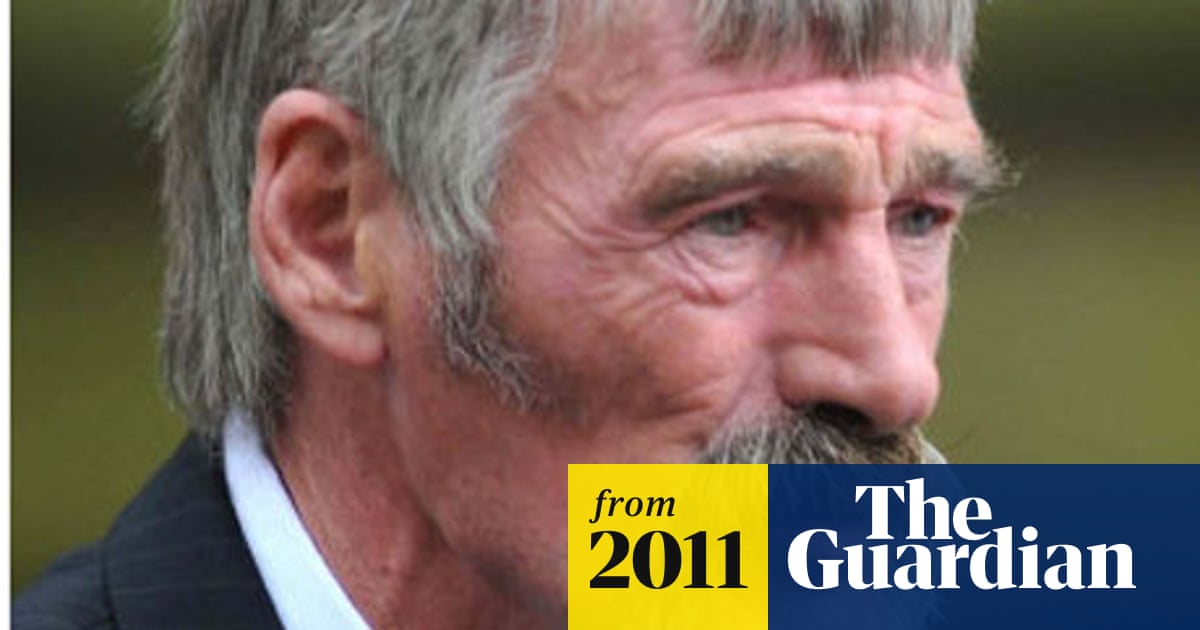
John McAleese obituary | Military | The Guardian
Leader of the SAS team that ended the 1980 Iranian embassy siege
theguardian.com →John McAleese, known to his comrades as 'John Mac', in 2009. Photograph: Barry Batchelor/PA John McAleese, known to his comrades as 'John Mac', in 2009. Photograph: Barry Batchelor/PA John McAleese was the first man in when the SAS stormed the Iranian embassy in London in May 1980, live on television, putting an end to six days of tension in which the building was held by terrorists who had taken hostages. Millions of viewers watched as McAleese, in black overalls, balaclava and gas mask, carrying a submachine gun and grenades, slid down a rope to a balcony and blew in a window with a small charge. Stun grenades and CS gas canisters followed. McAleese, who has died aged 62, apparently of a heart attack in his sleep, led one of two teams, "red" and "blue", of four troopers each, blue (his team) at the front, red at the back of the white mansion in Princes Gate, South Kensington. They had gathered first on the roof. The blue team, whose role was intended as a diversion from the main attack by red, burst into a large room which turned out to be empty, but the noise gave the terrorists enough time to start shooting. The drama had begun on 30 April when six men, armed with submachine guns, pistols and grenades, walked through the front door of the embassy and rounded up the 26 people, staff and visitors, in the building at the time as hostages. Their cause was self-determination for "Arabistan", an area in the province of Khuzestan in western Iran, bordering on Iraq. The Iranians were not interested in self-determination for an alien enclave formed by Iraqis who had come over the border. The cause was all but unknown outside the region, and if the assault on the embassy in faraway London was intended as "propaganda of the deed", it was a failure because it was overshadowed by the way it was brought to an end. The raid lasted 17 minutes and the storming just seven minutes, but "Operation Nimrod" had been meticulously prepared for five days. An ex-SAS man working at Scotland Yard had tipped off SAS headquarters in Hereford when the terrorists first struck. Planning began even before the government had thought of calling in the regiment. Later in the preparatory stages, an SAS soldier quietly paid a call to the headquarters of the Royal School of Needlework, then a few doors along from the embassy, because their five-storey, 56-room building, with its huge pillared portico, had exactly the same layout inside and out as the embassy at No 16. Commercial aircraft were asked to fly much lower than usual over the area to mask the noise made by drills used to insert listening and viewing devices in the walls and by the troopers as they took up positions on the roof. The home secretary, William Whitelaw, decided to give the SAS the go-ahead when the terrorists shot an embassy press attache and threw his body out of the building. The troopers took advantage of a domed skylight in the roof which they opened in order to lower a "distraction charge" that was detonated as McAleese made his move on the first-floor balcony at the front. The terrorists' leader was on the telephone to a police negotiator when the SAS struck. The result of the explosions was total disorientation among the terrorists (and the hostages) as the SAS men rampaged through the first floor. Although they had studied images of those in the building so as to distinguish victims from hostage-takers, the troopers had some luck in managing to shoot only terrorists, who themselves killed a single hostage before they were overwhelmed. The one terrorist who survived served 28 years in prison. McAleese, known to his comrades as John Mac, was born at Laurieston, Stirlingshire, and served in the Royal Engineers for six years before qualifying for the SAS, where he spent 17 years. He was awarded the Military Medal in 1988 for service in Northern Ireland. He also worked as a bodyguard for three prime ministers, and on leaving the army with the rank of sergeant he went into priva
Excerpt from a page describing this subject · 6,310 chars · not written by Vinony
Wikidata facts
- Instance of
- human
- Given name
- John
- Gender
- male
- Citizenship
- United Kingdom
- Place of birth
- Stirling
- Place of death
- Thessaloniki
- Occupation
- soldier
- Languages spoken
- English language
- Award
- Military Medal
- Participant in
- Iranian Embassy Siege
- Conflict
- The Troubles
- Military branch
- British Army
- Military rank
- master sergeant
Show 6 more facts
- date of birth
- 1949-04-25
- date of death
- 2011-08-26
- cause of death
- myocardial infarction
- nickname
- Mac
- described at URL
- www.theguardian.com/uk/2011/aug/31/john-mcaleese-obituary
- manner of death
- natural causes
Sources (1)
via Wikidata · CC0