
File:Odori_Keiyō_Edo-e_no_sakae_by_Toyokuni_III.jpg · Wikimedia Commons · See Wikimedia Commons
kabuki
Sign in to saveAlso known as kabuki theatre
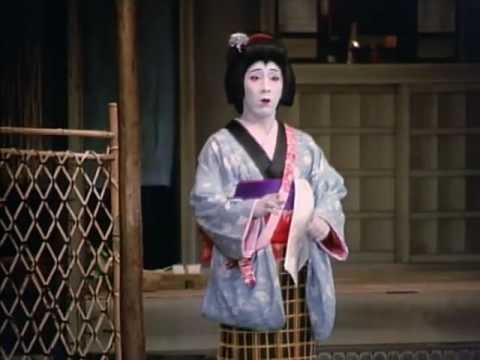
thumb|The July 1858 production of at the Ichimura-za theater theatre in Edo. [[Triptych woodblock print by Utagawa Toyokuni III.|383x383px]] alt=|thumb|Onoe Kikugorō VI as Umeō-maru in |279x279px is a classical form of Japanese theatre, mixing dramatic performance with traditional dance. Kabuki theatre is known for its heavily stylised performances, its glamorous, highly decorated costumes, and for the elaborate make-up worn by some of its performers.
Kabuki is a classical form of Japanese theatre that combines dramatic performance with traditional dance, distinguished by its highly stylized performances, elaborate costumes, and decorative makeup worn by performers. It has been an important part of Japanese cultural tradition, as evidenced by its presence in major theatres and its documentation in historical artwork dating back centuries.
AI-generated from the Wikipedia summary — may contain errors.
Described at
Kabuki theatre - UNESCO Intangible Cultural Heritage
ich.unesco.org →Kabuki is a Japanese traditional theatre form, which originated in the Edo period at the beginning of the seventeenth century and was particularly popular among townspeople. Originally, both men and women acted in Kabuki plays, but eventually only male actors performed the plays: a tradition that has remained to the present day. Male actors specialized in women’s roles are called onnagata. Two other major role types are aragoto (rough style) and wagoto (soft style). Kabuki plays are about historical events and moral conflict in relationships of the heart. The actors speak in a monotone voice and are accompanied by traditional instruments. The Kabuki stage is equipped with several gadgets, such as revolving stages and trapdoors through which the actors can appear and disappear. Another speciality of the Kabuki stage is a footbridge (hanamichi) that extends into the audience. Important characteristics of Kabuki theatre include its particular music, costumes, stage devices and props as well as specific plays, language and acting styles, such as the mie, in which the actor holds a characteristic pose to establish his character. Keshÿ, the particular make-up, provides an element of style easily recognizable even by those unfamiliar with the art form. After 1868, when Japan opened to Western influence, actors strove to heighten the reputation of Kabuki among the upper classes and to adapt the traditional styles to modern tastes. Today, Kabuki is the most popular of the traditional styles of Japanese drama.
Excerpt from a page describing this subject · 8,163 chars · not written by Vinony
Wikidata facts
- Instance of
- theatrical genre
- Subclass of
- theatre of Japan
- Named after
- kabukimono
- Country
- Japan
- Founded by
- Izumo no Okuni
- Country of origin
- Japan
- Image
- Morita-za in the 1790s.jpg
Show 9 more facts
- Commons category
- Kabuki
- topic's main category
- Category:Kabuki
- different from
- noh
- inception
- 1603-00-00
- intangible cultural heritage status
- Masterpieces of the Oral and Intangible Heritage of Humanity
- described at URL
- ich.unesco.org/es/RL/00163
- on focus list of Wikimedia project
- Wikipedia:Vital articles/Level/4
- native label
- 歌舞伎
via Wikidata · CC0
~39 min read
Encyclopedic overview
25 sectionsContents
- Etymology
- History
- 1603–1629: Kabuki
- 1629–1673: Transition to {{transliteration|ja|yarō-kabuki}}
- 1673–1841: Genroku period kabuki
- 1842–1868: {{transliteration|ja|Saruwaka-chō}} kabuki
- Post-Meiji period kabuki
- Post-war to modern day kabuki
- Super Kabuki
- Elements
- Stage design
- Appearances
- Performance
- Dance
- Music
- Play structure and performance style
- Famous plays
- Actors
- Major theatres
- Influence of kabuki on other art forms
- See also
- Notes
- References
- Further reading
- External links
thumb|The July 1858 production of at the Ichimura-za theater theatre in Edo. [[Triptych woodblock print by Utagawa Toyokuni III.|383x383px]] alt=|thumb|Onoe Kikugorō VI as Umeō-maru in |279x279px is a classical form of Japanese theatre, mixing dramatic performance with traditional dance. Kabuki theatre is known for its heavily stylised performances, its glamorous, highly decorated costumes, and for the elaborate make-up worn by some of its performers.
Kabuki is thought to have originated in the early Edo period, when the art's founder, Izumo no Okuni, formed a female dance troupe that performed dances and light sketches in Kyoto. The art form later developed into its present all-male theatrical form after women were banned from performing in kabuki theatre in 1629. Kabuki developed throughout the late 17th century and reached its zenith in the mid-18th century.
Excerpted from Wikipedia’s “kabuki” article, available under the CC BY-SA 4.0 licence.
Gallery (44)
Available in 72 languages
- Español
- Français
- Deutsch
- 中文
- 日本語
- Русский
- Português
- Italiano
- العربية
- हिन्दी
- Albanian
- Armenian
- Asturian
- Azerbaijani
- Bahasa Indonesia
- Bangla
- Bashkir
- Basque
Show 53 more
- be_x_old
- Belarusian
- Bikol
- Bosnian
- Bulgarian
- Catalan
- Chuvash
- Croatian
- Czech
- Esperanto
- Estonian
- Finnish
- Galician
- Georgian
- Greek
- Hebrew
- Hungarian
- Irish
- Kazakh
- Kyrgyz
- Latin
- Latvian
- Lithuanian
- Macedonian
- Malay
- Malayalam
- Marathi
- Mingrelian
- Mongolian
- Nederlands
- Norwegian
- Norwegian Nynorsk
- Polski
- Punjabi
- Romanian
- Serbian
- Serbian (Latin)
- simple
- Sinhala
- Slovenian
- Sundanese
- Svenska
- Tamil
- Tiếng Việt
- Türkçe
- Ukrainian
- Uzbek
- Welsh
- Wu Chinese
- zh_yue
- فارسی
- ไทย
- 한국어
via Wikidata sitelinks · CC0