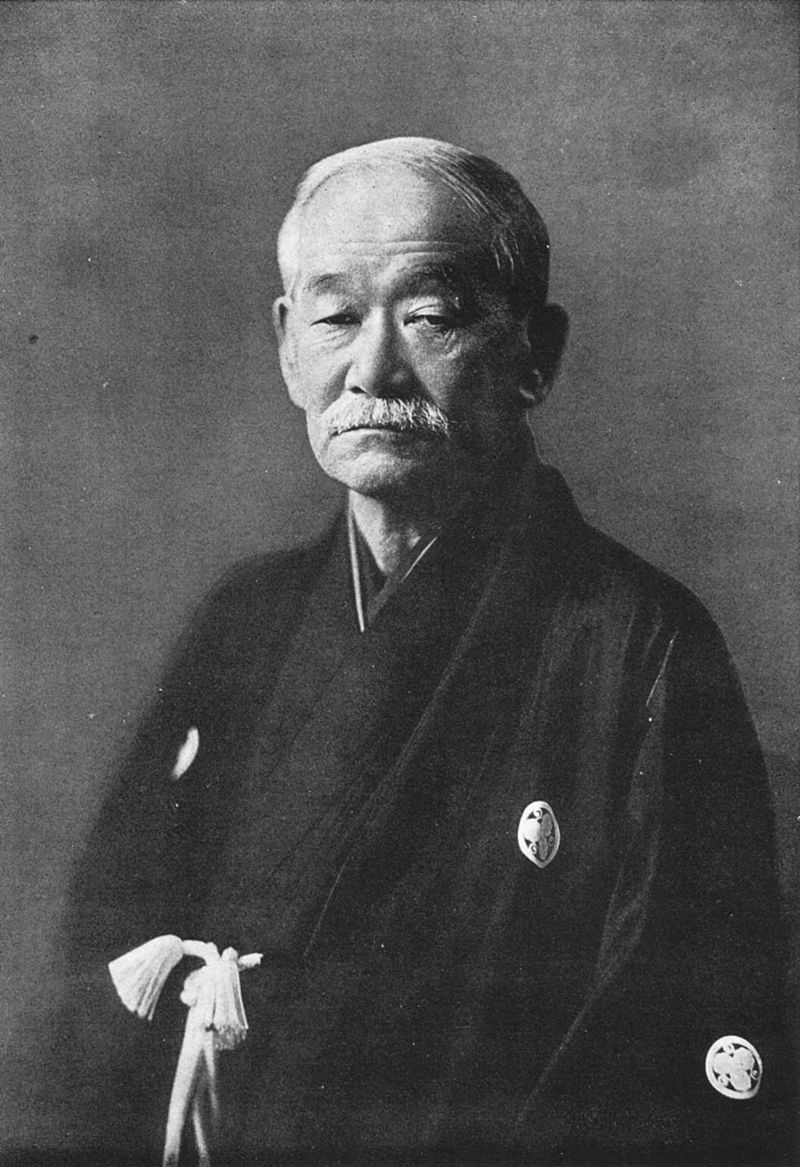
File:Portrait_of_late_Mr._Kano.jpg · Wikimedia Commons · See Wikimedia Commons
Kanō Jigorō
Sign in to saveAlso known as Kano Jigoro, Jigorō Kanō, Jigoro Kano
Japanese educator and judoka (1860–1938)
Kanō Jigorō was a Japanese educator and martial artist who lived from 1860 to 1938 and founded judo as a modern sport and educational system. He is important because he transformed traditional wrestling techniques into a systematized discipline that became an Olympic sport and influenced physical education worldwide.
AI-generated from the Wikipedia summary — may contain errors.
Wikidata facts
- Instance of
- human
- Gender
- male
- Citizenship
- Japan
- Place of birth
- Kobe
- Occupation
- politician
- Languages spoken
- English language
- Sport
- judo
- Image
- Kano Jigoro, director of the Tokyo Higher Normal School.jpg
- Number of children
- 9
Show 12 more facts
- Commons category
- Kanō Jigorō
- date of death
- 1938-05-04
- cause of death
- pneumonia
- student
- Kenji Tomiki
- manner of death
- natural causes
- Commons gallery
- Kano Jigoro
- name in kana
- かのう じごろう
- name in native language
- 嘉納 治五郎
- art name
- 帰一斎
- writing language
- Japanese
- date of birth
- 1860-12-10
- sports discipline competed in
- judo
via Wikidata · CC0
~40 min read
Encyclopedic overview
Kanō Jigorō (嘉納 治五郎; 10 December 1860 – 4 May 1938) was a Japanese judoka, educator, politician, and the founder of judo. Judo was one of the first Japanese martial arts to gain widespread international recognition, and the first to become an official Olympic sport since 1964 (for men) and 1992 (for women), as well as the Commonwealth Games sport in 1990. Pedagogical innovations attributed to Kanō include the use of black and white belts, and the introduction of dan ranking to show the relative ranking among members of a martial-art-style. Well-known mottoes attributed to Kanō include "maximum efficiency minimal effort" (精力善用, seiryoku zen'yō) and "mutual welfare and benefit" (自他共栄, jita kyōei).
In his professional life, Kanō was an educator and a promoter of multiple sports in Japan, including swimming, athletics, weightlifting and other forms of physical education. Aside from judo, he is considered by some to be the originator of modern strength training in Japan. He also helped Gichin Funakoshi and other masters to introduce and systematize karate in the country. He was also a high member of the Dai Nippon Butoku Kai martial arts organization, and played a key role in making judo and kendo part of the Japanese public school programs. His cousin Kenji Kanō, founder of one of the first western boxing clubs in Japan, was also influenced by him.
Excerpted from Wikipedia’s “Kanō Jigorō” article, available under the CC BY-SA 4.0 licence.