File:Kinsey_Scale.svg · Wikimedia Commons · See Wikimedia Commons
Kinsey scale
Sign in to saveAlso known as Heterosexual–Homosexual Rating Scale
social distribution of sexual orientation
Wikidata facts
- Instance of
- level of measurement
- Part of
- sexual orientation
- Named after
- Alfred Kinsey
- Developer
- Alfred Kinsey
- Image
- Kinsey Scale.svg
Show 3 more facts
- Commons category
- Kinsey scale
- published in
- Kinsey Reports
Sources (1)
via Wikidata · CC0
~13 min read
Encyclopedic overview
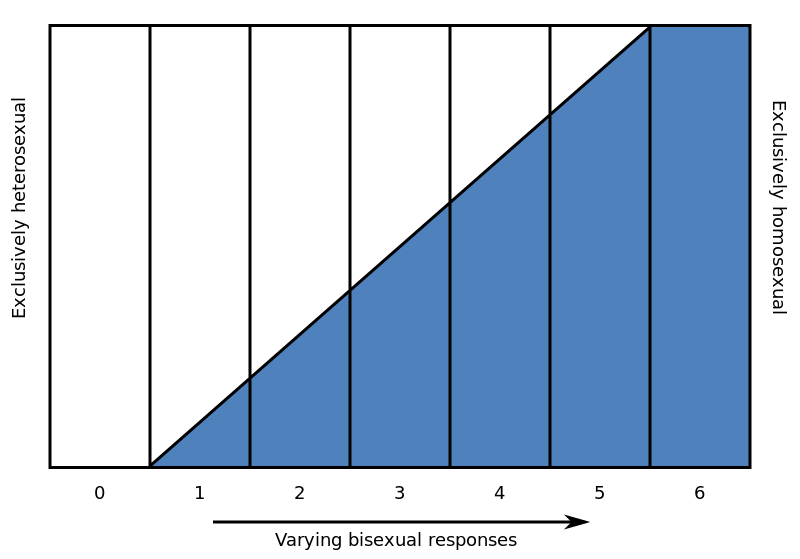
Kinsey scale of sexual responses, indicating degrees of sexual orientation
The Kinsey scale, also called the Heterosexual–Homosexual Rating Scale, is used in research to describe a person's sexual orientation based on one's experience or response at a given time. The scale typically ranges from 0, meaning exclusively heterosexual, to a 6, meaning exclusively homosexual. In both the male and female volumes of the Kinsey Reports, an additional grade, listed as "X", indicated "no socio-sexual contacts or reactions" (asexuality). The reports were first published in Sexual Behavior in the Human Male (1948) by Alfred Kinsey, Wardell Pomeroy, and others, and were also prominent in the complementary work Sexual Behavior in the Human Female (1953).
Excerpted from Wikipedia’s “Kinsey scale” article, available under the CC BY-SA 4.0 licence.