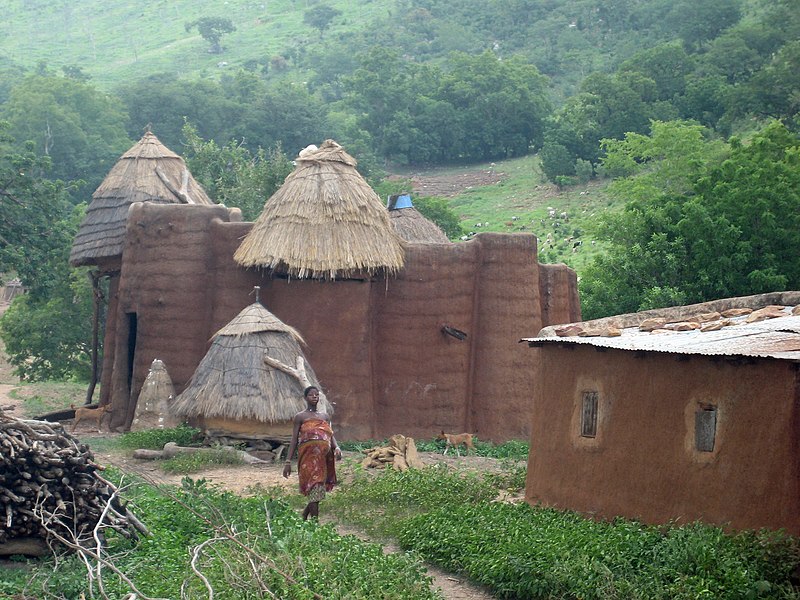
File:Togo_Taberma_house_02.jpg · Wikimedia Commons · See Wikimedia Commons
Koutammakou
Sign in to saveKoutammakou, the Land of the Batammariba () is a cultural landscape designated in 2004 as a UNESCO World Heritage Site at the border between northern Togo and Benin. The area features traditional mud tower-houses which remain the preferred style of living. The traditional mud houses are known as a national symbol of Togo. Many of the mud houses have two floors and some of them have flat roofs.
Key facts
- UNESCO World Heritage Site.image
- Togo Taberma house 02.jpg
- UNESCO World Heritage Site.image_upright
- 1.2
- UNESCO World Heritage Site.official_name
- Koutammakou, the Land of the Batammariba
- UNESCO World Heritage Site.location
- Kara Region, Togo / Atakora Department, Benin
- UNESCO World Heritage Site.criteria
- (vi), (v)
- UNESCO World Heritage Site.ID
- 1140
- UNESCO World Heritage Site.year
- 2004
- UNESCO World Heritage Site.WHS
- Koutammakou, the Land of the Batammariba
- UNESCO World Heritage Site.Extension
- 2023
via Wikipedia infobox
Described at
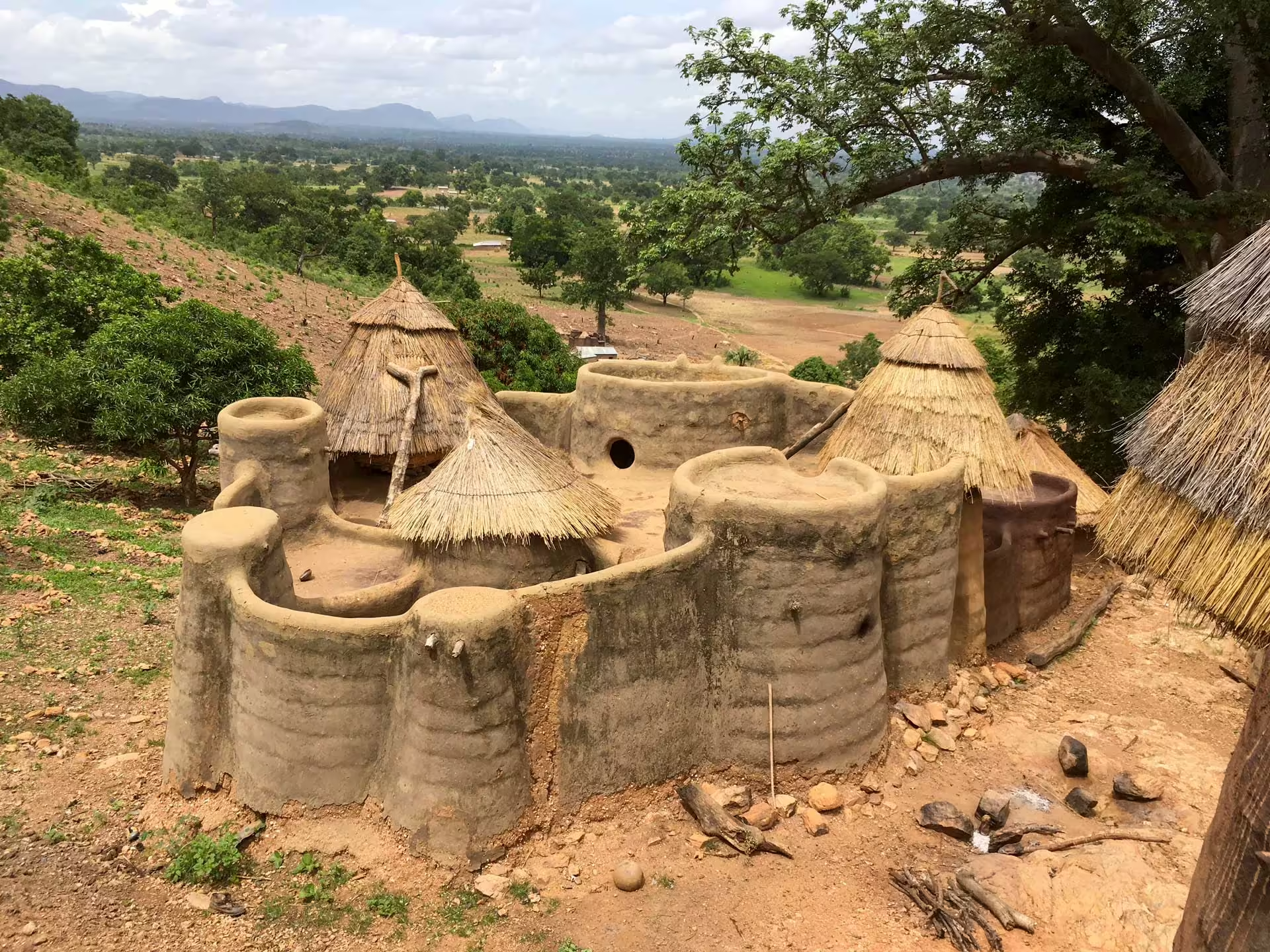
Koutammakou - Togo - PlaceMania
V oblasti Koutammakou sa zachovala tradičná architektúra kmeňa Batammariba s vežovými domami takienta.
placemania.sk →V Koutammakou, horskej oblasti na hraniciach s Togom a Beninom, ktorú UNESCO nazýva “živou krajinou kultúry”, sú v centre pozornosti tradičné stavebné zvyky kmeňa Batammariba. Tieto domy s hlinenými vežami, nazývané takienta, sú národným symbolom Toga a sú pevne zakorenené v silnej kultúrnej identite, ktorá bola kedysi ohrozovaná inými etnickými skupinami. Batammariba v hrubom preklade znamená “tí, ktorí sú skutočnými architektmi zeme”, čo dokazuje, aké kľúčové postavenie má budovanie týchto komunitných obydlí pre identitu kmeňa Batammariba. V priebehu rokov sa steny takienty spevňujú ďalšími vrstvami blata a omietky, a keď sa jedna z nich prestane používať, jej hlinené jadro sa zabuduje do novej stavby. Slamené strechy zvyčajne pokrývajú stavby takienta, ktoré sú postavené tak, aby udržali obyvateľov a potraviny v chlade pod horúcim koutammakouským slnkom. Približne osem takient tvorí spoločný sikien, plný dom osobitných stavieb. Jedna takienta môže slúžiť ako kuchyňa, ďalšie ako spálne a ďalšie ako sklad potravín a hospodárskych zvierat. Predkovia vraj obývajú tieto príbytky a chránia svojich žijúcich potomkov. Takienta sa dnes väčšinou používajú na skladovanie a uctievanie, ale v niektorých oblastiach Koutammakou sa stále používajú ako hlavné obydlia. Ľudia z kmeňa Batammariba majú bohaté animistické náboženstvo, ktoré uznáva rodinné aj kmeňové božstvá a prejavuje veľkú úctu k prírode. Táto viera sa prejavuje aj v prvkoch stavby takienty, ako je napríklad pravidlo, že hlavné dvere obydlia musia vždy smerovať na západ, čo symbolizuje západ slnka počas zimného slnovratu. Ľudia z kmeňa Batammariba žijú už stovky rokov v regióne Koutammakou, ktorý bol pred rozdelením Toga a Beninu koloniálnymi mocnosťami prostredníctvom hôr považovaný za jednu jednotnú oblasť. Togská strana je chránená ako svetové dedičstvo UNESCO, ale beninská strana nemá žiadnu oficiálnu ochranu. Zakladateľ projektu PlaceMania.sk a zodpovedá za jeho obsah, technické fungovanie a dlhodobý rozvoj. Cestovné zápisky na webe vychádzajú z vlastnej skúsenosti z ciest; faktografické záznamy o miestach vznikajú kombináciou verejných zdrojov, automatizovaného spracovania dát a redakčného overovania. Zameriava sa na netradičné lokality, ich historický a geografický kontext a menej známe súvislosti. Things to do near Koutammakou, Koutammakou, le pays des Batammariba, Коутаммакоу, كوتاماكو وطن باتاماريبا, クタマク, 古帕玛库, קוטמאקו, Zachovanie dedičstva, Dissani, Keran, Région de la Kara, Togolese Republic, République Togolaise, Togo, TG, TGO. Find tours, guided tours, local activities, attractions, tickets, excursions, sightseeing, day trips and travel experiences nearby. Coordinates: 10.0670679, 1.1349399. Skryté príbytky v útesoch severného Toga, ktoré využívali miestne kmene Moba na únik pred obchodníkmi s otrokmi v 18. storočí. Pozrite si ďalšie zaujímave miesta vo svete, ktoré stoja za naplánovanie ďalšej cesty. Skryté príbytky v útesoch severného Toga, ktoré využívali miestne kmene Moba na únik pred obchodníkmi s otrokmi v 18. storočí. Chcete vidieť ďalšie úchvatné miesta ako Koutammakou? Nájdeš ich u nás na mape. Objav s nami ďalšie úžasné miesta na zemi.
Excerpt from a page describing this subject · 14,460 chars · not written by Vinony
Wikidata facts
Show 3 more facts
- heritage designation
- World Heritage Site
- Commons category
- Koutammakou
- described at URL
- www.placemania.sk/svetova-zaujimavost/koutammakou
via Wikidata · CC0
~5 min read
Encyclopedic overview
4 sectionsContents
- History
- Bibliography
- References
- External links
Koutammakou, the Land of the Batammariba () is a cultural landscape designated in 2004 as a UNESCO World Heritage Site at the border between northern Togo and Benin. The area features traditional mud tower-houses which remain the preferred style of living. The traditional mud houses are known as a national symbol of Togo. Many of the mud houses have two floors and some of them have flat roofs.
In 2008, to complete the inscription of the site to World Heritage, the Department of Intangible Cultural Heritage (ICH) of UNESCO, headed by Rieks Smeets, set up the «Safeguarding of the Cultural Intangible Heritage of Batammariba», from the 2003 Convention. The goal was to promote sustainability in Intergenerational transmission and preservation of skills and knowledge in all the essential areas of their culture, such as : the manufacture of everyday and ceremonial objects, traditional healing and useful plants, takyentas construction, dance, music, archery, oral traditions, promotion of tourism respecting local traditions, mapping sacred areas, accumulation of data on the intangible cultural heritage and creation of access to it, recordings, films and photos…. Overall, teaching the ditammari, language of Batammariba in primary schools and education of youth in the intangible cultural heritage (distribution of textbooks).
Excerpted from Wikipedia’s “Koutammakou” article, available under the CC BY-SA 4.0 licence.
On the map
2 mapped locations