.jpg)
Kurentovanje
Sign in to saveKurentovanje is Slovenia's most popular and ethnologically significant carnival event first organised in 1960 by Drago Hasl and his associates from cultural and educational organizations. This 11-day rite of spring and fertility highlight event is celebrated on Shrove Sunday in Ptuj, the oldest documented city in the region, and draws around 100,000 participants in total each year. In 2016 proclaimed as the 7th largest carnival in the world by Lonely Planet.
Key facts
- Holiday.holiday_name
- Kurentovanje
- Holiday.nickname
- 5th season, Europe's greatest outdoor ethno carnival
- Holiday.image
- Ale%C5%A1_Kravos_Kurentovanje_Ptuj_2019.jpg
- Holiday.caption
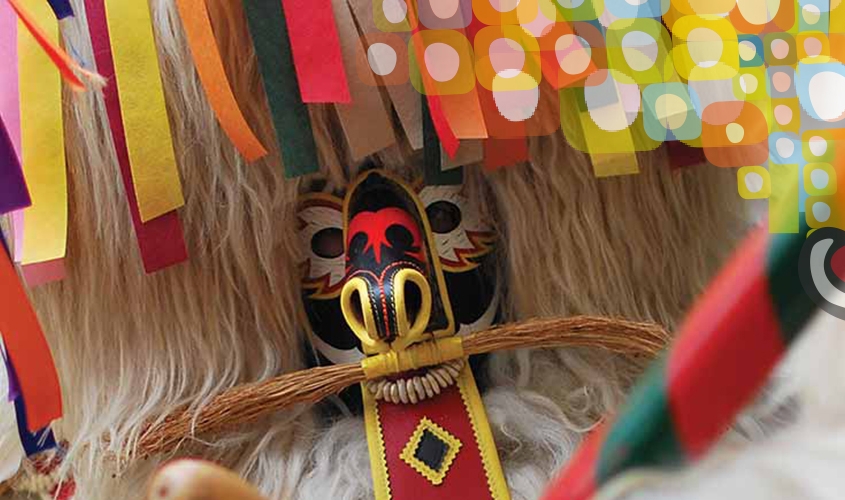
- Korant or Kurent
- Holiday.celebrations
- Parades, parties, open-air performances
- Holiday.longtype
- cultural
- Holiday.type
- christian
- Holiday.significance
- Celebration prior to fasting season of Lent.
- Holiday.relatedto
- Carnival, Ash Wednesday, Lent
- Holiday.begins
- 11 days before Ash Wednesday(57 days before Easter)
- Holiday.ends
- Shrove Tuesday(47 days before Easter)
- Holiday.duration
- 11 days
- Holiday.date{{CURRENTYEAR}}
- 3–13 February
- Holiday.date{{NEXTYEAR}}
- 6–16 February
- Holiday.date{{NEXTYEAR|2}}
- 19 February – 1 March
- Holiday.frequency
- annual
via Wikipedia infobox
Official website
Kurentovanje
kurentovanje.net →Link to the official site · 40,000 chars · not written by Vinony
Wikidata facts
- Instance of
- Slavic carnival
- Subclass of
- Slavic carnival
- Named after
- Kurent
- Country
- Slovenia
- Location
- Ptuj
- Official website
- kurentovanje.net
- Image
- Aleš Kravos Kurentovanje Ptuj 2019.jpg
Show 2 more facts
- Commons category
- Kurentovanje
- native label
- Kurentovanje
Sources (1)
via Wikidata · CC0
~18 min read
Encyclopedic overview
16 sectionsContents
- Festival origins
- The first "modern" version of the Kurentovanje festival
- Internationalization
- Extending the festival's program
- Indigenous characters
- ''Kurent'' or ''Korant'' - the main carnival figure
- Carnival parade list
- Traditional events
- Introduction
- Main events
- Accompanying events
- Princes of carnival
- Outside of Slovenia
- See also
- References
- External links
Kurentovanje is Slovenia's most popular and ethnologically significant carnival event first organised in 1960 by Drago Hasl and his associates from cultural and educational organizations. This 11-day rite of spring and fertility highlight event is celebrated on Shrove Sunday in Ptuj, the oldest documented city in the region, and draws around 100,000 participants in total each year. In 2016 proclaimed as the 7th largest carnival in the world by Lonely Planet.
Its main figure, known as Kurent or Korent, has been popularly (but incorrectly) reinterpreted as an extravagant god of unrestrained pleasure and hedonism in early Slavic customs. In today's festival, groups of kurents or kurenti wear traditional sheepskin garments while holding wooden clubs with hedgehog skins attached called ježevke, the noise of which is believed to "chase away winter". In this way, the presence of kurenti announces the end of winter and beginning of spring. Being a kurent was at first a privilege offered only to unmarried men, but today, married men, children and women are also invited to wear the outfit.
Excerpted from Wikipedia’s “Kurentovanje” article, available under the CC BY-SA 4.0 licence.