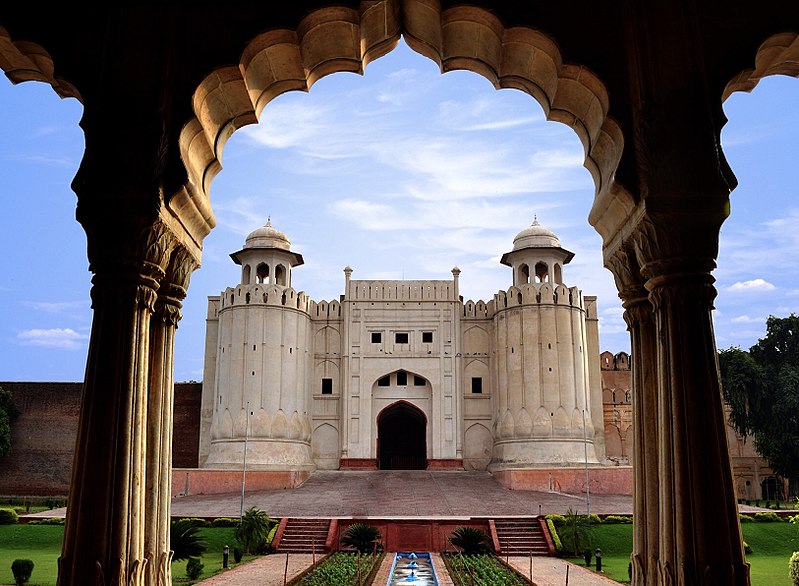
File:Lahore_Fort_view_from_Baradari.jpg · Wikimedia Commons · See Wikimedia Commons
Lahore Fort
Sign in to savecitadel in Lahore, Pakistan
Key facts
- Location
- Lahore , Punjab , Pakistan
- Built
- 1566 ; 460 years ago ( 1566 )
- Architectural styles
- Mughal , Indo-Islamic
- Owner
- Mughal Empire (1566–1752) Sikh Confederacy (1765–1799) Sikh Empire (1799–1849) British East India Company (1849–1858) British Empire (1858–1947) Federal Government of Pakistan (1947–present)
- Part of
- Fort and Shalamar Gardens in Lahore
- Criteria
- Cultural: i, ii, iii
- Reference
- 171-001
- Inscription
- 1981 (5th Session )
via Wikipedia infobox
Wikidata facts
Show 4 more facts
- native label
- قلعہ لاہور
- Commons category
- Lahore Fort
- topic's main category
- Category:Lahore Fort
- Commons gallery
- Lahore Fort
Sources (1)
via Wikidata · CC0
~29 min read
Encyclopedic overview
The Lahore Fort (Punjabi: شاہی قلعہ, romanised: Śā'ī Qilā; Urdu: شاہی قلعہ, romanised: Shahi Qilah; lit. 'Royal Fort') is a citadel in the walled interior of Lahore in Punjab, Pakistan. The fortress is located at the northern end of the Walled City and is spread over an area greater than 20 hectares (49 acres). It contains 21 notable monuments, some of which date to the era of Emperor Akbar. The Lahore Fort is notable for having been almost entirely rebuilt in the 17th century, when the Mughal Empire was at the height of its splendour and opulence.
Though the site of the present fort has been inhabited for millennia, the first record of a fortified structure at the site was that of an 11th-century mudbrick fort. The foundations of the modern fort was laid in 1566, during the reign of Emperor Akbar, in a syncretic architectural style that featured both Islamic and Hindu motifs. Additions from the Shah Jahan period are characterised by marble with inlaid Persian floral designs, while the fort's grand Alamgiri Gate was constructed by the last of the great Mughal emperors, Aurangzeb, and faces the Badshahi Mosque.
Excerpted from Wikipedia’s “Lahore Fort” article, available under the CC BY-SA 4.0 licence.