Encyclopedia of Life · EOL (see source)
Laniatores
Sign in to saveLaniatores is the largest suborder of the arachnid order Opiliones with over 4,200 described species worldwide. The majority of the species are highly dependent on humid environments and usually correlated with tropical and temperate forest habitats.
Species
Laniatores — самый многочисленный (по числу видов) подотряд сенокосцев, включающий свыше 4 000 видов, распространённых по всему миру (в монографии «Harvestmen: The Biology of Opiliones» 2007 года говорится о 4 000 видах, сгруппированных в 26 семейств). Большинство видов сосредоточено во влажных зонах, а именно в лесах тропиков и средней полосы. Самое большое семейство подотряда — Gonyleptidae (более 800 видов), эндемик неотропиков. Название Laniatores образовано от лат. laniator ‘мясник’. Первый вид, включаемый в данный подотряд, был описан в 1818 году (Gonyleptes horridus[es]).
via
Wikidata facts
Show 4 more facts
- taxon name
- Laniatores
- taxon rank
- suborder
- Commons category
- Laniatores
- taxon common name
- Armoured harvestmen
Sources (1)
via Wikidata · CC0
~2 min read
Encyclopedic overview
5 sectionsContents
- Identification
- Subtaxa
- Geographic distribution
- Footnotes
- References
Laniatores is the largest suborder of the arachnid order Opiliones with over 4,200 described species worldwide. The majority of the species are highly dependent on humid environments and usually correlated with tropical and temperate forest habitats.
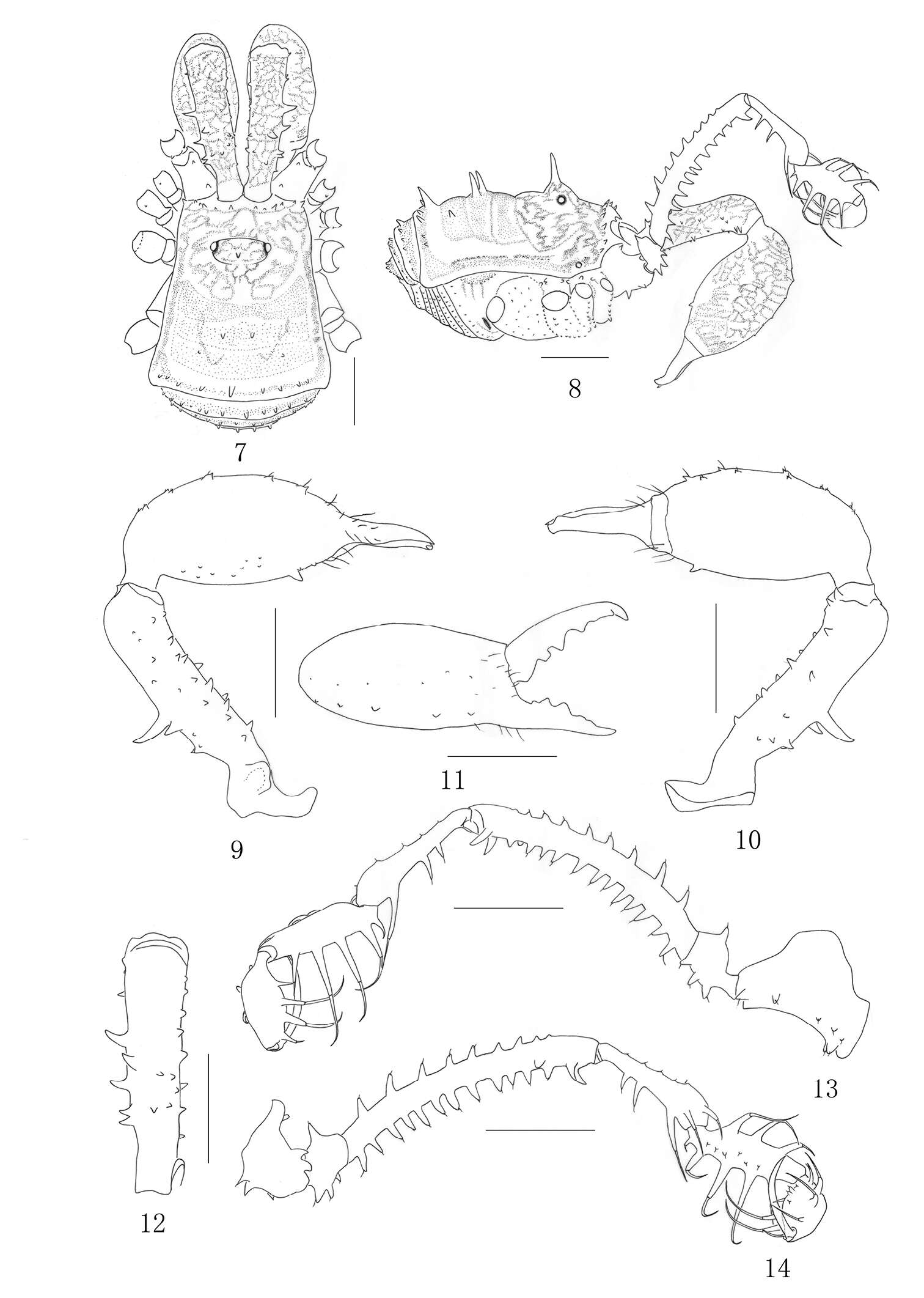
Laniatores are typically (relatively) short-legged, hard-plated, spiny Opiliones, common under logs and stones, in leaf litter and in caves. They often have spiny pedipalps and paired or branched claws on the third and fourth pairs of legs. The largest family is Gonyleptidae Sundevall, 1833, endemic of the Neotropics, with over 800 valid species and showing many cases of maternal and paternal care.
Excerpted from Wikipedia’s “Laniatores” article, available under the CC BY-SA 4.0 licence.