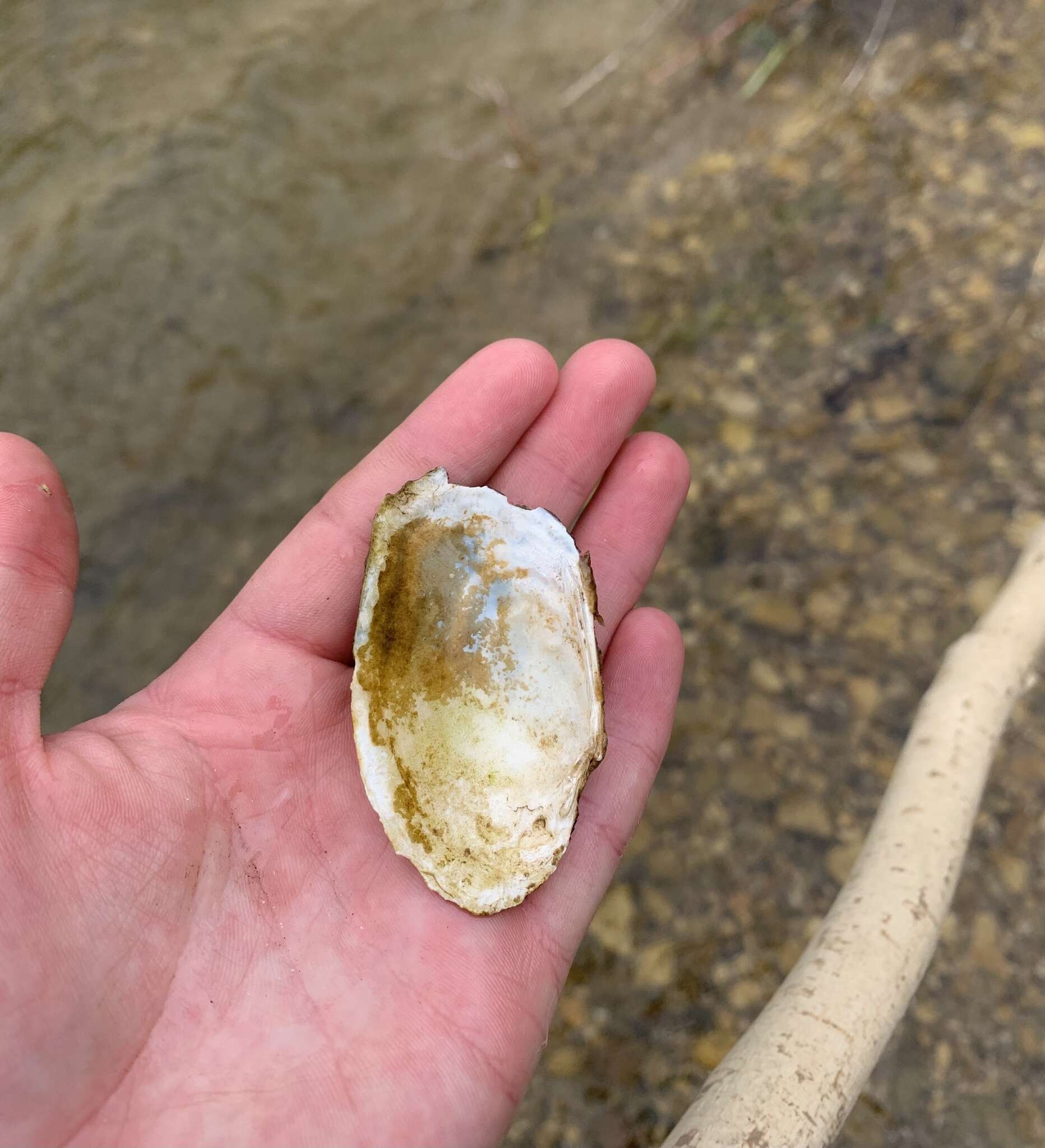
Encyclopedia of Life · EOL (see source)
Species
Least Concerncreek heelsplitter
SPECIES
- KingdomAnimalia
- PhylumMollusca
- ClassBivalvia
- OrderUnionida
- FamilyUnionidae
The middle lobe of the mantle edge has most of a bivalve's sensory organs. Paired statocysts, which are fluid filled chambers with a solid granule or pellet (a statolity) are in the mussel's foot. The statocysts help the mussel with georeception, or orientation.Mussels are heterothermic, and therefore are sensitive and responsive to temperature.Unionids in general may have some form of chemical reception to recognize fish hosts. How the creek heelsplitter attracts and/or recognizes its fish host is unknown.Glochidia respond to touch, light and some chemical cues. In general, when touched or a fluid is introduced, they will respond by clamping shut. Communication Channels: chemical Perception Channels: visual ; tactile ; vibrations ; chemical
via GBIF · IUCN
Museum specimens
- Specimen records
- 2,718
- With media
- 3,193
- Family
- Unionidae
- Collections
- CMN
- Recorded in
- Canada
Wikidata facts
- Instance of
- taxon
- Parent taxon
- Lasmigona
- Image
- Naturalis Biodiversity Center - ZMA.MOLL.213728 - Lasmigona compressa (Lea, 1829) - Unionidae - Mollusc shell.jpeg
Show 4 more facts
- taxon rank
- species
- IUCN conservation status
- Least Concern
- taxon name
- Lasmigona compressa
- Commons category
- Lasmigona compressa
Sources (1)
via Wikidata · CC0