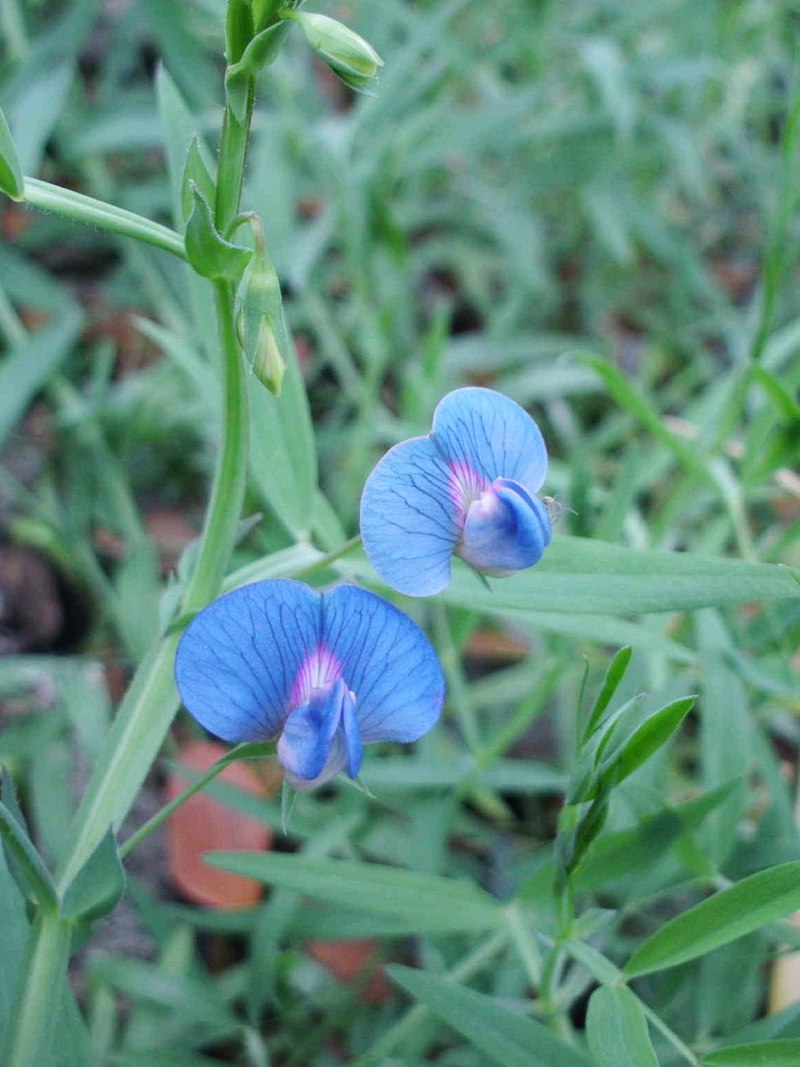
File:Lathyrus_sativus_flowers_Bangladesh_cropped.JPG · Wikimedia Commons · See Wikimedia Commons
OverviewAI-generated
Lathyrus sativus is a species of plant in the family Fabaceae. It belongs to the genus Lathyrus and is classified within the order Fabales, class Magnoliopsida, and phylum Tracheophyta. Common names for this taxon include Indian pea, white pea, and hrachor setý.
The species is native to Bulgaria and the NW. Balkan Pen. It has been introduced to numerous regions, including Afghanistan, Albania, Algeria, Angola, Assam, Austria, the Azores, the Baltic States, Bangladesh, Belarus, Belgium, and Buryatiya. Its range also includes the Tibet Autonomous Region. Records of the plant exist in Mexico, the United States, Canada, India, and Spain.
Synthesized by Vinony from 36 facts across 8 sources: Wikidata, GBIF, iNaturalist, Gbif Occ, Encyclopedia of Life, Plants of the World, iDigBio, Vinony graph. Generated from structured data (not the Wikipedia text) and checked against those facts — may still contain errors.
Species
Indian pea
SPECIES
- KingdomPlantae
- PhylumTracheophyta
- ClassMagnoliopsida
- OrderFabales
- FamilyFabaceae
Chile Central
via GBIF · Kew POWO
Museum specimens
- Specimen records
- 763
- With media
- 601
- Family
- Fabaceae
- Collections
- FCB-BUAP, DAV, QUE, CM, OKLA, CAS
- Recorded in
- Mexico, United States, Canada, India, Spain, Pakistan, France, Algeria
Wikidata facts
Show 8 more facts
- taxon rank
- species
- taxon name
- Lathyrus sativus
- Commons category
- Lathyrus sativus
- Commons gallery
- Lathyrus sativus
- taxon common name
- navadni grahor
- short name
- L. sativus
- taxon range
- Tibet Autonomous Region
via Wikidata · CC0
~6 min read
Encyclopedic overview
Lathyrus sativus, also known as grass pea, cicerchia, blue sweet pea, chickling pea, chickling vetch, Indian pea, white pea and white vetch, is a legume (family Fabaceae) commonly grown for human consumption and livestock feed in Asia and East Africa. It is a particularly important crop in areas that are prone to drought and famine, and is thought of as an 'insurance crop' as it produces reliable yields when all other crops fail. The seeds contain a neurotoxin that causes lathyrism, a neurodegenerative disease, if eaten as a primary protein source for a prolonged period.
Cultivation
Excerpted from Wikipedia’s “Lathyrus sativus” article, available under the CC BY-SA 4.0 licence.