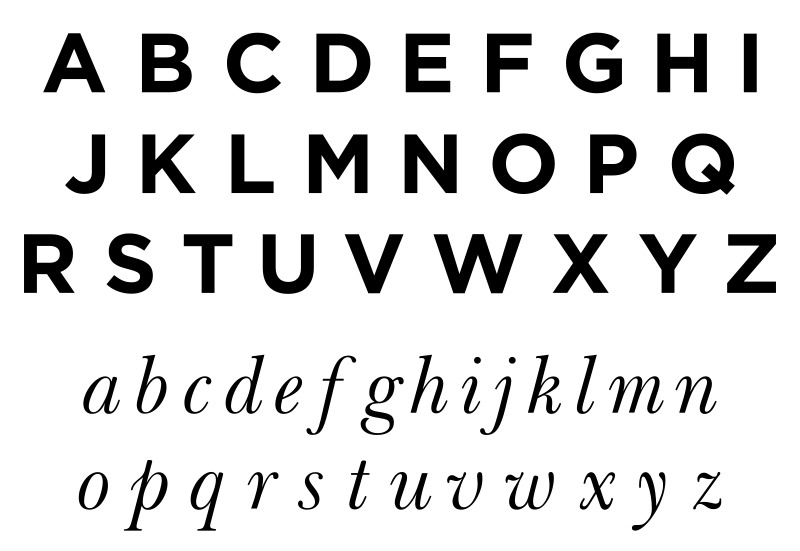
File:Abecedarium.svg · Wikimedia Commons · See Wikimedia Commons
Latin script
Sign in to saveAlso known as Roman script, Latn
writing system used to write most Western, Northern and Central European languages
Latin script is the alphabet used to write most languages in Western, Northern, and Central Europe. It matters because it enables communication across a large portion of the world's population through a shared writing system.
AI-generated from the Wikipedia summary — may contain errors.
Described at

sitelen Lasina - lipu Wikipesija
wikipesija.org →Link to a page describing this subject · 7,566 chars · not written by Vinony
Wikidata facts
- Image
- Ornamental Alphabet - 16th Century.svg
Show 8 more facts
- Unicode range
- U+1DF00-1DF1E,U+1DF25-1DF2A
- P8168
- Luis Méndez
- described at URL
- wikipesija.org/wiki/sitelen_Lasina
- Commons gallery
- Latin letters
- Commons category
- Latin alphabet
- inception
- 0700-00-00
- name
- latin
via Wikidata · CC0
~23 min read
Article
The Latin script, also known as the Roman script, is a writing system based on the letters of the classical Latin alphabet, derived from a form of the Greek alphabet which was in use in the ancient Greek city of Cumae in Magna Graecia. The Greek alphabet was altered by the Etruscans, and subsequently their alphabet was altered by the Ancient Romans. Several Latin-script alphabets exist, which differ in graphemes, collation and phonetic values from the classical Latin alphabet.
The Latin script is the basis of the International Phonetic Alphabet (IPA), and the 26 most widespread letters are the letters contained in the ISO basic Latin alphabet, which are the same letters as the English alphabet.
Gallery (3)
Available in 139 languages
- Español
- Français
- Deutsch
- 中文
- 日本語
- Русский
- العربية
- हिन्दी
- abstract
- Afrikaans
- Albanian
- Amharic
- Armenian
- Assamese
- Avaric
- azb
- Azerbaijani
- Bahasa Indonesia
Show 120 more
- Balinese
- Bangla
- Bashkir
- Basque
- bat_smg
- be_x_old
- Belarusian
- Bhojpuri
- Bikol
- Bosnian
- Breton
- btm
- Bulgarian
- Buriat
- Burmese
- Catalan
- cdo
- Central Kurdish
- Chechen
- Church Slavic
- Cornish
- Crimean Tatar
- Croatian
- Czech
- Egyptian Arabic
- Esperanto
- Estonian
- Faroese
- Fiji Hindi
- Filipino
- Finnish
- fiu_vro
- Galician
- Gan Chinese
- Georgian
- Greek
- Guarani
- Hakka Chinese
- Hebrew
- Iban
- Icelandic
- Iloko
- Ingush
- Inuktitut
- Irish
- Javanese
- Kabardian
- Kabyle
- Kalmyk
- Karachay-Balkar
- Kashmiri
- Kazakh
- kge
- Khmer
- Konkani
- Kyrgyz
- Lao
- Latvian
- Limburgish
- Lingala
- Lithuanian
- lld
- Lojban
- Low German
- Macedonian
- Malagasy
- Malay
- Malayalam
- Manipuri
- Manx
- Marathi
- Mazanderani
- Mingrelian
- Mongolian
- nah
- Nederlands
- Nepali
- Occitan
- Old English
- Pashto
- Punjabi
- pwn
- Quechua
- Romanian
- Romany
- Rusyn
- Santali
- Scots
- Scottish Gaelic
- Serbian
- Serbian (Latin)
- simple
- Sindhi
- Slovak
- Slovenian
- Somali
- Standard Moroccan Tamazight
- Svenska
- syl
- Tajik
- Tamil
- Tiếng Việt
- Toki Pona
- Türkçe
- Ukrainian
- Urdu
- Uyghur
- Walloon
- Waray
- Welsh
- Western Panjabi
- Wu Chinese
- Yakut
- Yiddish
- zh_classical
- zh_min_nan
- zh_yue
- فارسی
- ไทย
- 한국어
via Wikidata sitelinks · CC0