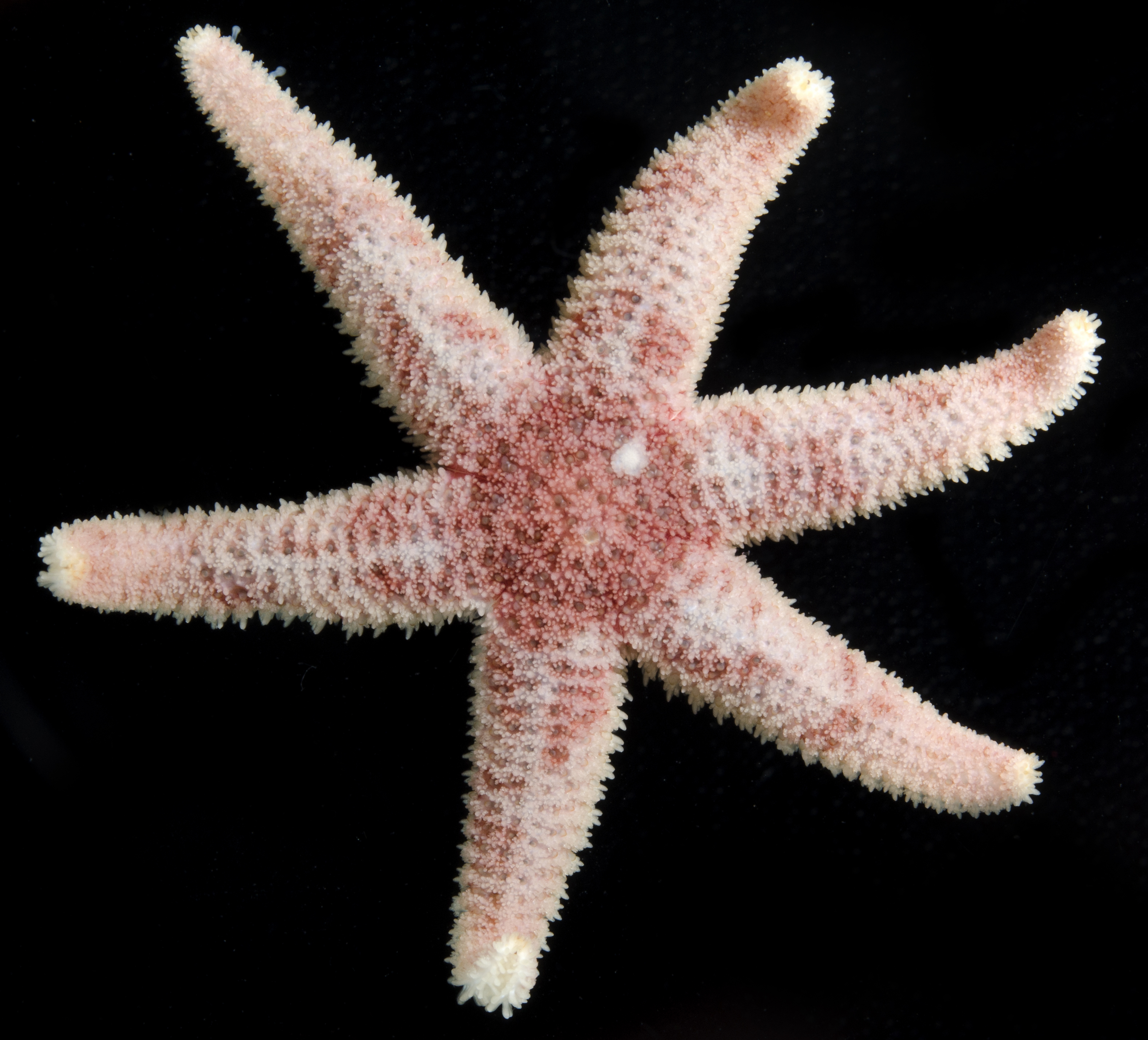
Specimen image via iDigBio · BY-NC
Leptasterias
Sign in to saveLeptasterias is a genus of starfish in the family Asteriidae. Members of this genus are characterised by having six arms although five-armed specimens sometimes occur. L. muelleri is the type species. The taxonomy of the genus is confusing and Leptasterias hexactis seems to be a species complex. Some species brood their eggs.
Species
コヒトデ属
GENUS
- KingdomAnimalia
- PhylumEchinodermata
- ClassAsteroidea
- OrderForcipulatida
- FamilyAsteriidae
via GBIF
Museum specimens
- Specimen records
- 372
- With media
- 39
- Family
- Asteriidae
- Collections
- YPM, USNM, CAS
- Recorded in
- United States, Canada, Brazil
Wikidata facts
- Instance of
- taxon
- Parent taxon
- Asteriidae
- Image
- Leptasterias hexactis.jpg
Show 4 more facts
- Commons category
- Leptasterias
- taxon name
- Leptasterias
- taxon rank
- genus
- topic's main category
- Category:Leptasterias
Sources (1)
via Wikidata · CC0
~6 min read
Encyclopedic overview
5 sectionsContents
- Description and biology
- Habitat
- Reproduction
- Species
- References
Leptasterias is a genus of starfish in the family Asteriidae. Members of this genus are characterised by having six arms although five-armed specimens sometimes occur. L. muelleri is the type species. The taxonomy of the genus is confusing and Leptasterias hexactis seems to be a species complex. Some species brood their eggs.
== Description and biology == Leptasterias is a genus of starfish in the family Asteriidae and order Forcipulatida. It is often noted that members in the genus have six arms, however, occasionally five-armed specimen can occur. They are also characterized by having several cryptic species complexes. They are often found in the waters of Alaska to central California in rocky intertidal and subtidal habitats. They are typically small in size, measuring less than 6 cm from ray tip to ray tip. They mature around the age of two. They are known for being lecithotrophic, providing the embryo with no nutrition other than the yolk in its egg. The females will brood their young under their rays until they have fully developed and are capable of crawling away. Because of the way they are bred and the fact that they are smaller creatures, it is difficult for the sea stars to disperse to new areas. Rather than crawling long distances, the sea stars will attach to macroalgae or other floating organisms and substrate, allowing them to be dispersed farther distances. However, this method of dispersal does not happen frequently. Leptasterias can also be used as an indicator species as they are not very able to move far from their habitat and are susceptible to local selection pressures like algal blooms and disease outbreaks. To do this, it is important to identify the certain species of Leptasterias in order to accurately observe changing distributions, abundances, and population health. The cryptic complexes also play a part in determining data for monitoring ecological effects of disastrous events and other environmental stressors.
Excerpted from Wikipedia’s “Leptasterias” article, available under the CC BY-SA 4.0 licence.