Lilaeopsis · Kew POWO · Kew Plants of the World Online
Lilaeopsis
Sign in to saveLilaeopsis (the grassworts or microswords) is a genus of aquatic and riparian flowering plants in the umbel family Apiaceae (carrots, celery, fennel, parsley, etc), which earns them the common name 'water umbels'. Lilaeopsis are primarily found along the Pacific coast of the Americas, from southern Alaska to Tierra del Fuego and southern Patagonia, as well as the Falkland Islands and some Caribbean and Oceanic islands (mainland Australia, New Zealand and Tasmania). One species, L. mauritiana, is found on the Indian Ocean islands of Madagascar and Mauritius.
Species
GENUS
- KingdomPlantae
- PhylumTracheophyta
- ClassMagnoliopsida
- OrderApiales
- FamilyApiaceae
via GBIF · Kew POWO
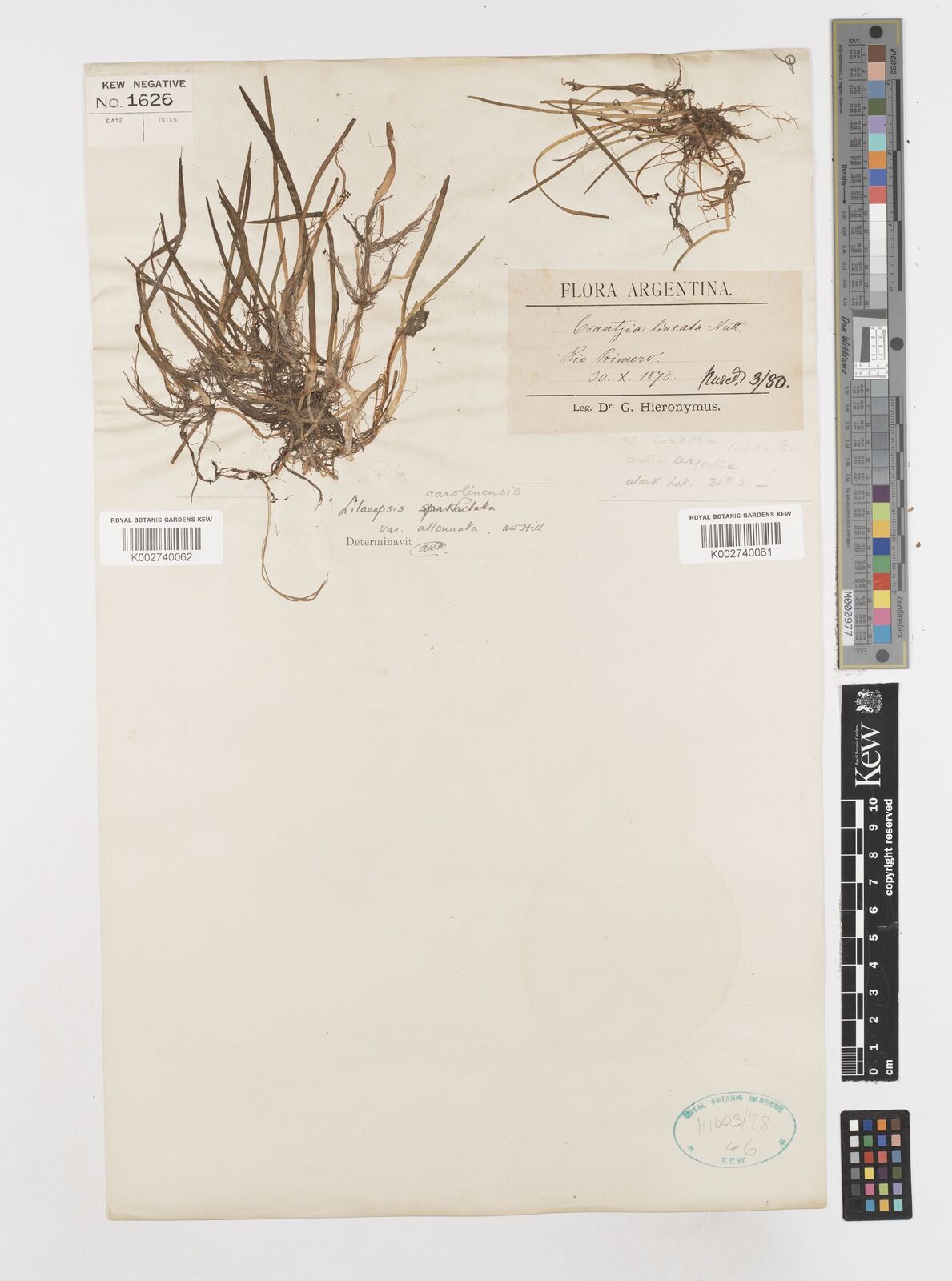
Museum specimens
- Specimen records
- 109
- With media
- 76
- Family
- Apiaceae
- Collections
- UFRGS, F, MO, WTU, RSA, ANSP
- Recorded in
- Brasil, Peru, Chile, United States, Argentina, Bolivia, New Zealand, Paraguay
Wikidata facts
Show 6 more facts
- taxon name
- Lilaeopsis
- taxon rank
- genus
- topic's main category
- Category:Lilaeopsis
- taxon common name
- 水毯草属
- Commons category
- Lilaeopsis
Sources (1)
via Wikidata · CC0
~3 min read
Encyclopedic overview
2 sectionsContents
- Species list
- References
Lilaeopsis (the grassworts or microswords) is a genus of aquatic and riparian flowering plants in the umbel family Apiaceae (carrots, celery, fennel, parsley, etc), which earns them the common name 'water umbels'. Lilaeopsis are primarily found along the Pacific coast of the Americas, from southern Alaska to Tierra del Fuego and southern Patagonia, as well as the Falkland Islands and some Caribbean and Oceanic islands (mainland Australia, New Zealand and Tasmania). One species, L. mauritiana, is found on the Indian Ocean islands of Madagascar and Mauritius.
The species L. minor (synonymous with L. brasiliensis, and often referred to as 'microsword' or 'Brazilian microsword') is somewhat common in the aquascaping hobby, as its grass-like appearance and creeping growth habit are valued as a groundcover plant for the foreground of aquaria. It is easily cultivated, being commercially produced and sold via tissue culture. The entire genus grows best in a rich, organic substrate (such as dirt or commercial aquasoil), as opposed to simply sand or gravel, and will prefer planting in well-aerated water with natural lighting, or medium to high artificial lighting; additionally, like many aquarium plants, carbon dioxide (CO2) supplementation will improve their overall health and vigor, though may not be necessary with a nutritious, organic substrate.
Excerpted from Wikipedia’s “Lilaeopsis” article, available under the CC BY-SA 4.0 licence.
Gallery (2)
Available in 11 languages
via Wikidata sitelinks · CC0