Encyclopedia of Life · EOL (see source)
Listeriaceae
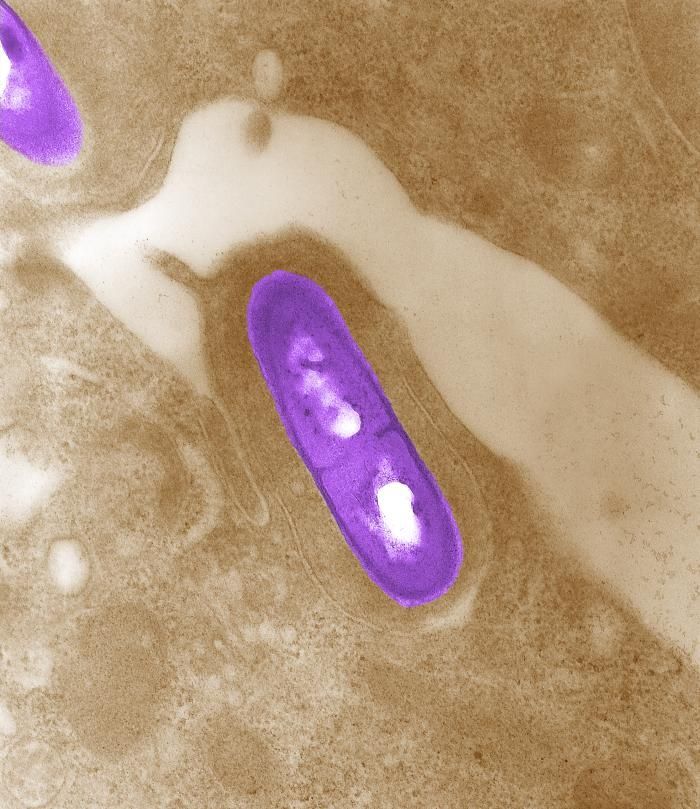
Sign in to saveThe Listeriaceae are a family of Gram-positive bacteria that includes two genera: Listeria and Brochothrix. They are short, rod-shaped bacteria that are aerobic or facultatively anaerobic. Spores are not formed, but under stress these bacteria can form filaments. Some species, namely Listeria monocytogenes, can cause human and animal listeriosis. While not all bacteria in the Listeriaceae family are considered a danger to humans, some are strongly associated with food borne illness or microbial spoilage, so they remain a topic of interest in agricultural industries.
Species
FAMILY
- KingdomBacteria
- PhylumFirmicutes
- ClassBacilli
- OrderLactobacillales
- FamilyListeriaceae
Die Listeriaceae bilden eine Familie grampositiver Bakterien. Die Typgattung Listeria ist nach dem britischen Chirurgen Joseph Lister benannt.
via GBIF
Wikidata facts
- Instance of
- taxon
- Parent taxon
- Caryophanales
- Image
- Listeria monocytogenes 01.jpg
Show 7 more facts
- Commons category
- Listeriaceae
- taxon rank
- family
- topic's main category
- Category:Listeriaceae
- taxon name
- Listeriaceae
- LPSN URL
- lpsn.dsmz.de/family/listeriaceae
- Gram staining
- gram-positive bacteria
- taxonomic type
- Listeria
Sources (1)
via Wikidata · CC0
~1 min read
Encyclopedic overview
3 sectionsContents
- Phylogeny
- See also
- References
The Listeriaceae are a family of Gram-positive bacteria that includes two genera: Listeria and Brochothrix. They are short, rod-shaped bacteria that are aerobic or facultatively anaerobic. Spores are not formed, but under stress these bacteria can form filaments. Some species, namely Listeria monocytogenes, can cause human and animal listeriosis. While not all bacteria in the Listeriaceae family are considered a danger to humans, some are strongly associated with food borne illness or microbial spoilage, so they remain a topic of interest in agricultural industries.
==Phylogeny== The currently accepted taxonomy is based on the List of Prokaryotic names with Standing in Nomenclature (LPSN) and National Center for Biotechnology Information (NCBI).
Excerpted from Wikipedia’s “Listeriaceae” article, available under the CC BY-SA 4.0 licence.