File:Minnakht_01.JPG · Wikimedia Commons · See Wikimedia Commons
logogram
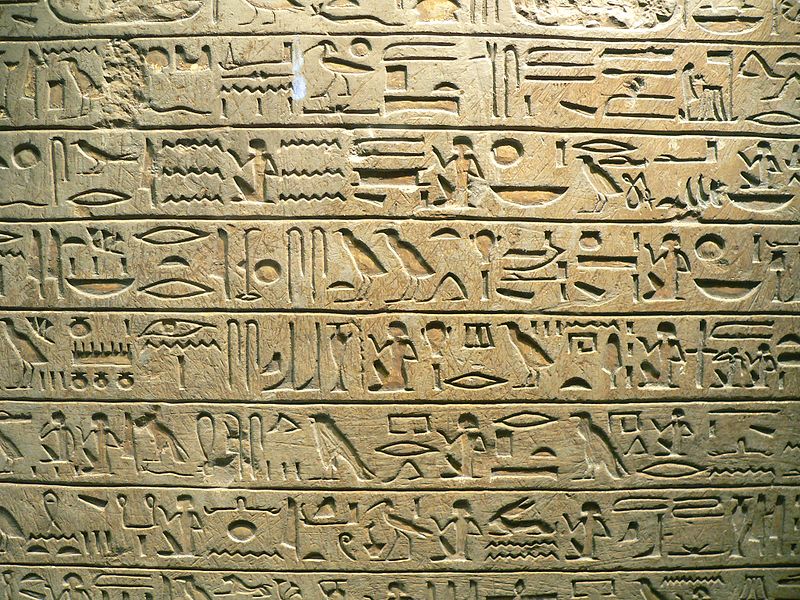
Sign in to savethumb|Egyptian hieroglyphs, including logograms such as the sun disk (⊙, visible several times here)
A logogram is a written symbol that represents an entire word or meaningful unit of language, rather than just a sound or letter. They were used in writing systems like Egyptian hieroglyphics, where a single symbol—such as a sun disk—could stand for a complete word or concept.
AI-generated from the Wikipedia summary — may contain errors.
In the Vinony graph
Within Vinony's link graph, logogram is referenced by 1,232 other articles, and connects out to cuneiform, Georgian scripts and Ulu scripts.
Vinony files it under Accuracy disputes from November 2017, Graphemes and Logographic writing systems.
Its subject is documented across 67 Wikipedia language editions.
Wikidata facts
- Subclass of
- grapheme
Show 5 more facts
- Commons category
- Logograms
- used by
- logographic writing system
- opposite of
- phonogram
- different from
- pictogram
- partially coincident with
- ideogram
Sources (1)
via Wikidata · CC0
~21 min read
Encyclopedic overview
18 sectionsContents
- Types of logographic systems
- Logoconsonantal
- <span class="anchor" id="Morphosyllabic"></span><span class="anchor" id="morphosyllabic"></span> Logosyllabic
- Others
- Semantic and phonetic dimensions
- Universal logograms
- Chinese characters
- Chinese characters used in Japanese and Korean
- Differences in processing of logographic and phonologic writing systems
- Advantages and disadvantages
- Separating writing and pronunciation
- Characters in information technology
- See also
- Notes
- References
- Citations
- Sources
- External links
thumb|Egyptian hieroglyphs, including logograms such as the sun disk (⊙, visible several times here)
In a written language, a logogram (from Ancient Greek 'word', and 'that which is drawn or written'), also logograph or lexigraph, is a written character that represents a semantic component of a language, such as a word or morpheme. Chinese characters as used in Chinese as well as other languages are logograms, as are Egyptian hieroglyphs and characters in cuneiform script. A writing system that primarily uses logograms is called a logography. Non-logographic writing systems, such as alphabets and syllabaries, are phonemic: their individual symbols represent sounds directly and lack any inherent meaning. However, all known logographies have some phonetic component, generally based on the rebus principle, and the addition of a phonetic component to pure ideographs is considered to be a key innovation in enabling the writing system to adequately encode human language.
Excerpted from Wikipedia’s “logogram” article, available under the CC BY-SA 4.0 licence.
Gallery (6)
Available in 67 languages
- Español
- Français
- Deutsch
- 中文
- 日本語
- Русский
- Português
- Italiano
- العربية
- हिन्दी
- Afrikaans
- Amharic
- Armenian
- Asturian
- Azerbaijani
- Bahasa Indonesia
- Bangla
- Banjar
Show 48 more
- Basque
- Bikol
- Burmese
- Catalan
- Cebuano
- Central Kurdish
- Croatian
- Czech
- Danish
- Esperanto
- Finnish
- Galician
- Georgian
- Hebrew
- Hungarian
- Icelandic
- Irish
- Kazakh
- Kyrgyz
- Latin
- Latvian
- Lingua Franca Nova
- Malay
- Manx
- Nederlands
- Norwegian
- Norwegian Nynorsk
- Occitan
- Pashto
- Polski
- Romanian
- Serbian
- Serbian (Latin)
- Silesian
- simple
- Svenska
- Tajik
- Tamil
- Tiếng Việt
- Türkçe
- Ukrainian
- Uzbek
- Wu Chinese
- zh_min_nan
- zh_yue
- فارسی
- ไทย
- 한국어
via Wikidata sitelinks · CC0