File:Minnakht_01.JPG · Wikimedia Commons · See Wikimedia Commons
logogram
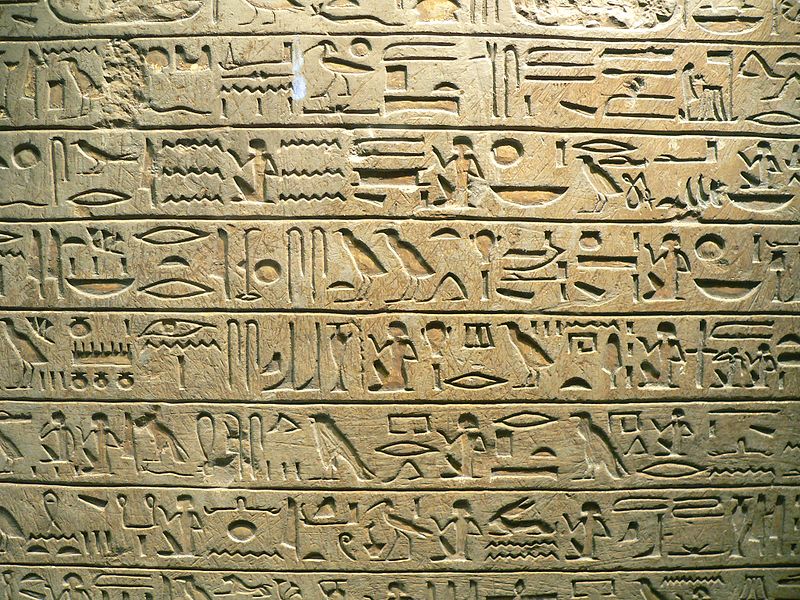
Sign in to savethumb|Egyptian hieroglyphs, including logograms such as the sun disk (⊙, visible several times here)
A logogram is a written symbol that represents an entire word or meaningful unit of language, rather than just a sound or letter. They were used in writing systems like Egyptian hieroglyphics, where a single symbol—such as a sun disk—could stand for a complete word or concept.
AI-generated from the Wikipedia summary — may contain errors.
~21 min read
Article
18 sectionsContents
- Types of logographic systems
- Logoconsonantal
- <span class="anchor" id="Morphosyllabic"></span><span class="anchor" id="morphosyllabic"></span> Logosyllabic
- Others
- Semantic and phonetic dimensions
- Universal logograms
- Chinese characters
- Chinese characters used in Japanese and Korean
- Differences in processing of logographic and phonologic writing systems
- Advantages and disadvantages
- Separating writing and pronunciation
- Characters in information technology
- See also
- Notes
- References
- Citations
- Sources
- External links
thumb|Egyptian hieroglyphs, including logograms such as the sun disk (⊙, visible several times here)
In a written language, a logogram (from Ancient Greek 'word', and 'that which is drawn or written'), also logograph or lexigraph, is a written character that represents a semantic component of a language, such as a word or morpheme. Chinese characters as used in Chinese as well as other languages are logograms, as are Egyptian hieroglyphs and characters in cuneiform script. A writing system that primarily uses logograms is called a logography. Non-logographic writing systems, such as alphabets and syllabaries, are phonemic: their individual symbols represent sounds directly and lack any inherent meaning. However, all known logographies have some phonetic component, generally based on the rebus principle, and the addition of a phonetic component to pure ideographs is considered to be a key innovation in enabling the writing system to adequately encode human language.
Gallery (6)
Available in 67 languages
- Español
- Français
- Deutsch
- 中文
- 日本語
- Русский
- Português
- Italiano
- العربية
- हिन्दी
- Afrikaans
- Amharic
- Armenian
- Asturian
- Azerbaijani
- Bahasa Indonesia
- Bangla
- Banjar
Show 48 more
- Basque
- Bikol
- Burmese
- Catalan
- Cebuano
- Central Kurdish
- Croatian
- Czech
- Danish
- Esperanto
- Finnish
- Galician
- Georgian
- Hebrew
- Hungarian
- Icelandic
- Irish
- Kazakh
- Kyrgyz
- Latin
- Latvian
- Lingua Franca Nova
- Malay
- Manx
- Nederlands
- Norwegian
- Norwegian Nynorsk
- Occitan
- Pashto
- Polski
- Romanian
- Serbian
- Serbian (Latin)
- Silesian
- simple
- Svenska
- Tajik
- Tamil
- Tiếng Việt
- Türkçe
- Ukrainian
- Uzbek
- Wu Chinese
- zh_min_nan
- zh_yue
- فارسی
- ไทย
- 한국어
via Wikidata sitelinks · CC0