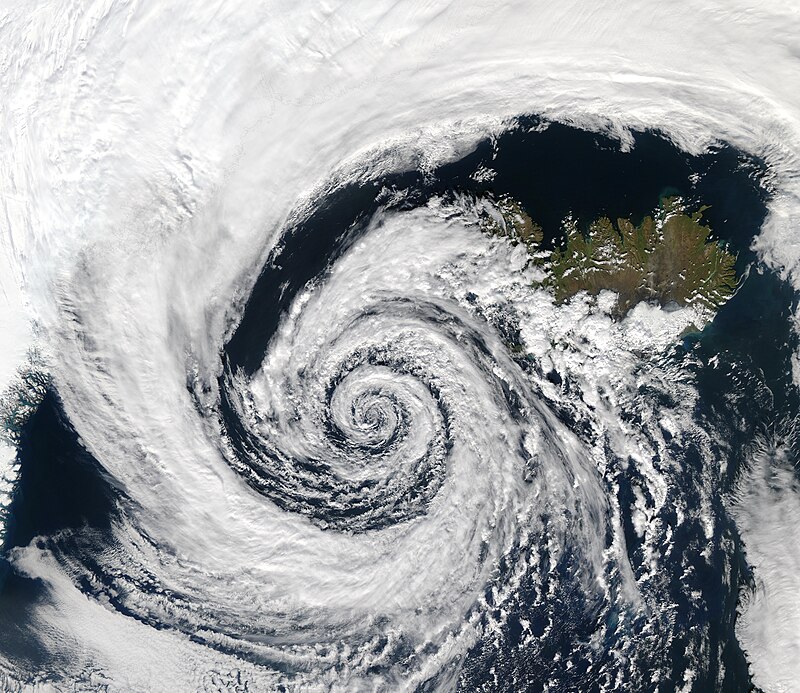
File:Low_pressure_system_over_Iceland.jpg · Wikimedia Commons · See Wikimedia Commons
low pressure area
Sign in to saveAlso known as low-pressure area, low, depression
region of the atmosphere in which atmospheric pressure is lower than that of surrounding regions
Wikidata facts
- Subclass of
- meteorological phenomenon
- Image
- Southern hemisphere extratropical cyclone.jpg
Show 3 more facts
- Commons category
- Low pressure systems
- opposite of
- anticyclone
- described by source
- Encyclopædia Britannica 11th edition
via Wikidata · CC0
~15 min read
Encyclopedic overview
A low-pressure system over Iceland.
In meteorology, a low-pressure area (LPA), low area or low is a region where the atmospheric pressure is lower than that of surrounding locations. It is the opposite of a high-pressure area. Low-pressure areas are commonly associated with inclement weather (such as cloudy, windy, with possible rain or storms), while high-pressure areas are associated with lighter winds and clear skies. Winds circle anti-clockwise around lows in the northern hemisphere, and clockwise in the southern hemisphere, due to opposing Coriolis forces. Low-pressure systems form under areas of wind divergence that occur in the upper levels of the atmosphere (aloft). The formation process of a low-pressure area is known as cyclogenesis. In meteorology, atmospheric divergence aloft occurs in two kinds of places:
Excerpted from Wikipedia’s “low pressure area” article, available under the CC BY-SA 4.0 licence.