Encyclopedia of Life · EOL (see source)
Luisia
Sign in to saveLuisia, commonly known as velvet orchids or 钗子股属 (chai zi gu shu), is a genus of epiphytic or lithophytic orchids in family Orchidaceae. Plants in this genus have flattened roots, long leafy stems, narrow, thick, leathery leaves and short-lived flowers that open sporadically. There are about 54 species found from tropical and subtropical Asia to the Western Pacific.
Species
GENUS
- KingdomPlantae
- PhylumTracheophyta
- ClassLiliopsida
- OrderAsparagales
- FamilyOrchidaceae
钗子股属(学名:Luisia)是兰科下的一个属,为附生兰。该属共有约40种,分布于热带亚洲至波利尼西亚。[1] 参考文献 ^ 中国种子植物科属词典. 中国数字植物标本馆. (原始内容存档于2012-04-11). 外部链接 維基物種中有關钗子股属的數據 这是一篇與植物相關的小作品。你可以通过编辑或修订扩充其内容。 查 论 编 取自“https://zh.wikipedia.org/w/index.php?title=钗子股属&oldid=45352328” 分类: 兰科 钗子股属 隐藏分类: 维基数据有相关图片而本地未添加 WikispeciesLatinName 全部小作品 植物小作品
via GBIF · Kew POWO
Museum specimens
- Specimen records
- 121
- With media
- 100
- Family
- Orchidaceae
- Collections
- ANSP, MICH, SEL, NY, AMES, RSA
- Recorded in
- Malaysia, Papua New Guinea, India, Guam, Myanmar, China, Philippines, Thailand
Wikidata facts
- Instance of
- taxon
- Parent taxon
- Aeridinae
- Image
- Luisia psyche - Curtis' 92 (Ser. 3 no. 22) pl. 5558 (1866).jpg
Show 7 more facts
- taxon rank
- genus
- taxon name
- Luisia
- topic's main category
- Category:Luisia
- Commons gallery
- Luisia
- Commons category
- Luisia
- taxon common name
- 钗子股属
Sources (2)
via Wikidata · CC0
~5 min read
Encyclopedic overview
6 sectionsContents
- Description
- Taxonomy and naming
- Distribution
- Species list
- Intergeneric hybrids
- References
Luisia, commonly known as velvet orchids or 钗子股属 (chai zi gu shu), is a genus of epiphytic or lithophytic orchids in family Orchidaceae. Plants in this genus have flattened roots, long leafy stems, narrow, thick, leathery leaves and short-lived flowers that open sporadically. There are about 54 species found from tropical and subtropical Asia to the Western Pacific.
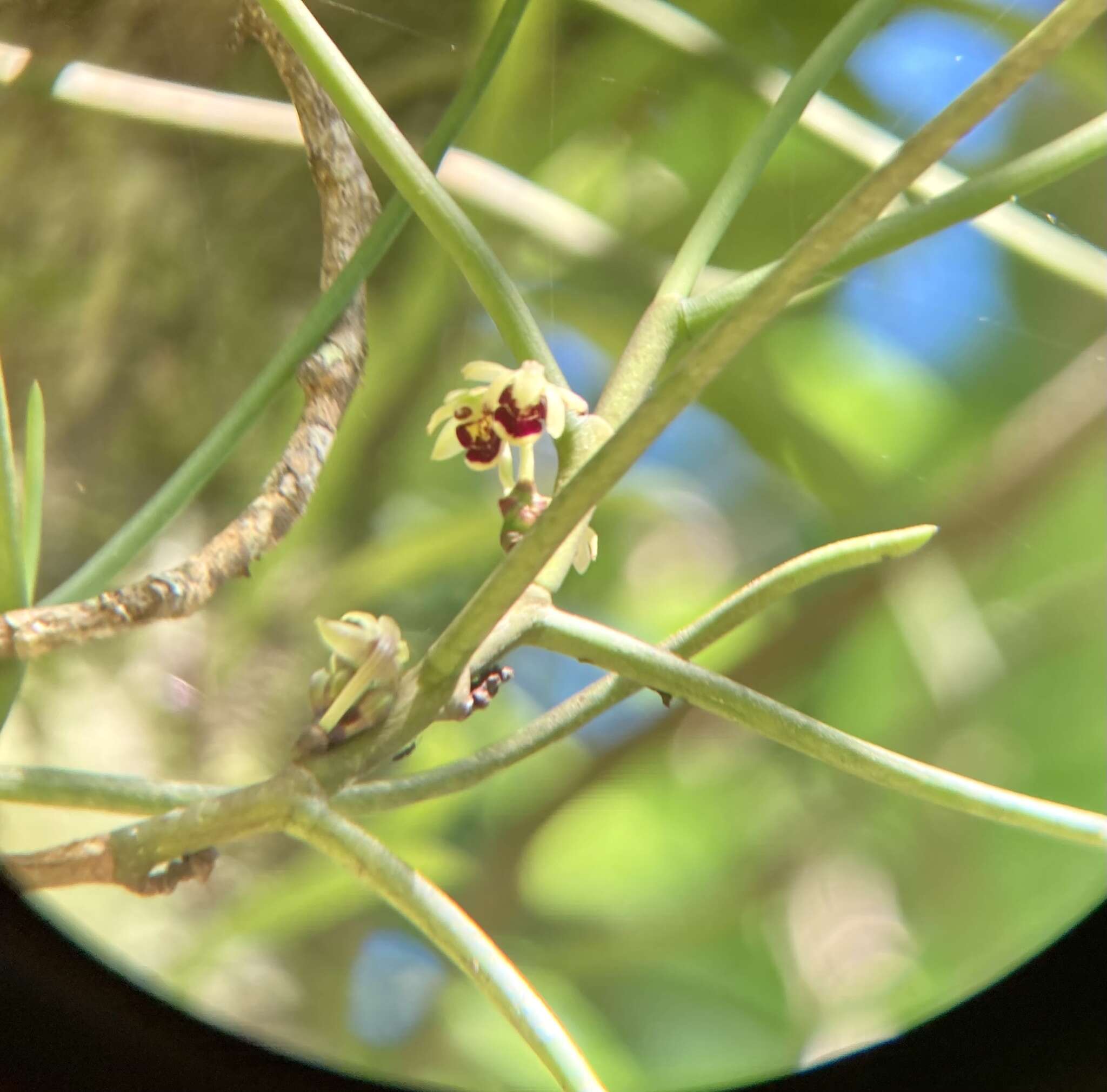
==Description== Orchids in the genus Luisia are epiphytic or lithophytic, monopodial herbs with long, fibrous stems and thick, more or less flattened roots. A large number of cylinder-shaped, narrow leathery leaves are arranged along the stems. Up to ten resupinate, usually small, fleshy flowers are arranged on a short, thickened flowering stem and open sporadically. Each flower has a short, curved stalk and petals that are longer than the sepals. The labellum is large and fleshy with an upper epichile separated by a groove from the lower concave hypochile. The labellum has a rigid connection to the column.
Excerpted from Wikipedia’s “Luisia” article, available under the CC BY-SA 4.0 licence.
Gallery (3)
Available in 16 languages
- Español
- 中文
- Português
- Cebuano
- Croatian
- Komi
- Komi-Permyak
- Malayalam
- Moksha
- Polski
- Svenska
- Tiếng Việt
- Udmurt
- Waray
- Western Mari
via Wikidata sitelinks · CC0