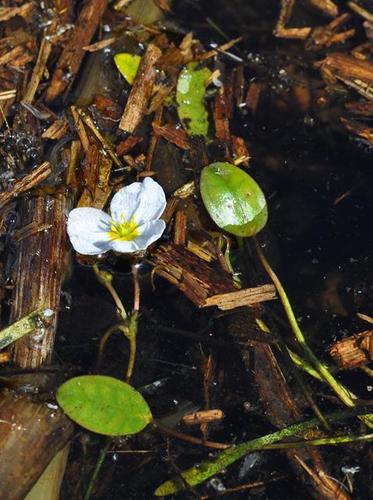
(c) Biopix, some rights reserved (CC BY-NC) · cc-by-nc
Luronium natans
Sign in to saveAlso known as Floating water-plantain
Luronium natans is a species of aquatic plant commonly known as the floating water-plantain. It is the only recognized species in the genus Luronium, native to western and central Europe, from Spain to Britain to Norway east to Ukraine.
Species
Least Concernfloating water-plantain
SPECIES
- KingdomPlantae
- PhylumTracheophyta
- ClassLiliopsida
- OrderAlismatales
- FamilyAlismataceae
Луро́ниум (лат. Lurónium) — монотипный род водных растений семейства Частуховые. Единственный вид — Лурониум плавающий (Luronium natans), распространённый в стоячих водах Северной Германии и в Испании.
via GBIF · IUCN · Kew POWO
Museum specimens
- Specimen records
- 757
- With media
- 581
- Family
- Alismataceae
- Collections
- MNHN, US, CM
- Recorded in
- France, Spain, Germany
Wikidata facts
Show 9 more facts
- Commons category
- Luronium natans
- taxon rank
- species
- taxon name
- Luronium natans
- IUCN conservation status
- Least Concern
- taxon common name
- Schwimmlöffel
- Commons gallery
- Luronium natans
- short name
- L. natans
- regional conservation status
- Endangered status
via Wikidata · CC0
~7 min read
Encyclopedic overview
11 sectionsContents
- Description
- Distribution
- Ecology
- Lakes
- Rivers
- Ponds
- Artificial habitats
- Conservation, threats and restoration
- Cultural
- References
- External links
Luronium natans is a species of aquatic plant commonly known as the floating water-plantain. It is the only recognized species in the genus Luronium, native to western and central Europe, from Spain to Britain to Norway east to Ukraine.
==Description== Stems elongated, rising in the water or creeping and rooting at the nodes. Submerged leaves (if present) basal, linear, floating or aerial leaves elliptical to ovate. Flowers hermaphrodite, long-pedunculate in the axils of the floating or aerial leaves. Stamens 6. Carpels 6–15 in an irregular whorl, free, each with 1 ovule; styles apical. Fruitlets achenial, longitudinally many-ribbed, with a short apical beak. 2n = 42.
Excerpted from Wikipedia’s “Luronium natans” article, available under the CC BY-SA 4.0 licence.