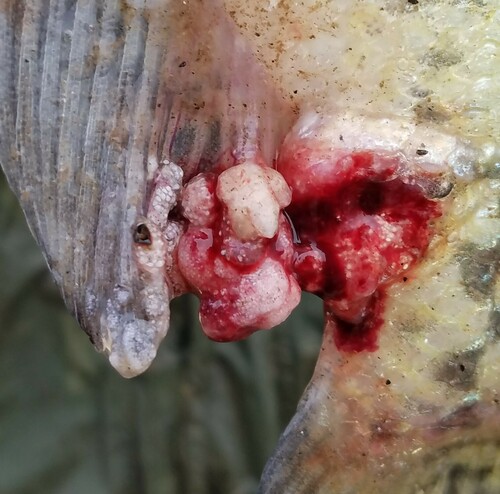
(c) srichard89, all rights reserved, uploaded by srichard89
Lymphocystivirus
Sign in to saveLymphocystivirus is a genus of viruses, in the family Iridoviridae. Fish serve as natural hosts. There are four species in this genus. Diseases associated with this genus include: tumor-like growths on the skin.
Species
lymphocystis disease virus 1
GENUS
- KingdomViruses
- PhylumNucleocytoviricota
- ClassMegaviricetes
- OrderPimascovirales
- FamilyIridoviridae
via GBIF
~6 min read
Encyclopedic overview
14 sectionsContents
- Hosts
- Taxonomy
- LCDV genome
- Structure
- Life cycle
- Pathogenesis
- Diagnostic pathology
- Gross pathology
- Histopathology
- Serology
- Electron microscopy
- Molecular pathology
- References
- External links
Lymphocystivirus is a genus of viruses, in the family Iridoviridae. Fish serve as natural hosts. There are four species in this genus. Diseases associated with this genus include: tumor-like growths on the skin.
==Hosts== Lymphocystivirus is one of seven genera of viruses within the viral family Iridoviridae, and one of three genera within this family which infect teleost fishes, along with Megalocytivirus and Ranavirus. Lymphocystiviruses infect more than 140 freshwater and marine species, spanning at least 42 host families worldwide, causing the chronic, self-limiting clinical disease, lymphocystis. While lymphocystis does not cause mass mortality events like megalocytiviruses and ranaviruses, fish with lymphocystis exhibit grossly visible papilloma-like skin lesions which substantially reduce their commercial value. No vaccines are currently available for lymphocystis viruses.
Excerpted from Wikipedia’s “Lymphocystivirus” article, available under the CC BY-SA 4.0 licence.