
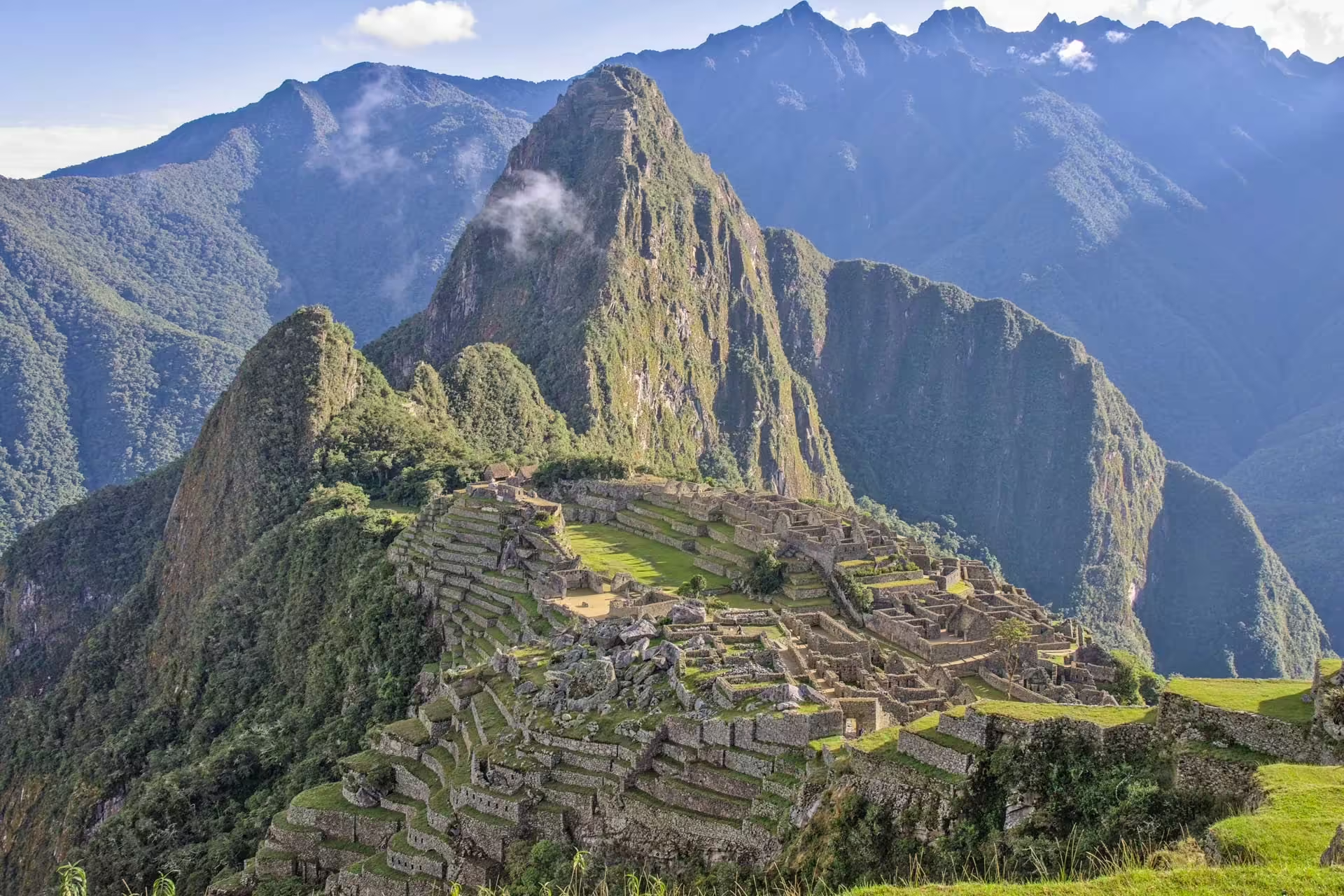
File:Machu_Picchu.png · Wikimedia Commons · See Wikimedia Commons
Machu Picchu
Sign in to saveAlso known as Huayna Picchu, Wayna Picchu
15th-century Inca citadel in the Peruvian Andes and UNESCO World Heritage Site
Machu Picchu is a 15th-century city built by the Inca civilization high in the Peruvian Andes mountains, showcasing remarkable architectural and engineering achievements from that era. It is recognized as a UNESCO World Heritage Site, reflecting its outstanding cultural and historical significance to humanity.
AI-generated from the Wikipedia summary — may contain errors.
Described at
Machu Picchu: Stratené mesto Inkov - Peru - PlaceMania
Machu Picchu ohromuje precíznym kamenným murivom, genialitou inkských inžinierov a polohou vysoko v Andách, vďaka čomu patrí k ikonám Peru.
placemania.sk →Cesta vlakom do Aguas Calientes stojí sama osebe za celý výlet. Prekvapivo, Machu Picchu (v nadmorskej výške takmer 8 000 stôp) leží v skutočnosti nižšie než Cusco a smerom na severozápad klesá do amazonskej džungle. Ako touto trasou cestujete, pred očami sa Vám menia celé biotopy. Po celej ceste uvidíte veľkolepé rieky, najmä Urubambu, s nekonečnými úsekmi dravej bielej vody — tak neúprosnej a prudkej, že ju dodnes nikto nezjazdil na kajaku. (Keď vlak zastaví, vystúpte si po horúcu kukuricu na klase od miestnych — zrná sa zdajú byť veľké takmer ako inkské kamenárske bloky a chutia jednoducho výborne.) Zároveň si uvedomíte, že ste v Andách. Zatieňujú všetky ostatné horské pásma. Sú božsky obrovské, strmé, lákavé aj hrozivé zároveň a človek len žasne nad zručnosťou Inkov a ich predchodcov, keď si predstaví, ako tieto hory dokázali ovládnuť. V Machu Picchu klesá po jednej strane lokality v sekvencii šestnásť kamenných vodopádov. Po celom Machu Picchu sú masívne opracované kamene poskladané v takmer dokonalej harmónii a oslavujú slnko, cyklus roka, tvary okolitých hôr aj spôsob, akým človek robí krok. Machu Picchu patrí medzi najväčšie architektonické úspechy a kultúrne centrá Inkov aj starovekého sveta. Je postavené tak dokonale, že jeho stavby dokážu odolávať zemetraseniam, ktoré sú v Peru a konkrétne v oblasti Machu Picchu pomerne bežné, keďže bolo vybudované nad dvoma zlomovými líniami. Zakladateľ projektu PlaceMania.sk a zodpovedá za jeho obsah, technické fungovanie a dlhodobý rozvoj. Cestovné zápisky na webe vychádzajú z vlastnej skúsenosti z ciest; faktografické záznamy o miestach vznikajú kombináciou verejných zdrojov, automatizovaného spracovania dát a redakčného overovania. Zameriava sa na netradičné lokality, ich historický a geografický kontext a menej známe súvislosti. Things to do near Machu Picchu: Stratené mesto Inkov, Machu Picchu, Machu Pikchu, Machu Pichu, Ruinas Machupichu, Ruinas de Machu Picchu, Мачу-Пикчу, Historické miesto, Turistická atrakcia, Urubamba Province, Cusco, Republic of Peru, Piruw, Peru, PE, PER. Find tours, guided tours, local activities, attractions, tickets, excursions, sightseeing, day trips and travel experiences nearby. Coordinates: -13.1631988, -72.5452621. Táto galéria sôch pod šírym nebom je modernou poctou kultúre a histórii And. Na výstavbu časti tohto cintorína z 19. storočia bol použitý materiál z kláštora zničeného delostreleckou paľbou. Táto železná budova v Amazónii má údajne spoločného architekta s Eiffelovou vežou. Pozrite si ďalšie zaujímave miesta vo svete, ktoré stoja za naplánovanie ďalšej cesty. Údolie Vilcabamba bolo posledným útočiskom Inkov, ktorí utiekli pred Španielmi, bolo určené najmä pre členov kráľovskej rodiny a šľachticov. Je… "Iné Machu Picchu" v ktorom nie sú tisíce turistov každý deň. Len musíš byť fit a mať výdrž. Chcete vidieť ďalšie úchvatné miesta ako Machu Picchu: Stratené mesto Inkov? Nájdeš ich u nás na mape. Objav s nami ďalšie úžasné miesta na zemi.
Excerpt from a page describing this subject · 18,253 chars · not written by Vinony
Wikidata facts
- Instance of
- World Heritage Site
- Country
- Peru
- Located in
- Urubamba Province
- Area
- 32500
- Elevation
- 2430
- Location
- Aguas Calientes
- Official website
- www.machupicchu.gob.pe
- Image
- 00 1596 Ruinenstadt Machu Picchu.jpg
Show 13 more facts
- discoverer or inventor
- Hiram Bingham III
- Commons category
- Machu Picchu
- dissolved, abolished or demolished date
- 1572-01-01
- topic's main category
- Category:Machu Picchu
- Commons gallery
- Machu Picchu
- directions
- A la riba esquerra del Congost del riu Urubamba
- inception
- 1450-00-00
- ground level 360 degree view URL
- artsandculture.google.com/streetview/santuario-historico-de-machu-picchu-casa-de-los-nobles/aQFExMrHgP-cnQ?hl=en&sv_lng=-72.54495507291048&sv_lat=-13.16402252726972&sv_h=35.82002380729517&sv_p=-10.098123157382673&sv_pid=EmUC8SWPFV33M41kwXa8HA&sv_z=0.33229984870289964
- on focus list of Wikimedia project
- Wikipedia:Vital articles/Level/4
- located in protected area
- Historic Sanctuary of Machu Picchu
- P12749
- Józefów
- visitors per year
- 950000
Sources (9)
via Wikidata · CC0
~40 min read
Encyclopedic overview
Machu Picchu is a 15th-century Inca citadel located in the Eastern Cordillera of southern Peru on a mountain ridge at 2,430 meters (7,970 ft). It is situated in the Machupicchu District of Urubamba Province about 80 kilometers (50 miles) northwest of Cusco, above the Sacred Valley and along the Urubamba River, which forms a deep canyon with a subtropical mountain climate.
Often referred to as the "Lost City of the Incas", Machu Picchu is one of the most iconic symbols of the Inca civilization and a major archaeological site in the Americas. Estimated to be built around 1450, it is believed to have served as an estate for the Inca emperor Pachacuti, though no contemporary written records exist to confirm this. The site was abandoned roughly a century later, likely during the Spanish conquest. Modern radiocarbon dating places its occupation between c. 1420 and 1530.
Excerpted from Wikipedia’s “Machu Picchu” article, available under the CC BY-SA 4.0 licence.
Gallery (12)
On the map
Available in 128 languages
- Español
- Français
- Deutsch
- 中文
- 日本語
- Русский
- Português
- Italiano
- العربية
- हिन्दी
- Abkhazian
- Afrikaans
- Albanian
- Albanian
- Amharic
- Aragonese
- Armenian
- Asturian
Show 109 more
- Aymara
- Azerbaijani
- Bahasa Indonesia
- Balinese
- Bangla
- Basque
- be_x_old
- Belarusian
- Bikol
- Bosnian
- Breton
- Bulgarian
- Burmese
- Catalan
- Croatian
- Czech
- Danish
- Divehi
- Egyptian Arabic
- Esperanto
- Estonian
- Faroese
- Filipino
- Finnish
- Galician
- gcr
- Georgian
- Greek
- Guarani
- Gujarati
- Hausa
- Hebrew
- Hungarian
- hyw
- Icelandic
- Interlingua
- Irish
- Javanese
- Kannada
- Kazakh
- kbp
- Khmer
- Kurdish
- Latin
- Latvian
- Lithuanian
- Luxembourgish
- Macedonian
- Maithili
- Malagasy
- Malay
- Malayalam
- Maltese
- Manipuri
- Marathi
- Mingrelian
- Mongolian
- nds_nl
- Nederlands
- Nepali
- Norwegian
- Norwegian Nynorsk
- Occitan
- olo
- Ossetic
- Pashto
- Polski
- Punjabi
- Quechua
- Romanian
- Saterland Frisian
- Scots
- Serbian
- Serbian (Latin)
- Sicilian
- simple
- Sindhi
- Slovak
- Slovenian
- Standard Moroccan Tamazight
- Sundanese
- Svenska
- Swahili
- szy
- Tamil
- Tatar
- Telugu
- Tibetan
- Tiếng Việt
- Toki Pona
- Türkçe
- Ukrainian
- Urdu
- Uzbek
- Venetian
- Veps
- Waray
- Welsh
- Western Panjabi
- Wu Chinese
- Yakut
- Yoruba
- Zaza
- Zeelandic
- zh_min_nan
- zh_yue
- فارسی
- ไทย
- 한국어
via Wikidata sitelinks · CC0