Marshall, Andrea D.;Compagno, Leonard J. V.;Bennett, Michael B.
Species
オニイトマキエイ属
GENUS
- KingdomAnimalia
- PhylumChordata
- ClassElasmobranchii
- OrderMyliobatiformes
- FamilyMyliobatidae
via GBIF
Museum specimens
- Specimen records
- 80
- With media
- 4
- Family
- Myliobatidae
- Collections
- USNM
- Recorded in
- United States
Wikidata facts
- Instance of
- synonym
- Parent taxon
- Myliobatidae
- Image
- Manta birostris-Thailand4.jpg
Show 7 more facts
Sources (3)
via Wikidata · CC0
~25 min read
Encyclopedic overview
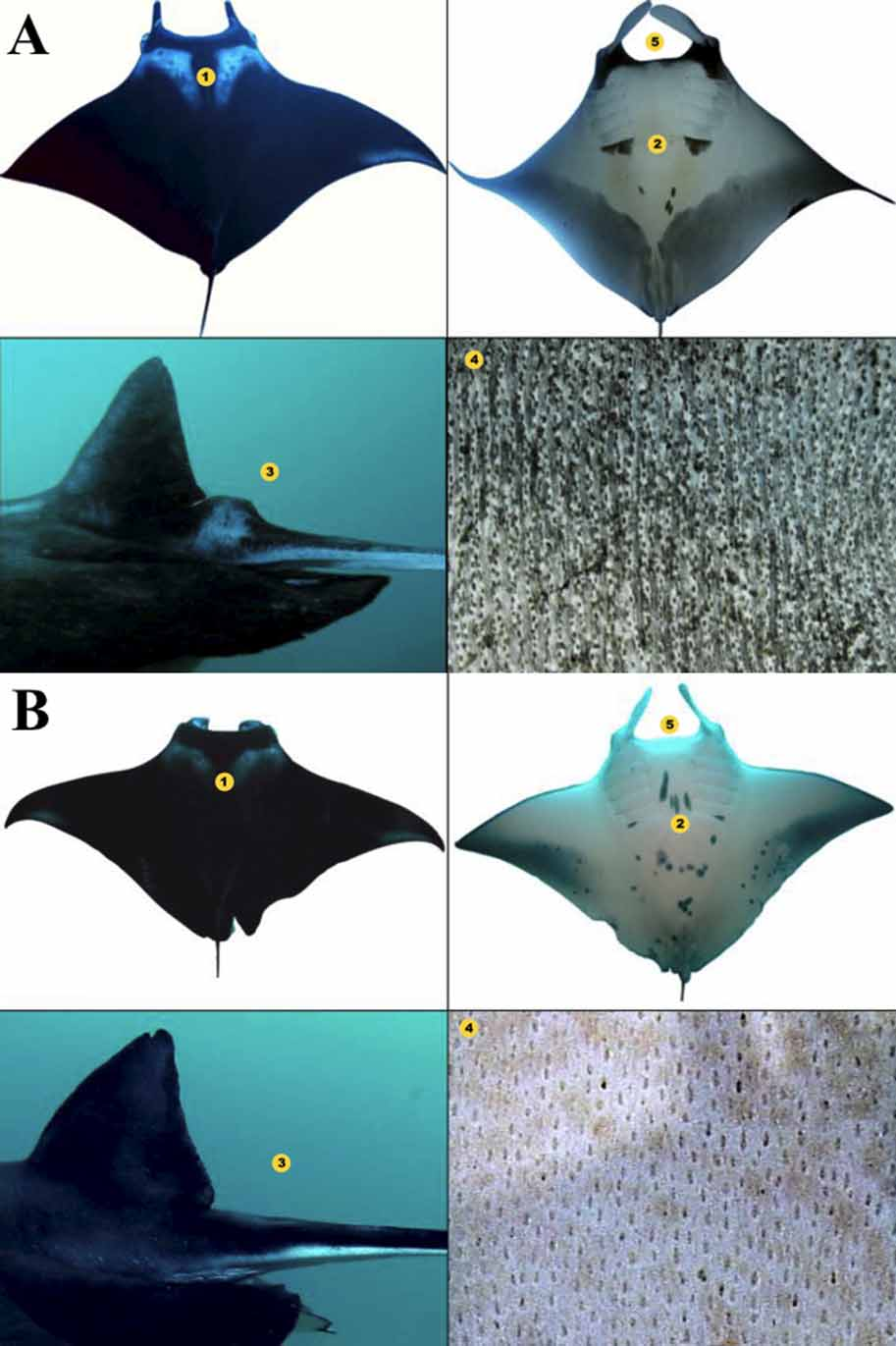
Manta rays are large rays belonging to the genus Mobula (formerly its own genus Manta). Three species are known: M. birostris, the largest at 7 m (23 ft) in width, M. yarae, which reaches 6 m (20 ft), and M. alfredi, the smallest at 5.5 m (18 ft). All three have triangular pectoral fins, horn-shaped cephalic fins and large, forward-facing mouths. They are classified among the Myliobatiformes (stingrays and relatives) and are placed in the family Myliobatidae (eagle rays). They have one of the highest brain-to-body ratio of all fish, and can pass the mirror test.
Mantas are found in warm temperate, subtropical and tropical waters. All three species are pelagic; M. birostris and M. yarae migrate across open oceans, singly or in groups, while M. alfredi tends to be resident and coastal. They are filter feeders and eat large quantities of zooplankton, which they gather with their open mouths as they swim. However, research suggests that the majority of their diet comes from mesopelagic sources. Gestation lasts over a year and mantas give birth to live pups. Mantas may visit cleaning stations for the removal of parasites. Like whales, they breach for unknown reasons.
Excerpted from Wikipedia’s “Manta” article, available under the CC BY-SA 4.0 licence.