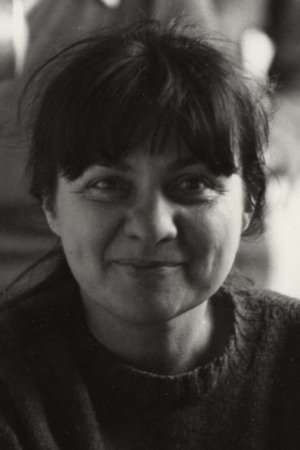
Profile via TMDB · Courtesy of TMDB
Márta Mészáros
Sign in to saveAlso known as Marta Meszaros
Hungarian screenwriter and film director (born 1931)
OverviewAI-generated
Márta Mészáros is a Hungarian film director and screenwriter born in Budapest in 1931. She began her work period in 1954 and was educated at the Gerasimov Institute of Cinematography. Her professional activities include participation in the 1969, 1977, 1980, and 1984 Cannes Film Festivals. She is also recognized in the Golden Bear collection.
Mészáros has received several awards, including the Béla Balázs Award, the Kossuth Prize, the European Film Academy Lifetime Achievement Award, and the Cannes Film Festival Grand Prix. She speaks Russian, Polish, and Hungarian. Her spouses have been Miklós Jancsó and Jan Nowicki, and her married name is Jancsó Miklósné.
Synthesized by Vinony from 20 facts across 3 sources: Wikidata, TMDb, Vinony collections. Generated from structured data (not the Wikipedia text) and checked against those facts — may still contain errors.
Film & TV
Budapest, Hungary
Márta Mészáros (born 19 September 1931) is a Hungarian screenwriter and film director. The daughter of László Mészáros, a sculptor, Mészáros began her career working in documentary film, having made 25 documentary shorts over the span of ten years. Her full-length directorial debut, Eltavozott nap/The Girl (1968), was the first Hungarian film to have been directed by a woman, and won the Special…
Known for
- Negative history of Hungarian cinema — Self2010
- Still Alive: A Film About Krzysztof Kieslowski — Self2006
- Notes in Lifestyle Margins2002
- Marta Meszaros: Portrait of the Hungarian Filmmaker — Self1979
- Les Rendez-vous du dimanche — Self1975
via TMDB
Key facts
- Born
- ( 1931-09-19 ) 19 September 1931 (age 94) , Budapest , Hungary
- Occupations
- Film director screenwriter
- Years active
- 1954–present
- Spouse s
- László Karda (1957–1959) (divorced), Miklós Jancsó (1960–1973) (divorced) (3 children), Jan Nowicki (?-2008) (divorced)
via Wikipedia infobox
Wikidata facts
- Instance of
- human
- Given name
- Márta
- Gender
- female
- Citizenship
- Hungary
- Place of birth
- Budapest
- Spouse
- Jan Nowicki
- Occupation
- screenwriter
- Educated at
- Gerasimov Institute of Cinematography
- Languages spoken
- Hungarian
- Participant in
- 1977 Cannes Film Festival
- Image
- Mészáros Márta.jpg
Show 7 more facts
- date of birth
- 1931-09-19
- Commons category
- Márta Mészáros
- married name
- Jancsó Miklósné
- related category
- Category:Films directed by Márta Mészáros
- start of work period
- 1954-00-00
- alternative name
- Марта Месарош
- name in native language
- Mészáros Márta
Sources (8)
via Wikidata · CC0
~10 min read
Encyclopedic overview
Márta Mészáros (born 19 September 1931) is a Hungarian screenwriter and film director. The daughter of László Mészáros, a sculptor, Mészáros began her career working in documentary film, having made 25 documentary shorts over the span of ten years. Her full-length directorial debut, Eltávozott nap/The Girl (1968), was the first Hungarian film to have been directed by a woman, and won the Special Prize of the Jury at the Valladolid International Film Festival.
Mészáros' work often combines autobiographical details with documentary footage. Prominent themes include characters' denials of their pasts, the consequences of dishonesty, and the problematics of gender. Her films often feature heroines from fragmented families, such as young girls seeking their missing parents (The Girl) or middle-aged women looking to adopt children (Adoption).
Excerpted from Wikipedia’s “Márta Mészáros” article, available under the CC BY-SA 4.0 licence.