File:Bricklayer_J4.jpg · Wikimedia Commons · See Wikimedia Commons
masonry
Sign in to saveAlso known as masonry construction
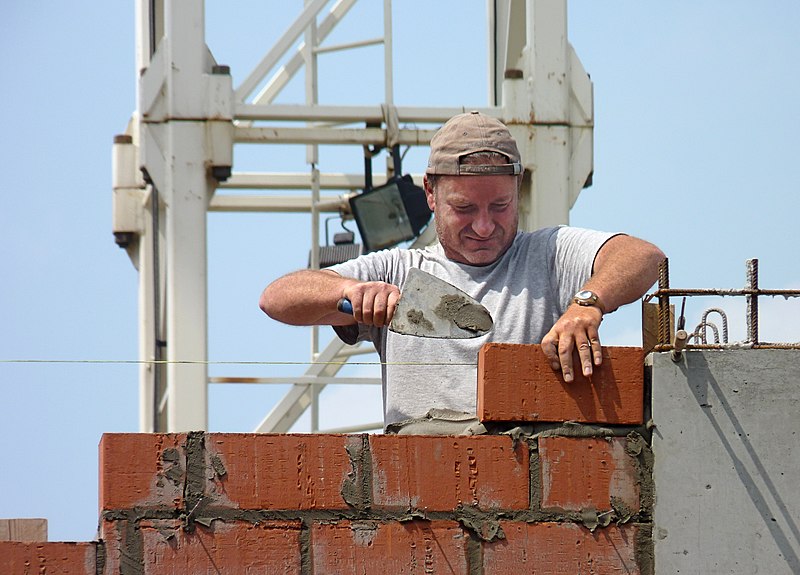
thumb|A mason laying a brick on top of the mortar thumb|Bridge over the Isábena (river)|Isábena river in the Monastery of Santa María de Obarra, masonry construction with stones
Masonry is the craft of building structures by laying bricks, stones, or similar materials and binding them together with mortar. It matters because it's a fundamental construction technique that has been used for centuries to create durable buildings and structures like bridges and monasteries.
AI-generated from the Wikipedia summary — may contain errors.
Wikidata facts
- Instance of
- architectural technology
- Image
- Bricklayer J4.jpg
Show 6 more facts
- described by source
- Brockhaus and Efron Encyclopedic Dictionary
- different from
- Freemasonry
- practiced by
- bricklayer
- Commons category
- Masonry (craft)
- topic's main category
- Category:Masonry
- on focus list of Wikimedia project
- Wikipedia:Vital articles/Level/4
via Wikidata · CC0
~15 min read
Encyclopedic overview
20 sectionsContents
- History
- Applications
- Advantages
- Disadvantages
- Structural limitations
- Dry set masonry
- Stonework
- Brick
- Uniformity and rusticity
- Serpentine masonry
- Concrete block
- Glass block
- Veneer masonry
- Gabions
- Passive fire protection (PFP)
- Mechanical modeling of masonry structures
- See also
- References
- General references
- External links
thumb|A mason laying a brick on top of the mortar thumb|Bridge over the Isábena (river)|Isábena river in the Monastery of Santa María de Obarra, masonry construction with stones
Masonry is the craft of building a structure with stone, brick, concrete, or similar material, including mortar plastering, which are often laid in, bound, and pasted together by mortar. The term masonry can also refer to the building units (stones, bricks, concrete blocks, etc.) themselves.
Excerpted from Wikipedia’s “masonry” article, available under the CC BY-SA 4.0 licence.