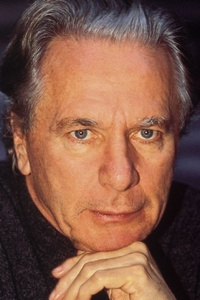
File:Maurice-Alexis_Jarre.jpg · Wikimedia Commons · See Wikimedia Commons
Maurice Jarre
Sign in to saveAlso known as Maurice-Alexis Jarre
French composer and conductor (1924-2009)
Maurice Jarre was a French composer and conductor who lived from 1924 to 2009. He is notable for his work in film and orchestral music during the twentieth century.
AI-generated from the Wikipedia summary — may contain errors.
Film & TV
Lyon, Rhône, France
Maurice-Alexis Jarre (13 September 1924 – 28 March 2009) was a French composer and conductor. Although he composed several concert works, Jarre is best known for his film scores, particularly for his collaborations with film director David Lean. Jarre composed the scores to all of Lean's films from Lawrence of Arabia (1962) on. Notable scores for other directors include The Train (1964),…
Known for
- In The Tracks Of - Special Edition — Self2020
- Stars 90 — Self1990
- Victoires de la musique — Self1985
- Great Performances — Self1971
- Discorama — Self1959
via TMDB
Music · MusicBrainz
- Type
- Person
- Gender
- Male
- Country
- France
- Active from
- 1924
- Active to
- 2009
Discography
via MusicBrainz · CC0
Listeners · Last.fm
- Listeners
- 177,081
- Total plays
- 1,356,539
Tags
Maurice Jarre (born in Lyon, France, September 13, 1924, died in Malibu, USA, March 29th, 2009) was a French composer of film scores noted for the scores of many motion pictures, in particular those of David Lean -- Lawrence of Arabia (1962), Doctor Zhivago (1965), and A Passage to India (1984). All three of these scores won Academy Awards and are widely considered to be among Jarre's best work. Other notable movies scored by Jarre include Luchino Visconti's The Damned (1969) <a href="https://w
Wikidata facts
- Instance of
- human
- Given name
- Alexis
- Gender
- male
- Citizenship
- France
- Place of birth
- 5th arrondissement of Lyon
- Place of death
- Malibu
- Occupation
- film score composer
- Educated at
- Conservatoire de Paris
- Languages spoken
- French
- Notable work
- Lara's Theme
- Record label
- Barclay
- Image
- Identite-MauriceJarre-1950-Sacem.png
- Work location
- France
- Residence
- Lyon
Show 12 more facts
- date of birth
- 1924-09-13
- date of death
- 2009-00-00
- cause of death
- cancer
- manner of death
- natural causes
- name in native language
- Maurice Jarre
- start of work period
- 1958-00-00
- end of work period
- 2001-00-00
- place of burial
- Westwood Village Memorial Park Cemetery
- related category
- Category:Films scored by Maurice Jarre
- P8168
- Reigi-Nõmme
- birth name
- Maurice Antoine Alexis Jarre
- relative
- Kevin Jarre
Sources (9)
via Wikidata · CC0
~8 min read
Encyclopedic overview
Maurice-Alexis Jarre ( French pronunciation: [mɔʁis alɛksi ʒaʁ]; 13 September 1924 – 28 March 2009) was a French composer and conductor, mainly of film scores. He was particularly known for his collaborations with film director David Lean, composing the scores to all of his films from 1962 to 1984. He received numerous accolades over the course of his career, including three Academy Awards, three BAFTA Awards, four Golden Globes, and a Grammy Award.
Jarre won three Academy Awards for Best Original Score for the David Lean films Lawrence of Arabia (1962), Doctor Zhivago (1965), and A Passage to India (1984). He was Oscar-nominated for Sundays and Cybèle (1962), The Message (1976), Witness (1985), Gorillas in the Mist (1988), and Ghost (1990). Notable scores also include Eyes Without a Face (1959), The Longest Day (1962), The Train (1964), The Collector (1965), Grand Prix (1966), The Man Who Would Be King (1975), The Year of Living Dangerously (1982), Fatal Attraction (1987), and Dead Poets Society (1989). He worked with such directors as Alfred Hitchcock, Elia Kazan, John Huston, Luchino Visconti, John Frankenheimer, and Peter Weir.
Excerpted from Wikipedia’s “Maurice Jarre” article, available under the CC BY-SA 4.0 licence.
Gallery (2)
Available in 59 languages
- Español
- Français
- Deutsch
- 中文
- 日本語
- Русский
- Português
- Italiano
- العربية
- Aragonese
- azb
- Azerbaijani
- Basque
- Belarusian
- Bosnian
- Breton
- Bulgarian
- Catalan
Show 40 more
- Central Kurdish
- Chechen
- Croatian
- Czech
- Danish
- Egyptian Arabic
- Esperanto
- Finnish
- Galician
- Georgian
- Greek
- Hebrew
- Hungarian
- Ido
- Latin
- Latvian
- Low German
- Luxembourgish
- Nederlands
- Norwegian
- Norwegian Nynorsk
- Occitan
- Polski
- Romanian
- Scots
- Serbian (Latin)
- simple
- Slovak
- Slovenian
- Svenska
- Swahili
- Tiếng Việt
- Türkçe
- Ukrainian
- Volapük
- Welsh
- zh_yue
- فارسی
- ไทย
- 한국어
via Wikidata sitelinks · CC0