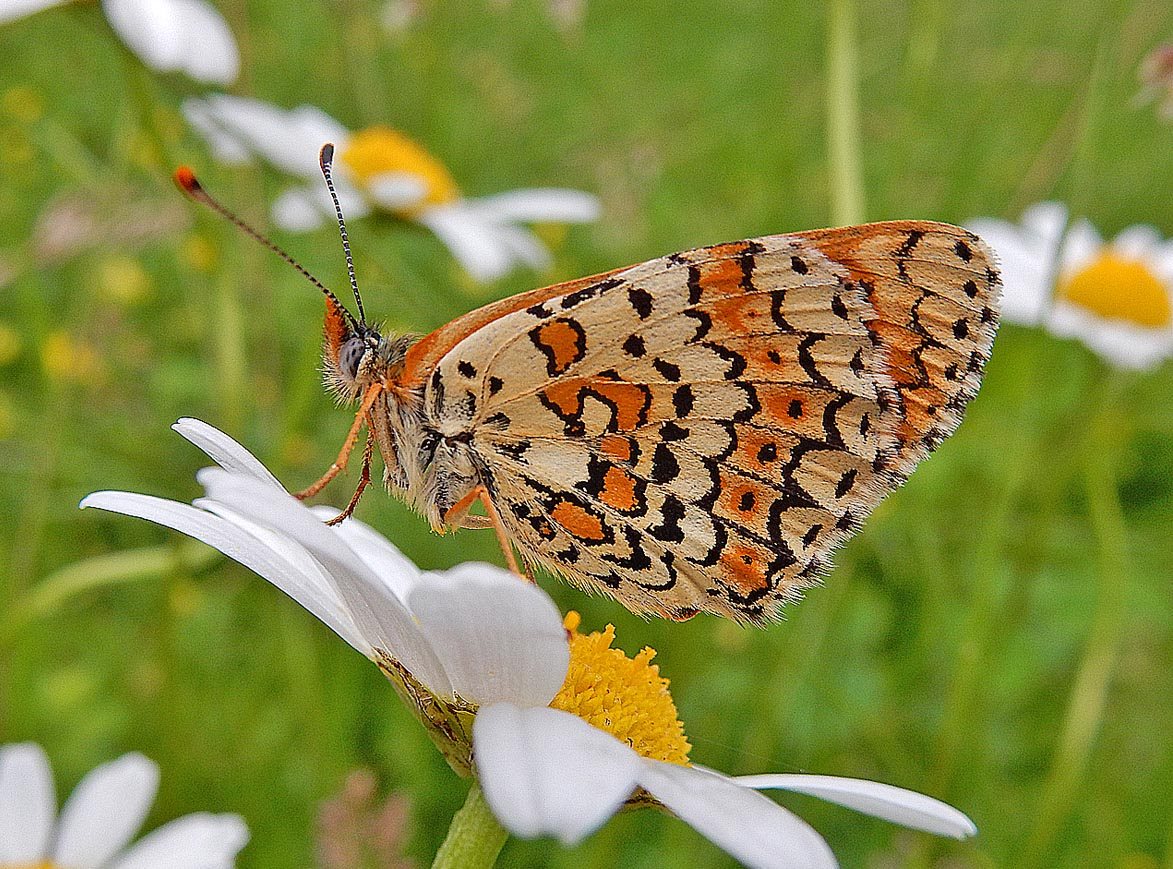
Image from GBIF · CC BY-NC-SA
Species
Glanville Fritillary
SPECIES
- KingdomAnimalia
- PhylumArthropoda
- ClassInsecta
- OrderLepidoptera
- FamilyNymphalidae
via GBIF
Museum specimens
- Specimen records
- 2,011
- With media
- 3,572
- Family
- Nymphalidae
- Collections
- FMNH, UMNH, RBINS-SCIENTIFIC HERITAGE, NRM
- Recorded in
- Iran, Italy, Sweden
Wikidata facts
Show 9 more facts
- Commons category
- Melitaea cinxia
- taxon rank
- species
- taxon name
- Melitaea cinxia
- Commons gallery
- Melitaea cinxia
- taxon common name
- pikasti pisanček
- has host
- Plantago media
- sequenced genome URL
- metazoa.ensembl.org/Melitaea_cinxia
- short name
- M. cinxia
- regional conservation status
- Near Threatened
via Wikidata · CC0
~12 min read
Encyclopedic overview
The Glanville fritillary (Melitaea cinxia) is a butterfly of the family Nymphalidae. It is named for Eleanor Glanville, the naturalist who discovered it, and the checkerboard pattern on its wings. These butterflies live in almost all of Europe, especially Finland, and in parts of northwest Africa. They are absent from the far north of Europe and parts of the Iberian Peninsula. To the east they are found across the Palearctic (in Turkey, Russia, northern Kazakhstan, and Mongolia).
It has been discovered that this butterfly only mates one time in June or July and lays its eggs. It does not provide any protection to these eggs or care for the offspring. As adults, the Glanville fritillaries are short-lived; they spend most of their lives as caterpillars. As caterpillars, Glanville fritillaries enter a stage of diapause, which is a period of suspended development, during the winter time.
Excerpted from Wikipedia’s “Melitaea cinxia” article, available under the CC BY-SA 4.0 licence.
Gallery (3)
Available in 28 languages
- Español
- Français
- Deutsch
- Русский
- Português
- Asturian
- Catalan
- Cebuano
- Danish
- Egyptian Arabic
- Finnish
- Galician
- Hebrew
- Hungarian
- Latvian
- Lithuanian
- Macedonian
- Nederlands
via Wikidata sitelinks · CC0