Gibbs, George W.
Micropterigidae
Sign in to saveAlso known as jaw moths
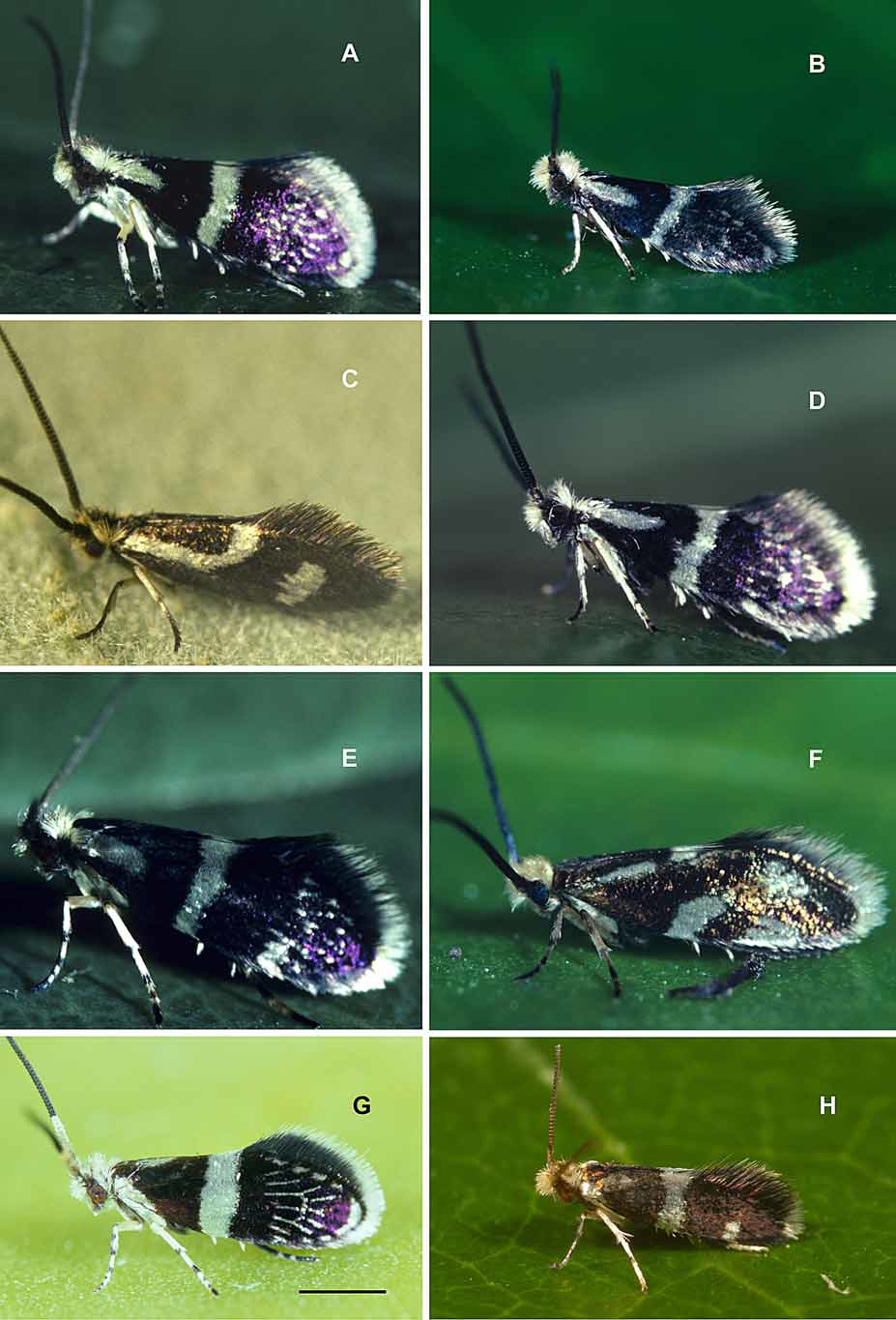
Micropterigoidea is the superfamily of "mandibulate archaic moths", all placed in the single family Micropterigidae, containing currently about twenty living genera. They are considered the most primitive extant lineage of lepidoptera (Kristensen, 1999), and the sole superfamily in the suborder Zeugloptera. The name comes from the Greek for mikros, little and pterux, a wing. Unique among the Lepidoptera, these moths have chewing mouthparts rather than a proboscis, and are seen feeding, often in large aggregations, on the pollen of the flowers of many herbaceous plants, shrubs and trees. The fo
Species
FAMILY
- KingdomAnimalia
- PhylumArthropoda
- ClassInsecta
- OrderLepidoptera
- FamilyMicropterigidae
多樣性 約180種 屬 小翅蛾屬 Micropterix Hübner, 1825 Eriocephala J. Curtis, 1839 Microptericina Zagulajev, 1983 Epimartyria Walsingham, 1898 Issikiomartyria Hashimoto, 2006 Kurokopteryx Hashimoto, 2006 Neomicropteryx Issiki, 1931 古小翅蛾 Palaeomicroides Issiki, 1931 Paramartyria Issiki, 1931 Vietomartyria Mey, 1997 Sabatinca F. Walker, 1863 Micropardalis Meyrick, 1912 Palaeomicra Meyrick, 1888 Agrionympha Meyrick, 1921 Hypomartyria Kristensen & Nielsen 1982 Squamicornia Kristensen & Nielsen, 1982 Parasabatinca Whalley, 1978 [化石] Baltimartyria Skalski, 1995 [化石] 小翅蛾科是小翅蛾總科中的唯一一科,也是小翅蛾亞目中的唯一一科。這一科包含著「有顎的古老蛾類」,目前存活的共有12個物種。牠們被認為是鱗翅目中最原始的一個現存支系[1]。 參考文獻 ^ Kristensen, N.P. (1999). The non-Glossatan Moths. Ch. 4, pp. 41-49 in Kristensen, N.P. (Ed.). Lepidoptera, Moths and Butterflies. Volume 1: Evolution, Systematics, and Biogeography. Handbuch der Zoologie. Eine Naturgeschichte der Stämme des Tierreiches / Handbook of Zoology. A Natural History of the phyla of the Animal Kingdom. Band / Volume IV Arthropoda: Insecta Teilband / Part 35: 491 pp. Walter de Gruyter, Berlin, New York. Firefly Encyclopedia of Insects and Spiders, edited by Christopher O'Toole, ISBN 1-55297-612-2, 2002
via GBIF
Museum specimens
- Specimen records
- 69
- With media
- 3
- Family
- Micropterigidae
- Collections
- USNM
- Recorded in
- Madagascar, Costa Rica, France
Wikidata facts
- Instance of
- taxon
- Image
- Micropterix.aureatella.jpg
Show 6 more facts
- Commons category
- Micropterigidae
- taxon rank
- family
- topic's main category
- Category:Micropterigidae
- taxon name
- Micropterigidae
- taxon common name
- skrzydliniaki
- diel cycle
- diurnality
Sources (1)
via Wikidata · CC0
~3 min read
Encyclopedic overview
5 sectionsContents
- Genera
- Extinct genera
- References
- Sources
- External links
Micropterigoidea is the superfamily of "mandibulate archaic moths", all placed in the single family Micropterigidae, containing currently about twenty living genera. They are considered the most primitive extant lineage of lepidoptera (Kristensen, 1999), and the sole superfamily in the suborder Zeugloptera. The name comes from the Greek for mikros, little and pterux, a wing. Unique among the Lepidoptera, these moths have chewing mouthparts rather than a proboscis, and are seen feeding, often in large aggregations, on the pollen of the flowers of many herbaceous plants, shrubs and trees. The fossil record of the group goes back to the middle-late Jurassic with the earliest known species being Auliepterix from the Karabastau Formation in Kazakhstan.
Micropterigid larvae possess a uniquely specialised trunk cuticle, in which the exo- and endocuticle are separated by fluid-filled chambers arranged in a honeycomb pattern, each chamber corresponding to an individual epidermal cell.
Excerpted from Wikipedia’s “Micropterigidae” article, available under the CC BY-SA 4.0 licence.