Described at
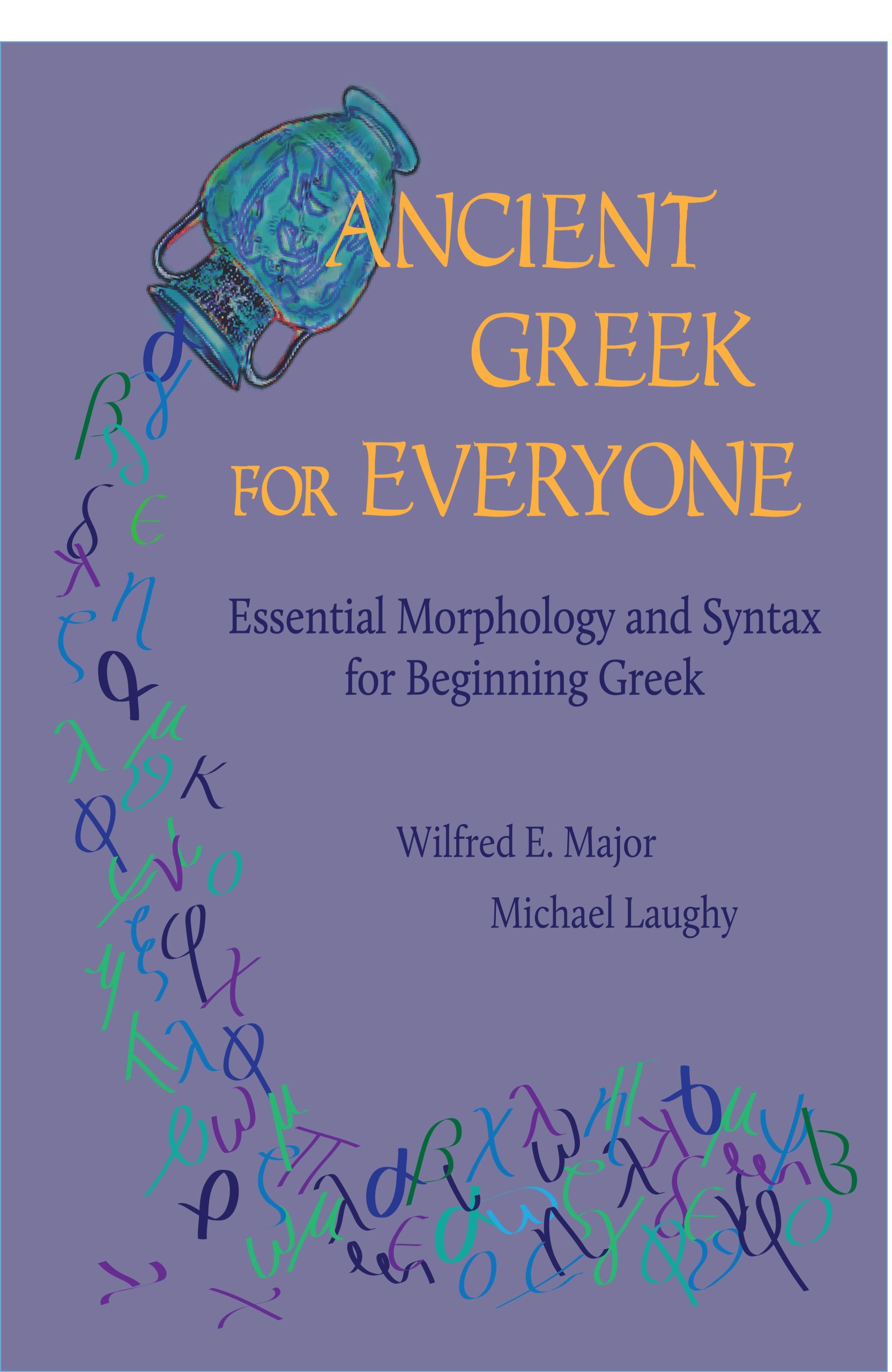
The Middle Voice: Part I – Ancient Greek for Everyone
pressbooks.pub →Fragment of a funerary lekythos. Names are inscribed above the heads of the three figures: Τιμοκράτης, Κλεόμαχος, Τιμοκράτης. So far, all verbs that we have discussed have been in the ACTIVE VOICE. In this lesson, we introduce the MIDDLE VOICE. Voice, you will recall, indicates the role that the subject plays in the action of the verb. To see the distinction that Greeks made between the ACTIVE and MIDDLE VOICE in transitive verbs, let’s consider the following example. Say you have a horse. If someone frees or unties your horse, then the verb is in the ACTIVE VOICE in Greek: Finally, for some Greek verbs, there can be an important distinction in meaning between the ACTIVE and MIDDLE VOICES (S 1728, 1734). For example: It is tempting, as English speakers, to think of the ACTIVE and PASSIVE VOICE as opposing poles, between which is located the MIDDLE VOICE. Certainly the English terminology for the three voices suggests this conception. It is important to understand, however, that the fundamental dichotomy for Greeks was actually between ACTIVE and MIDDLE. Greek originally inflected verbs to indicate ACTIVE and MIDDLE VOICES. There were no distinct PASSIVE forms, nor does that voice seem to have been used. As the need for the PASSIVE VOICE emerged, Classical and Koine Greek used the MIDDLE VOICE forms of the verb to represent also the PASSIVE VOICE (S 1735). This makes sense, when we realize that the difference between the MIDDLE and PASSIVE could at times be almost indistinguishable for Greeks. The cup breaks . (middle voice). Cups keep getting broken by him . (passive voice). Distinguishing voice can be difficult for speakers of English who have been taught that there are only two voices: active and passive. What voice is used, for example, in the following sentences? The bread is baking in the oven. She takes good pictures. He got himself fired today. “The soup that eats like a meal.” Consequently, while all the Greek verbs in this chapter are parsed – and almost always translated – in the MIDDLE voice, they can occasionally be translated with an English PASSIVE when context demands. One clue to identifying a PASSIVE use of a middle form is to look for ὑπό followed by a genitive; when modifying a passive verb, this construction indicates the agent of the verb. This construction is called the GENITIVE OF AGENT. τὸ βιβλίον ὑπὸ τοῦ ποιητοῦ γράφεται. The book is being written by the poet. αἱ πόλεις ὑπὸ τῶν Περσῶν λύονται. The cities are being destroyed by the Persians… In the ACTIVE VOICE, present tense athematic and thematic verbs use somewhat different endings to designate person and number, as well as the infinitive. In the MIDDLE VOICE, both types of verbs use exactly the SAME PERSONAL ENDINGS to designate person and number, as well as the infinitive mood. All endings are short. To begin building a Greek verb, we start with the VERB STEM, which tells the action that a verb describes. The Present, Indicative, Middle of δείκνυμι (athematic; S 418; GPH p. 156) Recall that adding –σ– to the verb stem marks a verb as in the FUTURE TENSE. So now the stem looks and sounds like this: 1. The vocabulary for this chapter introduces a number of verbs that were used by the Greeks only in the MIDDLE VOICE. The term DEPONENT VERBS (Latin for put down , lay aside ) is often used to describe these verbs, since to English speakers it appears that they somehow lost their ACTIVE forms (S 356). These verbs, however, never lost their ACTIVE forms, for they never had any. They are, and were meant to be, MIDDLE VERBS in Greek. As you study the vocabulary, consider why it made sense to Greeks that these particular verbs were best rendered in the MIDDLE VOICE. 2. If the vocabulary entry ends in –ομαι, then it has a thematic vowel and is an –ω verb. Otherwise, it is athematic. MIDDLE VS. ACTIVE VOICE MIDDLE VS. PASSIVE VOICE GENITIVE OF AGENT ATHEMATIC MIDDLE VOICE PERSONAL ENDINGS THEMATIC MIDDLE VOICE PERSONAL ENDINGS CONJUGATING THE P
Excerpt from a page describing this subject · 12,784 chars · not written by Vinony
Wikidata facts
- Subclass of
- voice
Show 1 more fact
- described at URL
- pressbooks.pub/ancientgreek/chapter/21
via Wikidata · CC0