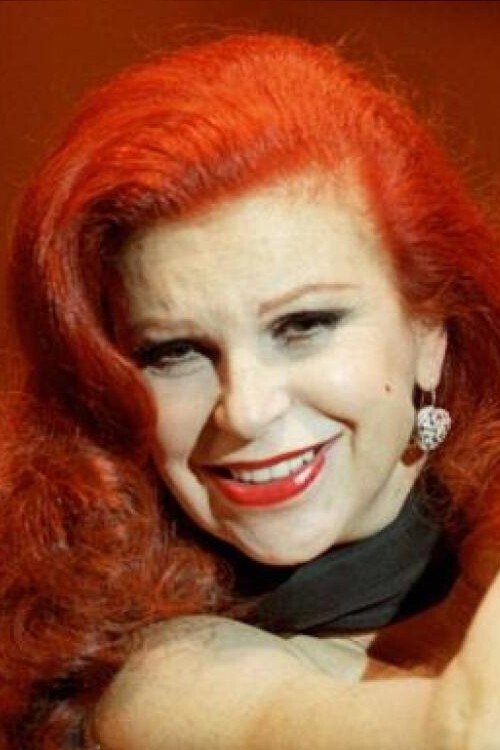
Profile via TMDB · Courtesy of TMDB
Milva
Sign in to saveMaria Ilva Biolcati (; 17 July 1939 – 23 April 2021), known as Milva (), was an Italian singer, stage and film actress, and television personality. She was also known as La Rossa (Italian for "The Redhead"), due to the characteristic colour of her hair, and additionally as La Pantera di Goro ("The Panther of Goro"), which stemmed from the Italian press having nicknamed the three most popular Italian female singers of the 1960s, combining the names of animals and the singers' birthplaces. The colour also characterised her leftist political beliefs, claimed in numerous statements. Popular in Ita
OverviewAI-generated
Milva, born Maria Ilva Biolcati, was an Italian opera singer, stage actor, and recording artist. She was born in Goro, Emilia-Romagna, on July 17, 1939, and died in Milan on April 23, 2021, from Alzheimer's disease. A contralto, she performed in genres including pop music, Italo disco, opera, tango, ballad, chanson française, jazz, and schlager. Her career began in 1959 and ended in 2021. She spoke German and Italian.
Milva was also known by the pseudonyms La Rossa and La Pantera di Goro. She had red hair and was the unmarried partner of Luigi Pistilli. Her professional work included acting and recording. She received the Knight of the Legion of Honour and the Goldene Stimmgabel award. She was a citizen of Italy.
Synthesized by Vinony from 33 facts across 4 sources: Wikidata, MusicBrainz, Last.fm, TMDb. Generated from structured data (not the Wikipedia text) and checked against those facts — may still contain errors.
Film & TV
Goro, Emilia-Romagna, Italy
Maria Ilva Biolcati, (17 July 1939 – 23 April 2021), known as Milva, was an Italian singer, stage and film actress, and television personality. She was also known as La Rossa (Italian for "The Redhead"), due to the characteristic colour of her hair, and additionally as La Pantera di Goro ("The Panther of Goro"), which stemmed from the Italian press having nicknamed the three most popular Italian…
Known for
- Milva, diva per sempre — Herself2024
- TV Story Superstar — Self (archive footage)2020
- 30 anni di SuperQuark - un viaggio sorprendente2011
- Musikalische Reise — Self2010
- Rudolf Nureyev alla Scala2005
- Willkommen bei Carmen Nebel — Self2004
- Kurt Weill2002
- Die Stunde der Stars — Self2001
- Show Palast — Self1999
- Beckmann — Self1999
via TMDB
Listeners · Last.fm
- Listeners
- 56,738
- Total plays
- 572,844
Tags
Milva, real name Maria Ilva Biolcati (July 17, 1939 - April 23, 2021) was an Italian singer, actress and TV personality. She is also known as the Red (due to the coulour of her hair) or as the Goro Panther, which stems from a journalist naming the 3 most talented Italian female singers of the 1970s with the birth place plus an animal name (the other two more are the Cremona Tiger and the Ligonchio Eagle). She was born in Goro, province of Ferrara. <a href="https://www.last.fm/music/Milva">Read
via Last.fm · Milva
Key facts
- Musical artist <! For individuals; see Wikipedia:WikiProject_Musicians >.name
- Milva
- Musical artist <! For individuals; see Wikipedia:WikiProject_Musicians >.image
- Milva in Pistoia 31-01-09 06.JPG
- Musical artist <! For individuals; see Wikipedia:WikiProject_Musicians >.alt
- Milva
- Musical artist <! For individuals; see Wikipedia:WikiProject_Musicians >.caption
- Milva at a theatre presentation of La variante di Lüneburg (2009)
- Musical artist <! For individuals; see Wikipedia:WikiProject_Musicians >.image_size
- 225
- Musical artist <! For individuals; see Wikipedia:WikiProject_Musicians >.background
- solo_singer
- Musical artist <! For individuals; see Wikipedia:WikiProject_Musicians >.birth_name
- Maria Ilva Biolcati
- Musical artist <! For individuals; see Wikipedia:WikiProject_Musicians >.birth_place
- Goro, Emilia–Romagna, Kingdom of Italy
- Musical artist <! For individuals; see Wikipedia:WikiProject_Musicians >.death_place
- Milan, Lombardy, Italy
- Musical artist <! For individuals; see Wikipedia:WikiProject_Musicians >.years_active
- 1958–2012
- Musical artist <! For individuals; see Wikipedia:WikiProject_Musicians >.website
- www.MilvaLaRossa.com
via Wikipedia infobox
Wikidata facts
- Instance of
- human
- Gender
- female
- Citizenship
- Italy
- Place of birth
- Goro
- Place of death
- Milan
- Occupation
- actor
- Languages spoken
- Italian
- Native language
- Italian
- Award
- Goldene Stimmgabel
- Participant in
- Sanremo Music Festival 2007
- Field of work
- popular music
- Hair colour
- red hair
- Genre
- jazz
- Instrument
- voice
- Official website
- www.milvalarossa.it
- Image
- Milva (2005).jpg
- Voice type
- contralto
Show 10 more facts
- Commons category
- Milva
- date of birth
- 1939-07-17
- start of work period
- 1959-00-00
- birth name
- Maria Ilva Biolcati
- pseudonym
- La Pantera di Goro
- date of death
- 2021-04-23
- end of work period
- 2021-00-00
- cause of death
- Alzheimer's disease
- manner of death
- natural causes
- web feed URL
- www.milva.it/feed
Sources (2)
via Wikidata · CC0
~51 min read
Encyclopedic overview
23 sectionsContents
- Life and career
- Early life and career beginnings
- 1960s
- 1970s
- 1980s
- 1990s
- 2000s
- Personal life
- Discography
- Albums
- Studio albums
- Live albums
- Soundtracks and cast recordings
- Compilation albums
- VHS video releases
- DVD video releases
- Songs
- Sanremo Music Festival
- Filmography
- Honours
- See also
- References
- External links
Maria Ilva Biolcati (; 17 July 1939 – 23 April 2021), known as Milva (), was an Italian singer, stage and film actress, and television personality. She was also known as La Rossa (Italian for "The Redhead"), due to the characteristic colour of her hair, and additionally as La Pantera di Goro ("The Panther of Goro"), which stemmed from the Italian press having nicknamed the three most popular Italian female singers of the 1960s, combining the names of animals and the singers' birthplaces. The colour also characterised her leftist political beliefs, claimed in numerous statements. Popular in Italy and abroad, she performed on musical and theatrical stages the world over, and received popular acclaim in her native Italy, and particularly in Germany and Japan, where she often participated in musical events and televised musical programmes. She released numerous albums in France, Japan, Korea, Greece, Spain, and South America.
She collaborated with European composers and musicians including Ennio Morricone in 1965, Francis Lai in 1973, Mikis Theodorakis in 1978 (Was ich denke became a best selling album in Germany), Enzo Jannacci in 1980, Vangelis in 1981 and 1986, and Franco Battiato in 1982, 1986 and 2010.
Excerpted from Wikipedia’s “Milva” article, available under the CC BY-SA 4.0 licence.