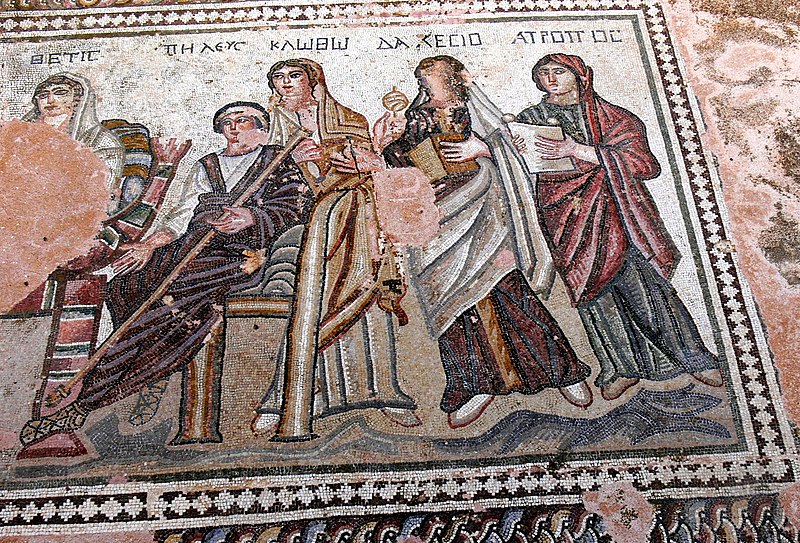
File:Paphos_Haus_des_Theseus_-_Mosaik_Achilles_3_Moiren.jpg · Wikimedia Commons · See Wikimedia Commons
مویرای
Sign in to saveAlso known as Moirai, The Fates, Fates
In ancient Greek religion and mythology, the Moirai ()often known in English as the Fateswere the personifications of destiny. In certain accounts, they were considered as three sisters: Clotho (the spinner), Lachesis (the allotter), and Atropos (the inevitable, a metaphor for death), though their number and names varied over time according to the author. Their Roman equivalent is the Parcae.
The Moirai, known in English as the Fates, were goddesses in ancient Greek mythology who personified human destiny and were typically depicted as three sisters—Clotho, Lachesis, and Atropos—each representing different aspects of fate from spinning life's thread to determining its length to bringing death. They matter as a central concept in ancient Greek religion and culture, reflecting how people understood the forces that controlled human lives and the inevitability of fate.
AI-generated from the Wikipedia summary — may contain errors.
Key facts
- Deity.name
- Moirai
- Deity.type
- greek
- Deity.deity_of
- Personifications of the fates
- Deity.parents
- NyxZeus and ThemisAnanke
- Deity.symbol
- Thread, dove, spindle, scissors
- Deity.other_names
- ClothoLachesisAtropos
- Deity.image
- Paphos Haus des Theseus - Mosaik Achilles 3 Moiren.jpg
- Deity.caption
- Late second-century Greek mosaic from the House of Theseus (at Paphos Archaeological Park, Cyprus), showing the three Moirai: Clotho, Lachesis, and Atropos, standing behind Peleus and Thetis, the parents of Achilles
via Wikipedia infobox
Wikidata facts
- Subclass of
- time and fate deity
- Has part
- Atropos
- Father
- Cronus
- Mother
- Ananke
- Image
- William Blake 006.jpg
- Said to be same as
- Parcae
Show 6 more facts
- Commons category
- Moirae
- native label
- Μοίρες
- topic's main category
- Category:Moirai
- worshipped by
- Greek mythology
- present in work
- Iliad
- different from
- moai
Sources (3)
via Wikidata · CC0