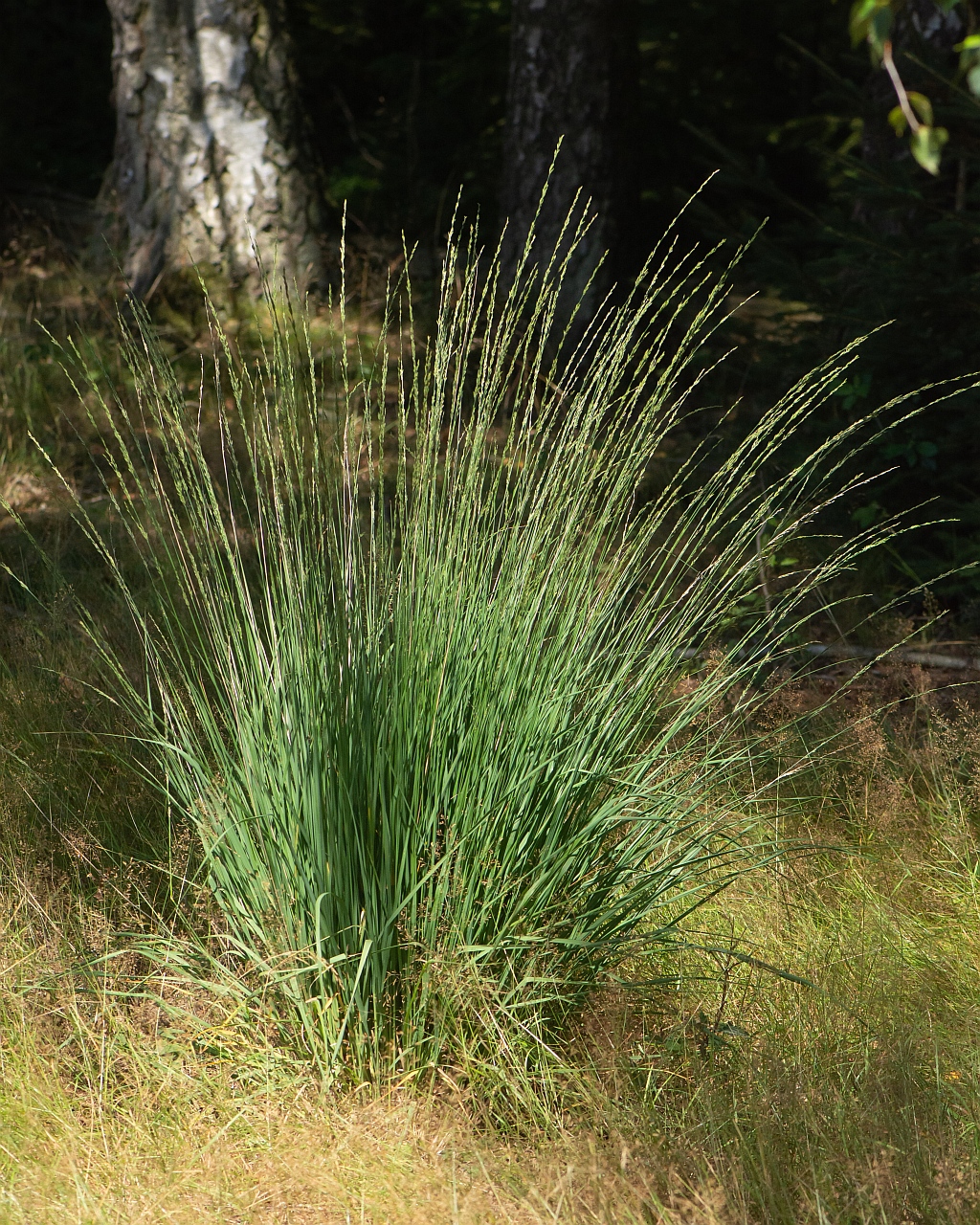
Image from GBIF · CC BY-NC
OverviewAI-generated
Molinia caerulea, commonly known as purple moor grass, is a species within the family Poaceae. Its taxonomic author citation is (L.) Moench. The organism is classified in the kingdom Plantae, phylum Tracheophyta, class Liliopsida, and order Poales. Other common names include glaswellt y gweunydd, Almindelig Blåtop, and Blaues Pfeifengras.
The species has been assessed by the IUCN Red List as Least Concern, with a status year of 2010. Records indicate its presence in the United States, United Kingdom, Canada, Denmark, and Germany. An Encyclopedia of Life entry describes its location as Chile Central. The taxon is described in the Brockhaus and Efron Encyclopedic Dictionary.
Synthesized by Vinony from 32 facts across 8 sources: Wikidata, GBIF, IUCN Red List, Gbif Occ, Encyclopedia of Life, Plants of the World, iDigBio, Vinony graph. Generated from structured data (not the Wikipedia text) and checked against those facts — may still contain errors.
Species
Least ConcernSPECIES
- KingdomPlantae
- PhylumTracheophyta
- ClassLiliopsida
- OrderPoales
- FamilyPoaceae
Chile Central
via GBIF · IUCN · Kew POWO
Museum specimens
- Specimen records
- 4,219
- With media
- 2,875
- Family
- Poaceae
- Collections
- UNIVERSITY OF VERMONT, DBG, UNIVERSITY OF MAINE, MSC, YPM, OSW
- Recorded in
- United States, United Kingdom, Canada, Denmark, Germany
Wikidata facts
Show 8 more facts
- Commons category
- Molinia caerulea
- taxon rank
- species
- taxon name
- Molinia caerulea
- Commons gallery
- Molinia caerulea
- taxon common name
- oliciu
- short name
- M. caerulea
- taxon author citation
- (L.) Moench
via Wikidata · CC0
~5 min read
Encyclopedic overview
Molinia caerulea, known by the common name purple moor-grass, is a species of grass that is native to Europe, west Asia, and north Africa. It grows in locations from the lowlands up to 2,300 m (7,546 ft) in the Alps. Like most grasses, it grows best in acid soils, ideally pH values of between 3.5 and 5, however, it can continue to live under more extreme conditions, sometimes to as low as 2. It is common on moist heathland, bogs and moorland throughout Great Britain and Ireland. Introduced populations exist in northeastern and northwestern North America.
The specific epithet caerulea means "deep blue" and refers to the purple spikelets.
Excerpted from Wikipedia’s “Molinia caerulea” article, available under the CC BY-SA 4.0 licence.