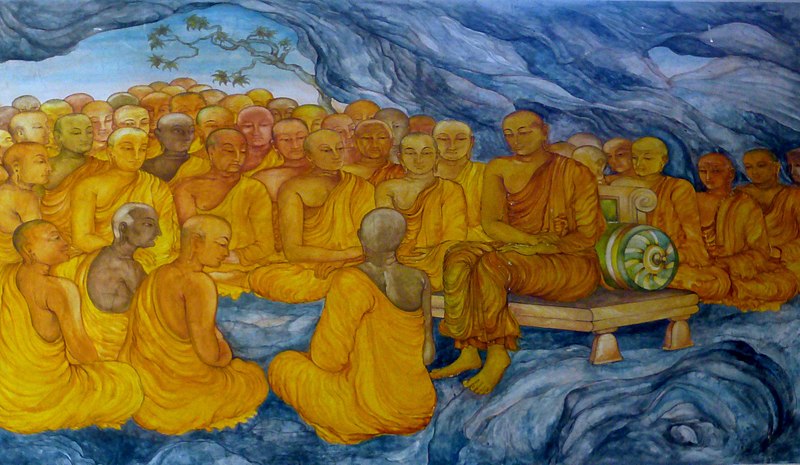
File:Nava_Jetavana_Temple_-_Shravasti_-_013_First_Council_at_Rajagaha_(9241729223).jpg · Wikimedia Commons · See Wikimedia Commons
A monk is a man who belongs to a religious order and lives in a monastery, where he typically devotes his life to prayer and contemplation. This way of life is an ancient practice found across many different religions, philosophies, and cultures around the world.
AI-generated from the Wikipedia summary — may contain errors.
Research
6,410 papersvia PubMed
Wikidata facts
- Part of
- monastic order
- Image
- Mendicant Monk Sitting on Xindong Street, Taipei 20140103.jpg
- Field of occupation
- monasticism
Show 12 more facts
- Commons gallery
- Monk
- ISCO-88 occupation class
- 2460
- female form of label
- черниця
- male form of label
- monje
- topic's main category
- Category:Monks
- Commons category
- Monks
- different from
- pond outlet sluice
- native label
- μοναχός
- described by source
- Encyclopædia Britannica 11th edition
- has characteristic
- male
- P8168
- Jordanoff Bay
- ISCO-08 occupation class
- 3413
via Wikidata · CC0
Article · Español
Un monje (del occitano monge que proviene del latín monachus y este del griego μοναχός, monachós, "sólo, único, solitario") es una persona que practica el ascetismo religioso, viviendo solo o con otros monjes. Un monje puede ser una persona que decide dedicar su vida a servir a los demás, o ser un asceta que elige voluntariamente abandonar la sociedad para vivir una vida de oración y contemplación. El concepto es muy antiguo y puede verse en muchas religiones y filosofías. En el idioma griego el término puede aplicarse también a mujeres, aunque en español, es usado para hombres. La palabra monja se utiliza normalmente para las monásticas femeninas. Aunque el término griego monachós es de origen cristiano, la palabra monje también sirve para designar ascetas de otras creencias religiosas o filosóficas. Sin embargo, al ser un vocablo genérico, no es intercambiable con los términos que denotan clases particulares de monje, como cenobita, ermitaño, anacoreta o hesicasta. Además de en la religión cristiana, existen en otras religiones monjes jainistas, budistas, sintoístas, taoístas o hindúes.
Abstract from DBpedia / Wikipedia · CC BY-SA
Gallery (50)
Available in 88 languages
- Español
- Français
- Deutsch
- 中文
- 日本語
- Русский
- Português
- العربية
- Afrikaans
- Albanian
- Albanian
- Aragonese
- Armenian
- Asturian
- Azerbaijani
- Bahasa Indonesia
- Bangla
- Basque
Show 69 more
- be_x_old
- Belarusian
- Breton
- Bulgarian
- Catalan
- Croatian
- Czech
- Danish
- Egyptian Arabic
- Esperanto
- Estonian
- Finnish
- fiu_vro
- Galician
- Georgian
- Greek
- Hungarian
- Icelandic
- Ido
- Interlingua
- Irish
- Kazakh
- Khmer
- Kurdish
- Kyrgyz
- Latin
- Latvian
- Limburgish
- Lithuanian
- Lombard
- Macedonian
- Malagasy
- Malay
- mnw
- Mongolian
- Nederlands
- Norwegian
- Norwegian Nynorsk
- nrm
- Pampanga
- Polski
- Romanian
- Rusyn
- Scottish Gaelic
- Serbian
- Serbian (Latin)
- simple
- Slovak
- Slovenian
- Svenska
- Swahili
- Tamil
- Tibetan
- Tiếng Việt
- Türkçe
- Ukrainian
- Urdu
- Uzbek
- Walloon
- Welsh
- Western Frisian
- Western Panjabi
- Wu Chinese
- Zaza
- zh_min_nan
- zh_yue
- فارسی
- ไทย
- 한국어
via Wikidata sitelinks · CC0