OverviewAI-generated
Mort Sahl was a comedian whose professional career began in 1953. He was born on May 11, 1927, and died on October 26, 2021.
A source article titled "Mort Sahl dead at 94: Comedian revolutionized stand-up" describes his impact on the genre. The text states that without Sahl, it is difficult to imagine the existence of comedians such as George Carlin, Richard Pryor, or Dave Chappelle.
Synthesized by Vinony from 8 facts across 2 sources: Wikidata, Firecrawl. Generated from structured data (not the Wikipedia text) and checked against those facts — may still contain errors.
Described at
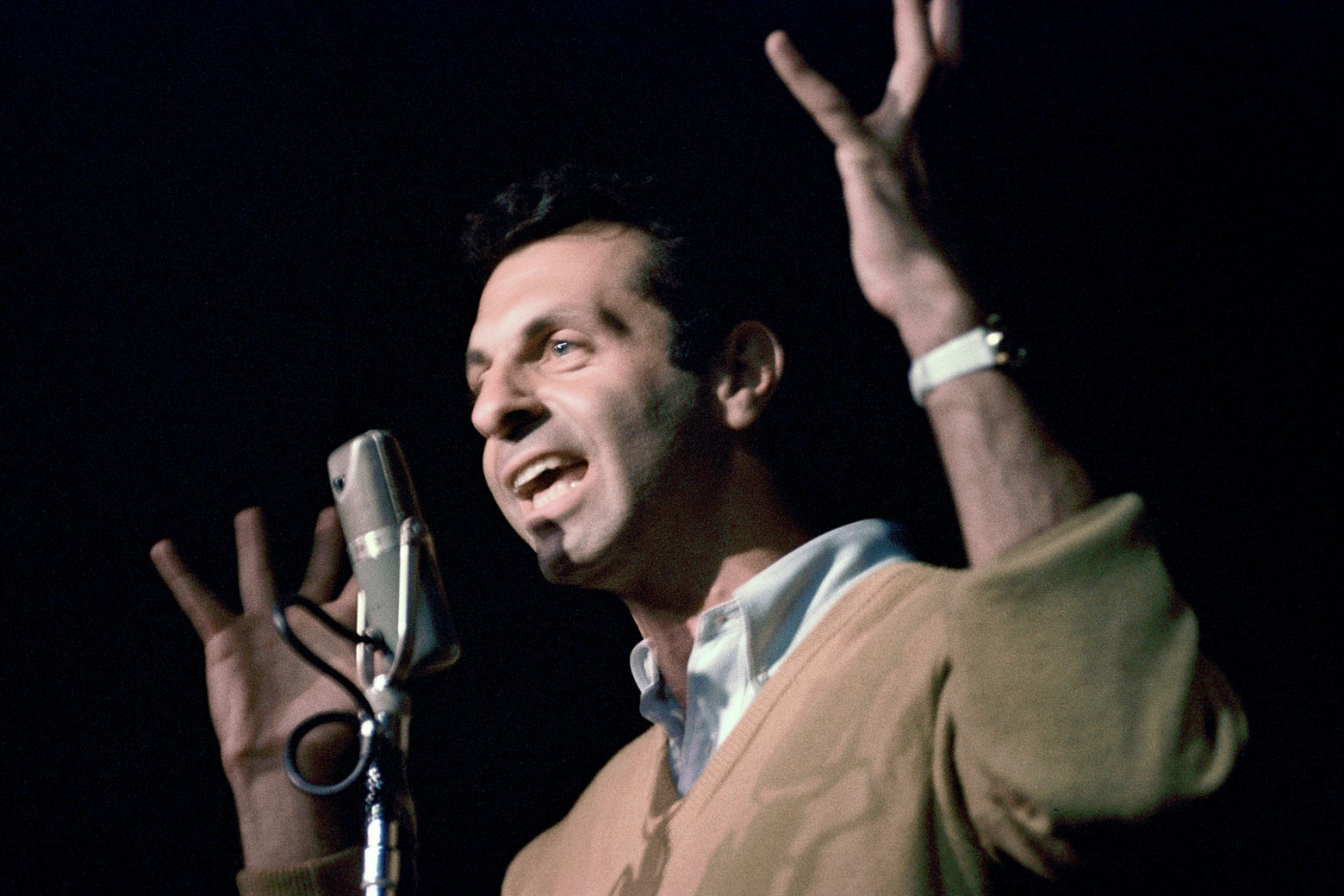
Mort Sahl dead at 94: Comedian revolutionized stand-up.
Without Mort Sahl, it’s hard to imagine the likes of George Carlin, Richard Pryor, or Dave Chappelle.
slate.com →Only Slate Plus members can gift Slate stories. Become a member to share 10 free articles a month. Only Slate Plus members can gift Slate stories. Become a member to share 10 free articles a month. Before Sahl, the headline comics performed on the Vegas strip or the Catskills circuit, reciting jokes—snappy setups and rim-shot punchlines—about wives, kids, and mothers-in-law. Sahl, who made his mark at the hungry i , a dank, dingy nightclub in San Francisco’s North Beach district, uncorked discursive monologues on politics and the era’s raft of social hypocrisies—the sorts of topics that polite people didn’t talk about in public. (Yes, Will Rogers poked fun at politicians, but in a genial manner; Sahl was out for blood.) The best of movies, TV, books, music, and more, delivered to your inbox. Sahl had the look and manner of a hip Berkeley professor, dressed not in a suit and tie but in chinos, a V-necked sweater, and a shirt with an open collar, bounding to the stage with a sly grin, a few newspapers and magazines tucked under his arm. (Many years later, he would teach a course on “the other America” at Claremont McKenna College.) With the cadence of a jazz musician, he would read from some of the articles, commenting sarcastically; digress to another issue; cackle at some improvised observation; then return to the topic after musing, “Now where were we?” Other, similar comedians and satirists would soon emerge from similar scenes with their own forms of rebellion—Lenny Bruce, Jonathan Winters, Tom Lehrer—but Sahl was the first, the tone-setter, and the most enduringly influential. Without him, it is hard to imagine the likes of Woody Allen, George Carlin, Richard Pryor, Chris Rock, or Dave Chappelle. Sahl was the most overtly political of the gang that some stuffy scribe denounced as “sick comics.” He first appeared at the hungry i on Christmas night, 1953, and, after a few weeks of experimenting, scored with these two jokes about the era’s Red Scare: “Joe McCarthy doesn’t question what you say so much as your right to say it.” And: “Every time the Russians throw an American in jail, the House Un-American Activities Committee retaliates by throwing an American in jail, too.” John F. Kennedy’s election as president in that year marked Sahl’s peak—and the start of his downfall. Sahl adored Kennedy—his insouciant wit and youthful charm—and the Kennedy crowd adored Sahl in return, laughing along with his trenchant stabs at Eisenhower, Nixon, and the stagnant complacency of the era. But then, once Kennedy entered the White House, this same crowd was appalled when Sahl started going after him. Sahl found himself blackballed from Camelot and never got over the sting. Nor, however, did he quite get over his infatuation with Kennedy himself—and JFK’s assassination wrecked him. He plunged deep down the rabbit hole of conspiracy theories, going onstage not with his usual props of newspapers and magazines but rather with a marked-up copy of the Warren Report (which concluded that JFK was shot by a sole gunman), devoting entire, hourslong sets to shredding its inconsistencies. In short, Sahl committed the cardinal, often fatal sin of a stand-up comedian: He became unfunny. (Dave Chappelle, take note.) Lenny Bruce committed the same sin around this time, though Bruce spent time onstage dissecting the transcripts of his own court trials on charges of obscenity and drug possession. Bruce died of an overdose in 1966, at the age of 40. Sahl, who was just two years younger than Bruce and an uneasy friend till the end, avoided that degree of self-destruction, but he vanished from the public light for a few years. Sahl made a comeback with the reemergence, then implosion, of another blast from the past: Richard Nixon. The abortive second term of Nixon’s presidency—from his landslide over George McGovern in 1972 to the Watergate hearings of ’73 and his resignation in ’74—served as a perfect scene-setter for Sahl’s subtly savage satire and
Excerpt from a page describing this subject · 10,452 chars · not written by Vinony
Wikidata facts
- Instance of
- human
- Gender
- male
- Citizenship
- Canada
- Place of birth
- Montreal
- Place of death
- Mill Valley
- Occupation
- actor
- Languages spoken
- English language
- Record label
- Mercury Records
- Official website
- www.mortsahlfake.com
- Image
- Mort Sahl -1.jpg
Show 7 more facts
- date of birth
- 1927-05-11
- influenced by
- Irwin Corey
- Commons category
- Mort Sahl
- start of work period
- 1953-00-00
- date of death
- 2021-10-26
- manner of death
- natural causes
Sources (8)
via Wikidata · CC0